

 Written by Avery Knox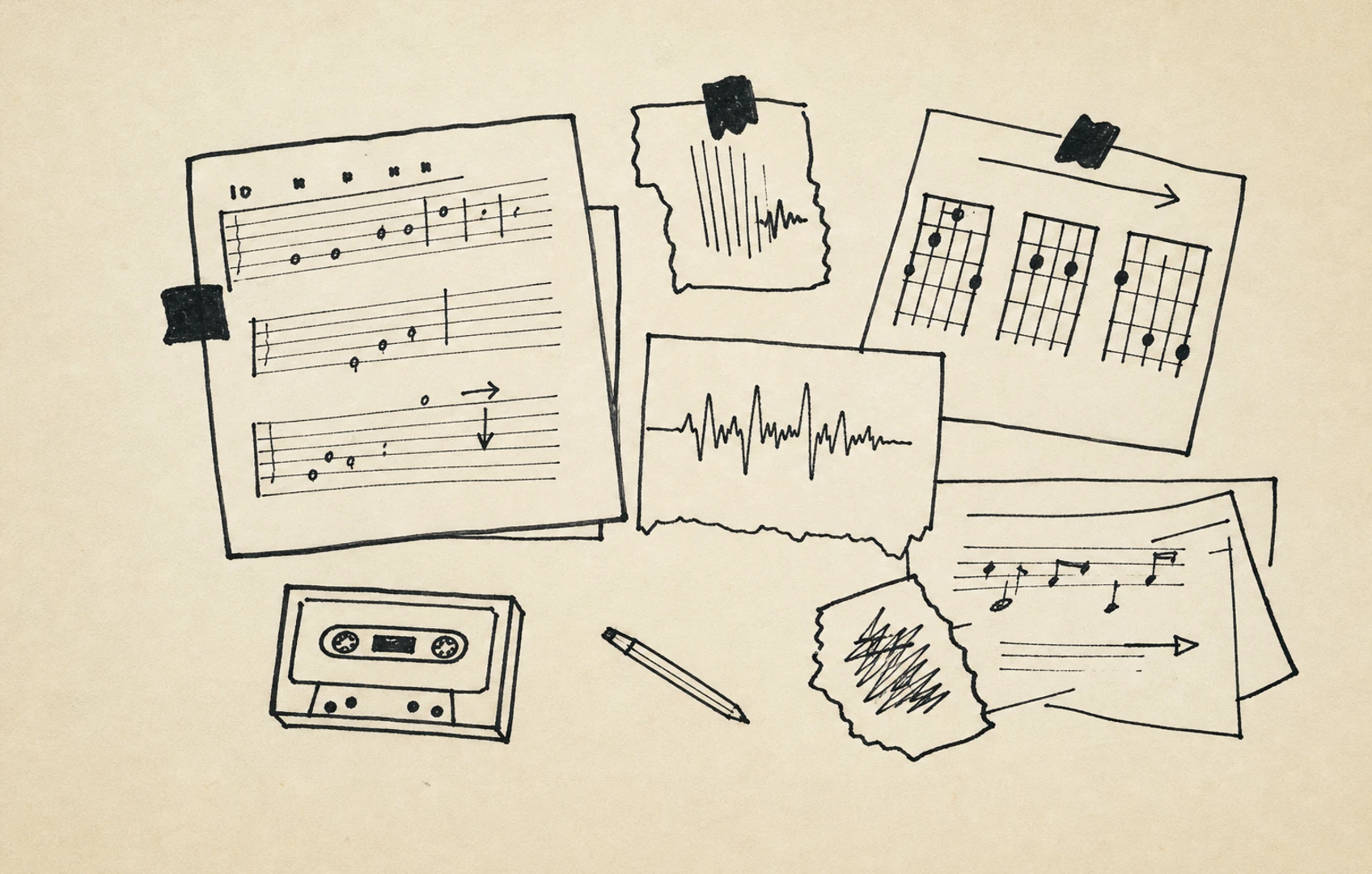
The boring headline with wires hanging out
A private equity exit is the kind of headline most musicians scroll past on muscle memory. Fair enough. It sounds like a room full of adults congratulating one another with slides. But this one has wires hanging out of it. Muse Group is the company behind Audacity, Ultimate Guitar, and Hal Leonard, plus notation software that lives in the same neighborhood of everyday music work. That means this is not some distant capital-markets weather report. It lands much closer to the desk: the free editor on an old laptop, the tab page open during rehearsal, the lesson book on a stand, the arrangement file waiting to be cleaned up before sending stems.
According to Music Business Worldwide, Francisco Partners has exited its minority investment in Muse Group, while the company remains majority owned and controlled by founder and CEO Eugeny Naidenov, alongside executive chairman and COO Mo Chahdi. We should be careful here. An ownership change does not automatically predict a product overhaul, a pricing shock, a strategic swerve, or a golden age. But when one company touches so many entry points into music-making, even a dry business update deserves a closer listen.
One company, several moments in the same song
Muse Group is interesting because its products do not all belong to one glamorous category. They belong to the messier truth of how people actually become musicians.
You hear a song and look up the chords on Ultimate Guitar. You slow something down, trim a take, or rescue a rehearsal recording in Audacity. You buy or borrow educational material tied to Hal Leonard. You move between learning, practicing, arranging, recording, and sharing without announcing a platform transition to yourself. It is one long session with different windows open.
That matters because music software is often discussed as if the whole game lives inside a DAW or a plug-in folder. In reality, a huge amount of musical life happens before and around the glamorous production layer. Discovery, instruction, transcription, notation, reference listening, rough editing, and low-stakes capture are the plumbing. If a company controls several pieces of that plumbing, it has a real view into how musicians move from curiosity to competence.
This is why a business story can become a workflow story fast. Musicians do not experience these brands as separate press releases. They experience them as adjacent stops in the same creative loop.
The useful middle of music tech
There is a tendency in music tech coverage to chase the dramatic edges: AI demos, flagship synths, celebrity-backed platforms, impossible startup promises. Meanwhile, the tools that actually get touched every day keep doing the quiet labor.
Audacity is one of those names. It has long occupied the useful middle: not the most glamorous environment, not the deepest production suite, but a familiar place for editing, bouncing, cleaning, exporting, and getting unstuck. Ultimate Guitar occupies a similar zone for players. It is not a romantic object. It is a practical one. Same with educational publishing and songbooks under Hal Leonard. These are not fantasy purchases. They are workbench materials.
The useful middle is where habits harden. Once a tool becomes the thing you open without thinking, it gains a kind of gravity. That gravity is commercially valuable, which is why ownership and control matter. A company with products across that middle layer can chase sensible integration, or it can chase extraction. Sometimes it tries both in sequence.
No need to panic on cue. But no need to pretend infrastructure is neutral, either.
What musicians should actually watch for now
The practical question is not whether this ownership update is good or bad in the abstract. The practical question is what signals would tell us the company’s priorities are changing.
First: account creep. When separate tools begin insisting on one identity layer, one dashboard, one subscription funnel, or one cross-sell corridor, that tells you the company is thinking in ecosystem terms. That can be convenient. It can also make exit harder.
Second: the treatment of free users. Audacity has cultural weight partly because it has been a low-friction entry point. If a company owns beloved on-ramps, the pressure to monetize those on-ramps never disappears. Watch how much friction gets inserted between opening the app and finishing a simple task.
Third: educational bundling. Hal Leonard and Ultimate Guitar suggest obvious package logic around learning, tabs, notation, and repertoire access. Again, this could produce genuinely smoother experiences for beginners. It could also produce a maze of memberships and feature gates. The difference lives in details: what stays portable, what remains printable, what gets paywalled, what becomes easier to start but harder to leave.
Fourth: product tempo. Ownership stability sometimes leads to patient product development. It can also lead to a long stretch of operational tidying dressed up as innovation. Musicians will feel the difference quickly. Does the software become easier to use? Do basic annoyances get fixed? Does the company improve trust at the edges, where export, compatibility, and access usually fray?
Those are not glamorous metrics. They are the ones that decide whether a tool remains part of your reflexes.
The old lesson: convenience always wants custody
Music platforms love the word convenience because convenience lowers resistance. One login, one library, one payment relationship, one recommendation layer, one place to store your effort. For users, that can feel merciful. For companies, it can feel like custody.
Muse Group’s portfolio is notable because it sits near the early and middle stages of musical development. That is a powerful place to be. If you help someone learn songs, read charts, edit audio, and organize basic creative output, you are not just selling software. You are shaping default behavior.
This is where musicians should stay unsentimental. The friendliest tools in your setup are still businesses. If they become deeply interconnected, the upside is obvious: fewer dead ends, less file chaos, less platform-hopping. The downside is subtler. Your practice history, your repertoire habits, your educational purchases, your editing routines, and your creative rough drafts start to live under one corporate roof.
That does not make the roof evil. It makes the roof important.
Why this story belongs to beginners and working players alike
It would be easy to frame this as a niche business item for people who enjoy cap tables and acquisition math. I think the opposite is true. Stories like this matter most to the people who do not have backup systems, legal teams, or premium studio budgets.
Beginners rely on accessible tools because they have to. Working players rely on them because they are efficient. Teachers rely on them because students need familiar ramps. Songwriters rely on them because not every idea deserves a full production environment. The same ecosystem can serve the teenager learning barre chords, the church MD cleaning up reference audio, the podcaster trimming dialogue, and the guitarist grabbing a last-minute chart before load-in.
That breadth is exactly why ownership shifts deserve attention. When infrastructure consolidates, the changes rarely arrive as thunderclaps. They arrive as defaults. A checkbox preselected. An export path moved. A feature folded into an account wall. A library tied more tightly to a service. A simple task that now asks you to join something.
Musicians notice these things late because they feel small one at a time. Then one day the setup feels heavier.
Keep an eye on the desk, not the press release
The cleanest way to read this week’s Muse Group news is to ignore the ceremonial language and watch the desk. Watch what happens where musicians actually touch the products. Can you still get in quickly, do the task, and leave with your file intact? Do learning materials remain usable in ordinary ways? Do tabs, notation, and editing tools stay interoperable without becoming clingy? Does the company earn trust through restraint?
A lot of music-tech power now lives far from the stage and far from the glamour shot. It lives in the tiny moments before inspiration hardens into work: opening a tab, marking a chart, trimming a take, cleaning a voice memo, exporting something ugly but useful. That is the layer Muse Group occupies.
So yes, a minority investor has exited. On paper, that is a tidy business brief. In practice, it is a reminder that some of the most important music companies are the ones sitting quietly in the background while you try to finish a chorus before dinner.
Comments
No comments yet.