

 Written by Jordan Vega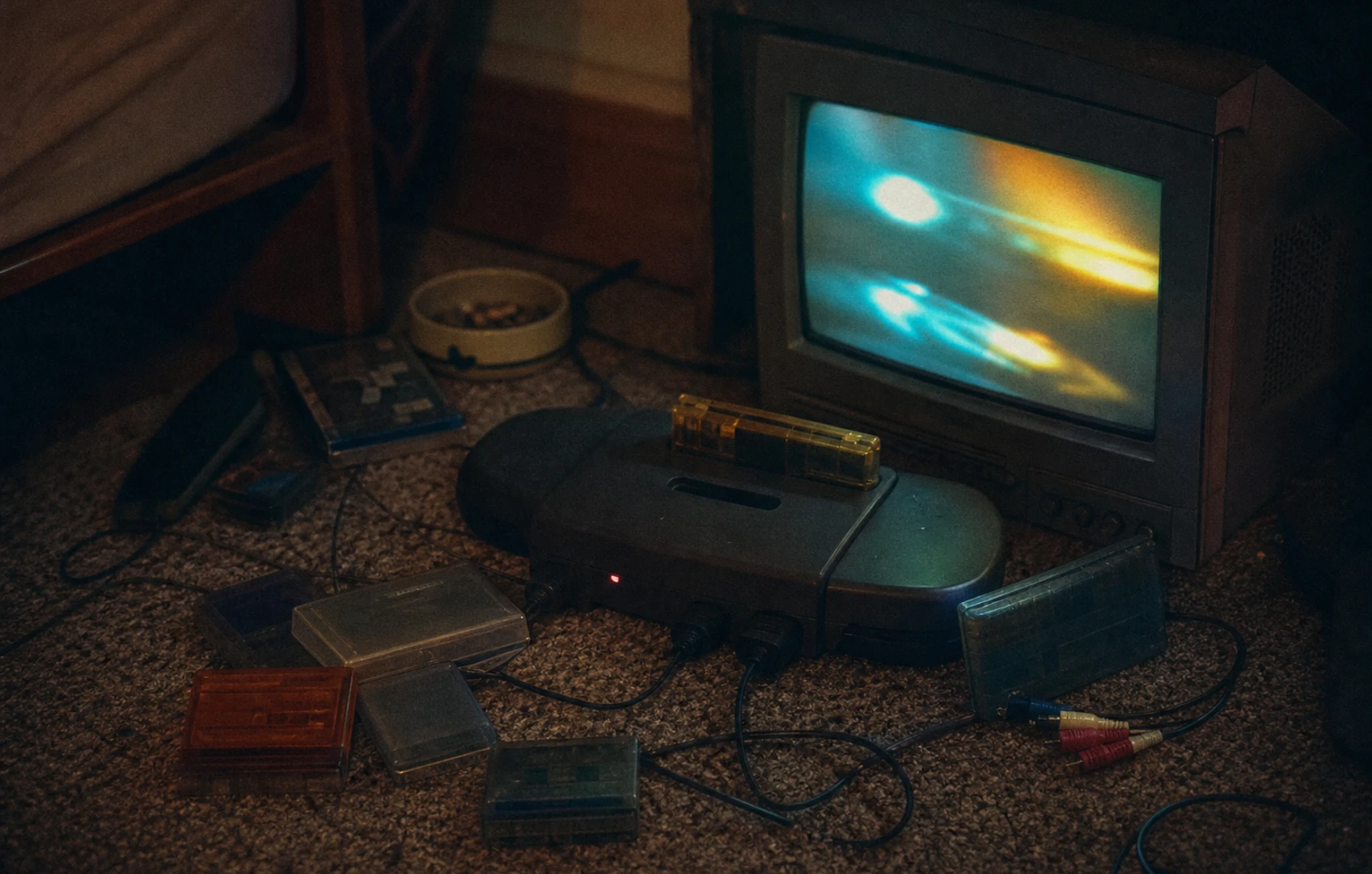
The album boots up
A recent MusicTech feature spotlights Remute and Daydream Plus, producers releasing albums for the NES, Sega Genesis, and Game Boy with tracker tools rooted in an earlier era of game development. The obvious headline writes itself: an album can boot from the same slot as a game. The useful detail is what happens after boot. When music runs through a console's own sound system, the playback machine participates in the record.
Most releases ask a format to carry a finished stereo master. A console release can ask code to schedule voices, trigger envelopes, call patterns, and negotiate the sound chip in real time. Playback reconstructs the arrangement within a fixed pool of memory and channels. Composing, mixing, and delivery begin leaning on the same hardware limits.
That is why this work is harder than feeding a synth line through a bit crusher. The console has a voice budget, timing rules, and a particular way of making noise. Your 140-track session gets no diplomatic immunity.
Every chip has an accent
Those machines do not share one generic retro sound. The NES audio system is commonly approached through pulse, triangle, noise, and a sample-capable channel. The Game Boy offers two pulse channels, a programmable wave channel, and noise. The Sega Genesis pairs Yamaha FM synthesis with a programmable sound generator, giving it sharp transients, glassy bells, rubbery basses, and deliberately abrasive possibilities. These are capabilities. Programming and arrangement determine the result.
Trackers make the resource argument visible. Notes and commands sit on rows, patterns repeat, and small effect values alter pitch, volume, timing, or timbre. A lead may borrow a channel from a chord. A drum hit can interrupt another voice for a few milliseconds. Quick arpeggios can imply harmony with a single channel, while noise becomes percussion through envelope and pitch control.
Hardware and software tricks can stretch the budget, though each trick spends memory, processor time, or timing headroom. That pressure is productive when the composer hears it early. Kick, bass, chord, and melody stop behaving like four permanent employees. They clock in only when the arrangement needs them.
Playback is part of the mix
A cartridge-native album turns correct playback into a technical question. Every console's sound generation eventually passes through an analog output path, and hardware revisions can differ. Aging components, aftermarket modifications, display connections, mixers, and capture interfaces may alter level or noise. Regional clock standards can also affect speed or pitch when a program has not accounted for them.
Emulation adds another playback target. A well-maintained emulator aims to reproduce the original behavior, but implementations and settings vary. For listeners, the artist's stated hardware or software target is the sensible starting point. An official audio render, when one is supplied, makes a better reference than a random compressed capture.
For producers, the release checklist should include target hardware, one documented emulator, and a clean lossless capture. Record with conservative gain, bypass unnecessary TV audio processing, and write down the signal path. If a track behaves differently across setups, document the expected version instead of declaring every alternate playback broken. The old box has tolerances. So does the modern chain plugged into it.
Borrow the constraint
You can borrow tracker discipline without buying aging hardware. Start with a blank DAW session and impose rules directly on the arrangement:
- Choose four to six monophonic voices and assign each one a job.
- Use one noise source for percussion, with automation doing the work that sample swaps usually handle.
- Build with short reusable patterns. Change a pattern only when the song needs new information.
- Keep effects on sends with strict limits, then check the arrangement in mono and at low volume.
Finish a short piece before lifting the cap. The point is to hear which notes deserve space. If every chord needs eight voices and a wide reverb tail, the exercise reveals that dependency quickly.
A bit crusher supplies a surface cue. Channel contention, stepped envelopes, duty-cycle choices, and FM operator relationships supply the deeper structure. The same techniques work in club tracks, ambient pieces, pop hooks, or ugly little rhythm experiments. A tracker mindset simply forces decisions closer to note entry, before a browser full of plugins starts offering alibis.
Nostalgia has a cover charge
Nostalgia is present, naturally. These chips can summon memories of title screens, handheld speakers, bedroom televisions, and the small panic of a low-battery light. Memory gives the timbres emotional velocity before a melody has done much work. A smart composer can use that association, resist it, or rough it up.
The physical format also introduces friction. Original hardware needs power, working connectors, and a route into current speakers or displays. That ritual can focus attention. It can also turn a release into a collector's object that many listeners cannot play.
A practical edition plan keeps the native version alongside an accessible audio release. The cartridge carries code, interaction, and hardware-specific behavior. Lossless files carry the songs to headphones, cars, DJ software, and future devices. Each edition serves a different listening situation. Nobody should need an aging RF adapter to hear the chorus, and the playable object can still reward the person who keeps an old console wired under the television.
Preserve the boot sequence
Console music has two clocks: musical tempo and hardware decay. Contacts can oxidize. Cartridge batteries, where used, can fail. Capacitors age. Displays and proprietary connectors disappear from ordinary desks. A shelf copy is lovely and still makes a weak single-point archive.
A stereo master captures the audible result. It cannot preserve every interactive behavior or show how patterns drove the chip. Project data preserves additional logic, though old tools and operating systems can become difficult to run. The strongest archive is layered: a lossless render, the creator-distributed software image when available, tracker or project data when the artist chooses to share it, notes naming the target console and region, and a checksum that confirms each file stayed intact.
Listeners can do a smaller version. Keep official downloads in their original folders, retain any readme file, and maintain backups in two places. Do not rename every mysterious file until its purpose is clear. For artists, capture the boot sequence and track transitions as well as individual songs. Those details explain how the release was meant to move.
The cartridge can remain the star of the shelf. Beside it, a WAV, a project archive, and a plain text hardware note give the album somewhere to respawn after the plastic shell goes quiet.
Comments
No comments yet.