

 Written by Silas Reed
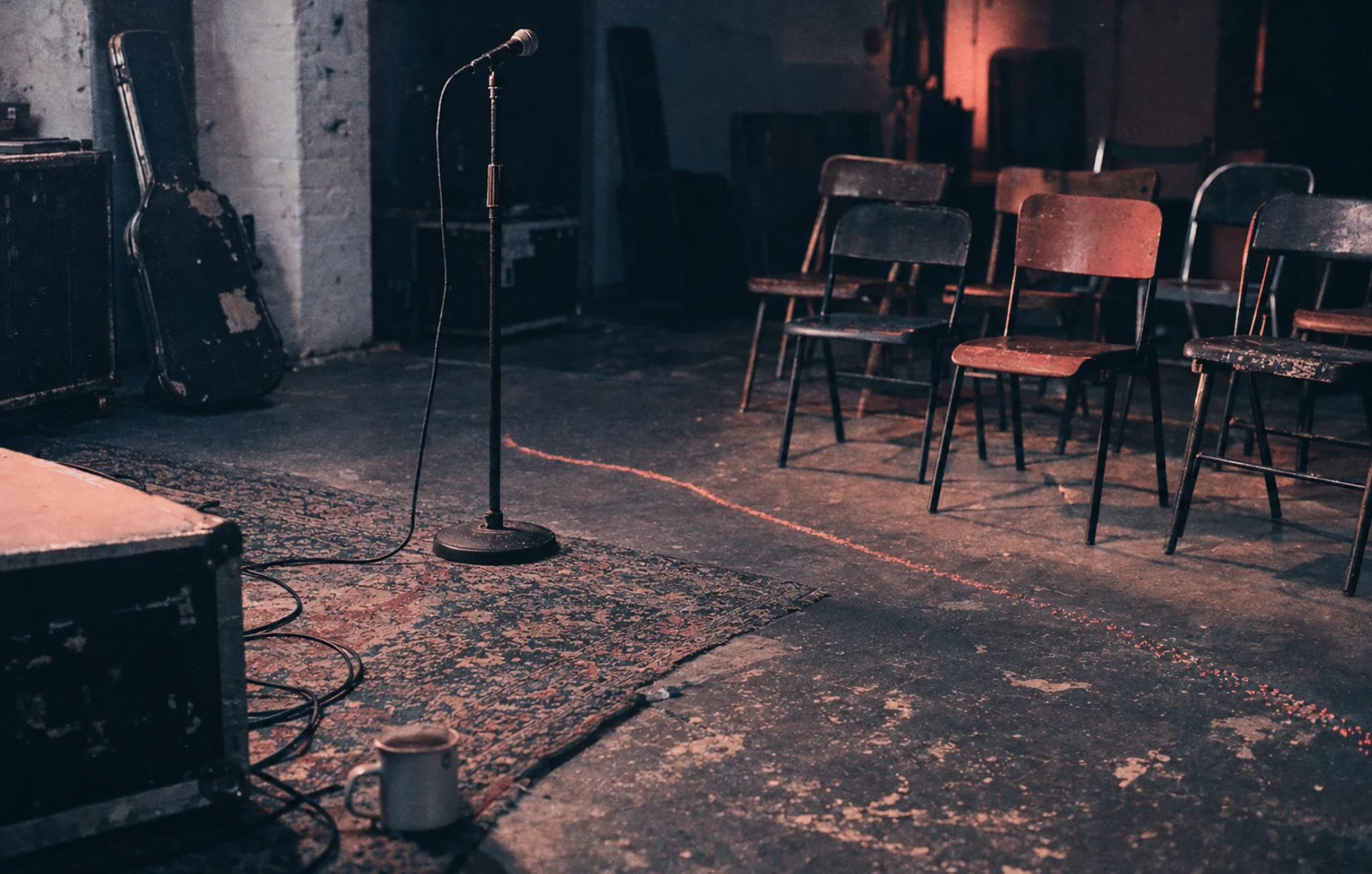
A different kind of microphone
Stereogum reported on Nov. 22 that Wayne Coyne officiated Miley Cyrus and Maxx Morando’s wedding. Billboard covered the wedding photos, which can tell you how the occasion looked. The officiant credit is the detail that makes me wonder how a ceremony sounds from the back row. The Flaming Lips have spent decades making an extravagantly public kind of intimacy. Officiating calls for a smaller version of a skill any frontperson needs: drawing a room’s attention and knowing when to hand it to somebody else.
The credit alone tells us nothing about the couple’s vows, playlist, or setup. What it does offer is a way into the most underplanned part of many music-loving people’s weddings. You can spend weeks finding a song both of you can stand to hear in public and never once walk to the back of the room while someone speaks into the microphone. The two choices meet there. It’s where a guest finds out whether they’re hearing a ceremony or watching several faces turn toward a voice they can’t make out.
Listen from the back row
A good first soundcheck starts with an ordinary sentence at an ordinary speaking level. Have someone read from where the officiant will stand while another person listens from the farthest chair and from the seats farthest to either side. A mic check delivered at announcer volume is easy to pass. A person reading a line that catches in their throat is a different source. Test at the level somebody might actually use when the room goes quiet.
Indoors, a hard room can hang on to one syllable long enough to cloud the next. Turning up the speaker can make that worse. Outdoors, wind noise can swamp a line the instant someone turns their head. Ask whoever runs the system about speaker placement or a suitable windscreen before reaching for more gain. If several people are speaking, rehearse the handoff. A guest who can hear the officiant perfectly can still lose a whole reading when the next person holds the mic down by their waist.
Give the song a cue
Think about how a favorite record starts. Maybe the first few seconds are room tone, a breath, or a guitar so soft you lean in. You know something is coming because you’ve heard the track a hundred times. The person at the door, waiting for a cue to walk, may hear only a chair scrape. Dependent on where they’re standing, they may barely hear the speaker at all.
Make a cue somebody can give with their eyes open and their hands free. Agree on a nod, a lifted hand, or a door opening. Then decide which part of the song the room needs to hear. If you’re attached to a first verse whose opening line arrives after a long instrumental, try the whole sequence at walking pace. Forty seconds is easy to spend on headphones. It feels considerably longer when everyone has reached their places and the person running playback is wondering whether to bring the level down.
Leave the words some space
Playback can borrow a useful habit from radio: give people a moment to hear the music on its own, then decide where the voice should enter. Even a quiet sound bed can pull focus if there’s a singer in it or a melody people know by heart. Familiar music has a peculiar way of completing itself in your head. Put it under a vow and a guest may spend the first sentence silently supplying the chorus.
If you want a track under speech, try that stretch in the room before committing. Have somebody speak over the loudest passage and listen from a seat, away from the playback controls. A sparse instrumental may work beautifully. So might a fade that finishes before the first word. The few seconds after a song ends can feel painfully exposed in rehearsal. With people in the chairs, those same seconds give everyone time to settle. Let them hear the person take a breath.
Put someone in charge of playback
Write a cue sheet short enough to scan while standing. Use the exact versions of songs, including any edits, and put the action against something a human can recognize: start when the door opens, fade when the reader reaches the mic, wait for the officiant to finish. Durations help in rehearsal. On the day, a laugh or a long pause can throw off a sequence built entirely on elapsed time.
Keep the files available offline and check the actual playback device through the actual system. Disable notifications and anything that might automatically start another track. Give one person responsibility for pressing play and permission to wait when the room needs it. Their seat matters, too. If they’re tucked behind a column with a fine view of the mixer and no view of the door, even the neatest cue sheet will leave them guessing.
What the room keeps
There’s a peculiar thrill in seeing a musician’s name next to a job like “officiant.” Onstage, Coyne can ask an audience to look at him. The wedding role puts that power to work on behalf of the people standing beside him. It’s a useful shift in perspective for anyone drawing up a ceremony playlist. A song can invite people into the room, hold a pause, or give them something to carry out with them. Between those cues, it helps to know what the music can leave alone.
The photos will keep the arrangement of the room long after the chairs are stacked. Somebody in the last row might remember a different detail: when a voice dropped, they could still hear the end of the sentence.
Comments
No comments yet.