

 Written by Marvin Cavanaugh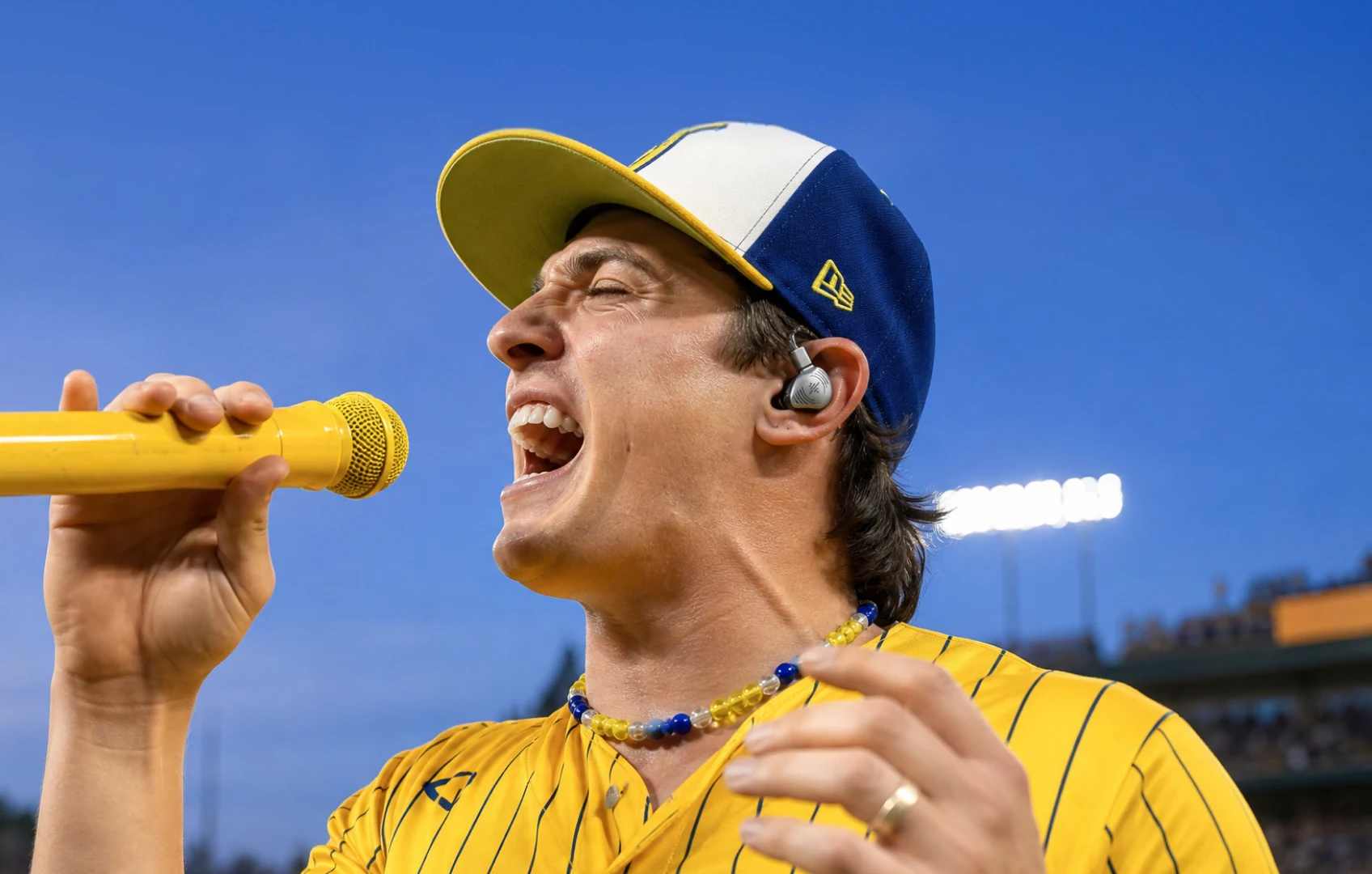
The Tiny Detail Musicians Couldn’t Unsee
A recent Instagram performance clip has passed 2 million views, and the obvious reason is the voice. Smooth, controlled, locked in. But singers and players tend to watch clips like this differently: they look for the small pieces of control hiding in plain sight.
Look closely at the ear. From the public footage, the singer appears to be wearing Soundbrenner Wave Pro-style wired in-ear monitors. To be clear, that is not a claim of endorsement, affiliation, or recommendation — just an honest gear-detective read of what musicians noticed.
The more useful question is not “what did he buy?” It is “why do locked-in singers still reach for wired monitoring when normal earbuds are everywhere?”
Because when you cannot clearly hear pitch, click, track, and mix, you compensate. You push. You turn up. You guess.
“Turning up is not the same as hearing clearly.”
The Fast Verdict For Singers
If you sing, rehearse with a band, record at home, use a click, run backing tracks, gig occasionally, or post performance clips, proper wired in-ear monitors solve a different problem than normal earbuds.
- Wave Pro 2 is the serious pick if vocal detail, pitch confidence, dense mixes, and stage/studio separation matter.
- Wave is the better-value first upgrade if you want real wired monitoring without overbuying.
- Bluetooth earbuds are convenient, but convenience is not the same as real-time monitoring.
Why Normal Earbuds Make Singers Guess
Consumer earbuds are built for commuting, calls, playlists, and podcasts. That is not an insult. It is just the wrong job description for a singer trying to hear pitch, timing, track, band, and voice at the same time.
Picture a garage rehearsal. The drummer is splashing cymbals, the backing track is buried, the vocal mic is hot, and your earbud seal loosens every time you move. The click feels a hair late, so you lean harder into the phrase. By the chorus, you are asking for “more me” when what you really need is a cleaner monitor.
That is the spiral: the seal gets weak, the mix turns mushy, the singer pushes harder, and the volume creeps up even though the real problem is clarity.

The problems show up fast
- Delay: If the click, track, or live feed arrives late, your timing feels wrong even when you are playing correctly.
- Poor isolation: If the earphone does not seal well, room noise wins and you keep turning up.
- Mushy separation: If vocals, instruments, and tracks blur together, you lose the pitch and phrasing cues that make a performance feel controlled.
That is why wired in-ear monitors still make sense in 2026. Musicians need sound that arrives immediately, a connection that works with interfaces, headphone amps, mixers, and stage rigs, and a fit that stays put when the take or set actually matters.
- Wired 3.5mm monitoring: zero Bluetooth delay, no pairing drama, and no battery anxiety.
- Passive isolation: less room chaos fighting your monitor mix, especially when foam tips seal properly.
- Over-ear cable fit: more secure for movement than dangling consumer earbuds, with easier compatibility through musician gear and adapters.
If you already know you need clearer monitoring, the button above goes to Soundbrenner’s official store so you can check fit options, current pricing, and support terms.
The Serious Pick: Soundbrenner Wave Pro 2
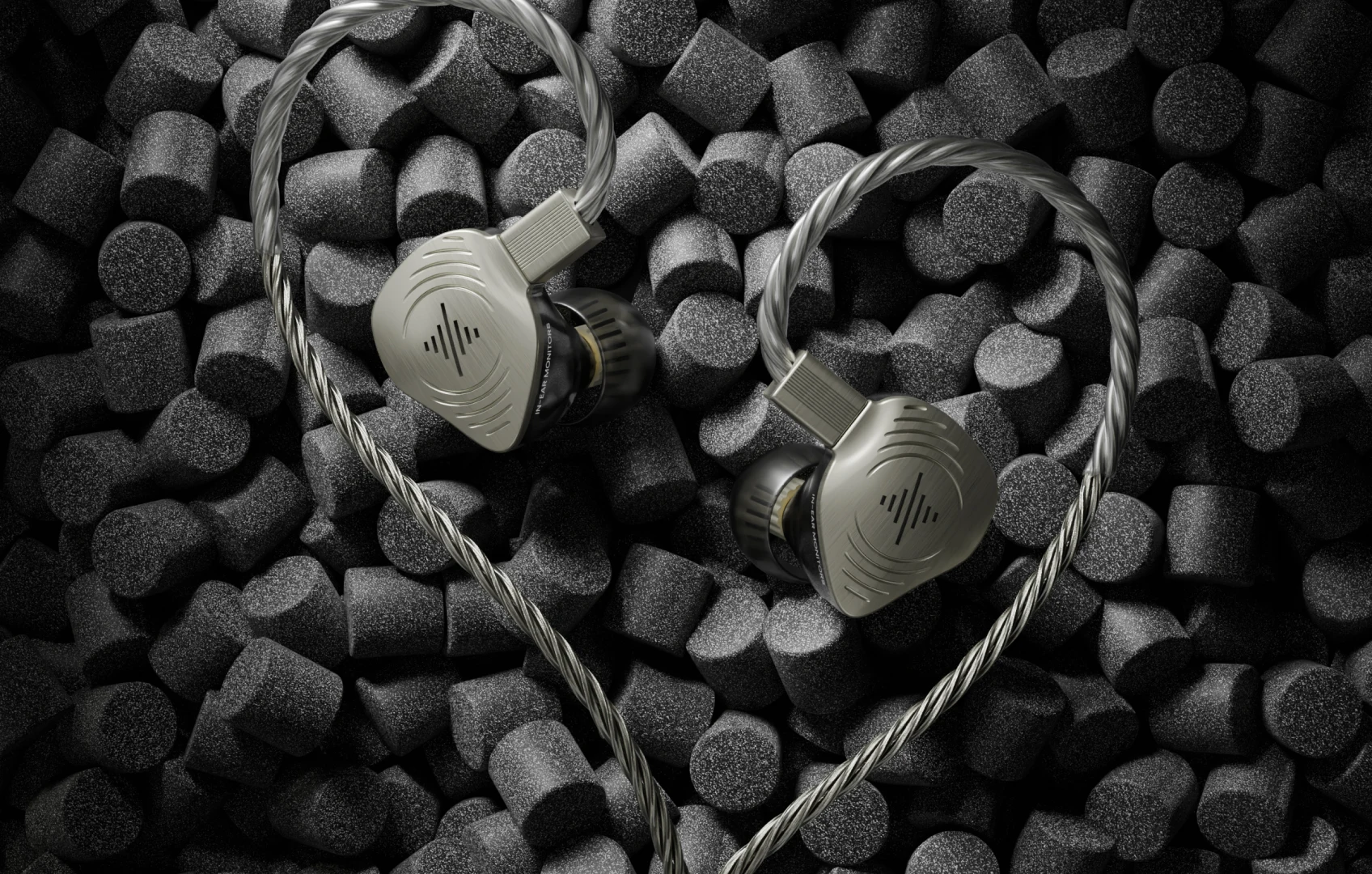
This is where the viral ear detail gets practical. The Soundbrenner Wave Pro 2 is not trying to be a luxury lifestyle earbud with a music-adjacent story. It is a wired in-ear monitor built around the problems singers and players actually complain about: latency, isolation, fit, and separation.
The headline feature is the quad-driver hybrid array. Translation: instead of forcing one driver to handle the whole mix, Wave Pro 2 splits the job across dedicated drivers so vocals, instruments, click, and backing tracks have a better chance of staying distinct.
- Vocals stay easier to place: the driver array is built for separation, so a vocal line does not get buried as quickly in a dense mix.
- Timing cues feel more locked: wired zero-latency monitoring means the click or track is not fighting Bluetooth delay.
- The setup is musician-friendly: detachable 1.5m over-ear cable, 3.5mm plug, included 1/4-inch adapter, and carrying case.
The fit story is just as important
Wave Pro 2 includes multiple tip styles in S/M/L — Liquid Pro, foam, and double-flange — because the seal is not a side detail. The seal is the whole fight. With the foam tips, Soundbrenner claims up to 36 dB of passive isolation, which can be the difference between hearing your monitor mix and wrestling the room.
That fit kit also lowers the odds of judging the monitors too early. Try the sizes and styles before deciding the sound is wrong. A weak seal can make even capable in-ear monitors feel thin, loud, or underwhelming.
Wave Pro 2 vs. Wave: Choose Fast
Soundbrenner also makes the standard Wave, and for some readers it is the smarter buy. The point is not pretending everyone needs the premium model. The point is choosing the right level of monitoring for the way you actually make music.
Choose Wave Pro 2 if…
- You are a singer who wants more vocal nuance and pitch detail.
- You play in dense mixes where guitars, keys, tracks, drums, and vocals compete.
- You record or rehearse often enough that monitoring quality affects confidence.
- You want the more detailed, premium separation pick.
- You would rather buy the serious version once than wonder if you should have upgraded.
Choose Wave if…
- You are moving from consumer earbuds to real wired in-ear monitors for the first time.
- You care most about zero latency, passive isolation, and secure fit.
- You want the better-value workhorse option.
- Your setup is mostly rehearsal, home recording, casual gigs, or practice.
- You do not need the extra driver detail and separation of Wave Pro 2 yet.
Specs that matter at decision time
Wave Pro 2 uses a quad-driver hybrid array: two dynamic drivers cover the full range and the mids and highs, while two 6mm planar magnetic drivers handle the highest frequencies. The dual-planar treble delivers airier, more detailed highs and slightly better separation in busy mixes. It covers a 20 Hz–20 kHz frequency response and includes the wired monitoring setup, detachable 1.5m over-ear cable, 3.5mm plug, included 1/4-inch adapter, multiple tip styles in S/M/L, and carrying case.
The standard Wave uses a dual-driver hybrid array with a 10mm dual-magnet dynamic driver and balanced armature tweeter. It keeps the musician-friendly basics: wired zero-latency monitoring, detachable over-ear cable, 3.5mm plug, included 1/4-inch adapter, foam and silicone tips in S/M/L, passive isolation through the ear tips, and a carrying case.
That makes Wave the practical first upgrade. Wave Pro 2 is the one I would point serious singers and detail-hungry players toward first.
What I Would Tell A Singer Before Buying
Do not buy in-ear monitors because a clip went viral. Buy them if the problem behind the clip feels familiar: you want to perform with control, and normal earbuds are making you fight for basic information.
A good monitor setup will not magically fix pitch, tone, breath support, or timing. That is still on you. What it can do is remove a stupid obstacle: not being able to hear the thing you are trying to control.
- If you are tracking vocals at home, zero delay helps your take feel natural.
- If you rehearse with a band, isolation helps you stop chasing room noise.
- If you use clicks or backing tracks, wired monitoring keeps timing locked.
- If you gig occasionally, a secure over-ear fit is one less thing to worry about mid-song.
- If you post performance clips, hearing yourself clearly can make the difference between controlled and chaotic.
The Catch, Because There Is Always A Catch
Wave Pro 2 is not the right answer for everyone. That is exactly why it is easier to trust the recommendation.
- Wired is less convenient than Bluetooth. You will deal with a cable. For performance, that tradeoff is usually worth it. For grocery-store listening, maybe not.
- Fit matters more than casual buyers expect. Try the tips. A weak seal can make even good in-ear monitors sound underwhelming.
- Strong isolation can feel strange at first. If you are used to hearing the room, a sealed monitor mix may feel closed-off until you adjust.
- Wave Pro 2 may be overkill for casual listening. If you mostly want a basic wired upgrade, Wave is probably enough.
- A viral clip can start the question, but it cannot answer it for you. Your setup, ears, and monitoring needs are what matter.
Who Should Seriously Consider Wave Pro 2
- Singers who need vocal detail, pitch cues, and less guessing in the mix.
- Casual and semi-pro musicians who rehearse, record, or gig often enough for monitoring to matter.
- Home recorders who want a wired, no-delay setup for tracking.
- Players using clicks or backing tracks who cannot afford timing to feel late.
- Musicians tired of cranking volume when the real problem is a bad seal and a smeared mix.
Final Verdict: The Tiny Detail Wasn’t The Point
The clip got attention because the performance was good. The earphones got attention because musicians know performances like that are rarely built on guessing.
For singers and semi-pro players, the Soundbrenner Wave Pro 2 makes the most sense as a serious monitoring upgrade: wired, zero-latency, strongly isolating, secure, and detailed enough for real musical separation. It is not the cheapest path, and it is not as convenient as Bluetooth. But if your actual problem is hearing yourself clearly, convenience is not the thing that saves the take.
If you want the premium pick, start with Wave Pro 2. If you want the value workhorse, look at Wave. Either way, buy through the official Soundbrenner path, confirm the current support terms there, and stop trying to solve a monitoring problem by simply turning up.
Comments
No comments yet.