

 Written by Avery Knox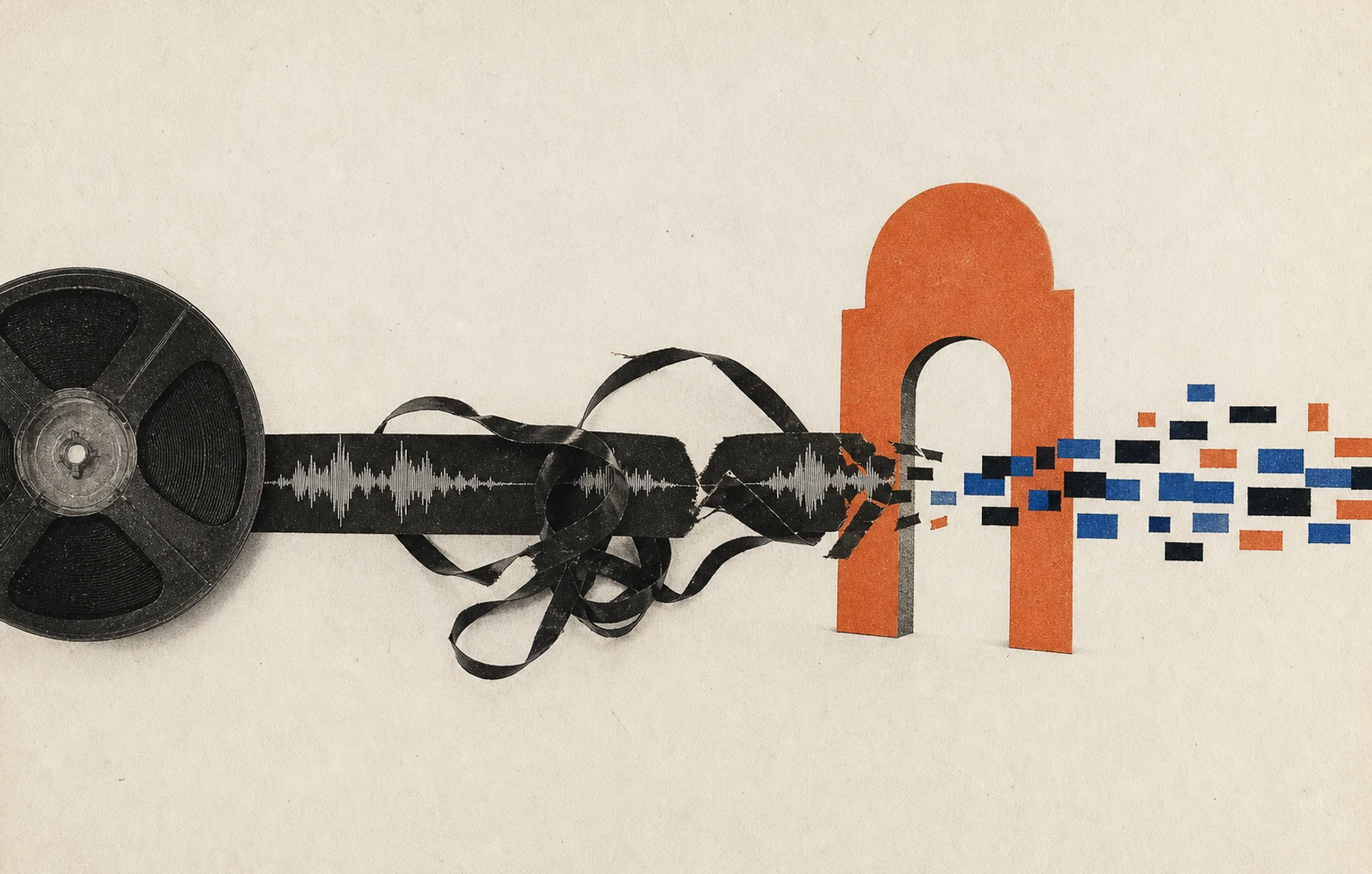
Permission joins the signal chain
A prompt goes in, a render comes back, and Udio’s latest infrastructure move sits farther down the signal chain: permission. On July 20, Music Business Worldwide reported that the generative-music company had tapped content-security provider BuyDRM to secure what the publication called an AI music “walled garden.” BuyDRM will provide multi-DRM support through its KeyOS MultiKey Service, covering Google Widevine, Apple FairPlay, and Microsoft PlayReady.
The announcement sounds like server-room business, the kind of plumbing usually left to product managers. Musicians should lean closer. Plumbing determines whether audio arrives as a durable file, a protected stream, or something between those states. It also determines how a session behaves when an account changes, a collaborator joins, or a project is reopened after months away.
The reported details available here do not specify Udio’s exact user-facing restrictions, export policy, or which media will sit behind DRM. That uncertainty matters. The meaningful story is the control layer now being installed, plus the choices Udio will make around it.
What multi-DRM can control
DRM wraps protected media in encryption and ties playback to authorization. A compatible app or browser requests a license and receives decryption material when the relevant conditions are met. Supporting Widevine, FairPlay, and PlayReady gives a provider coverage across major playback ecosystems rather than forcing one universal client.
A DRM system can enforce conditions involving devices, sessions, regions, or access windows. No such specific restriction has been announced for Udio in the material available here, so reading a particular limit into the agreement would outrun the facts. The architecture creates those options. Product policy decides whether and how they are used.
Codecs handle how audio is represented and compressed. DRM handles permission to decode protected media. It will not rescue a harsh hi-hat, widen a chorus, or restore a clipped master. Its creative effect appears indirectly through access. When authorization becomes part of playback, it joins the dependency list beside the plugin version, sample path, and operating system.
The two meanings of save
Studios survive on durable assets. A producer freezes a processor-heavy synth, prints a vocal effect, and consolidates stems because future recall is never guaranteed. The WAV file is boring by design. It can be copied to another drive and dropped into another DAW without asking its maker to wake a server.
Protected cloud media adds a second layer to the word save. One layer preserves the musical decision. The other preserves authorization to hear it. If a project points toward media that requires a live license, session recall can depend on the platform as well as the archive. If Udio provides unrestricted, locally downloadable audio for relevant creations, the practical effect could be much smaller. The BuyDRM announcement alone does not settle that distinction.
Creators therefore need product details that marketing copy often treats as footnotes: available export formats, stem access, offline behavior, collaborator access, and what remains usable after an account or plan changes. A dazzling generation means little to a mixer facing silent regions six months later. Creation speed gets the demo. A clean exit path gets the song through revisions.
The lock cannot supply provenance
DRM is designed to control an authorized playback path. It cannot establish where training material came from, whether a creator consented to a use, who deserves attribution, or whether a generated passage resembles an existing recording. Those questions require licensing records, provenance, policy, and sometimes adjudication. Encryption supplies none of them.
That distinction is especially important in AI music, where distribution control can look like a broad answer to rights anxiety. A locked container may carry carefully documented material. It may also carry material with unresolved origins. The lock describes the container. Its contents still need a history.
For rights holders and commercial partners, a controllable playback environment can offer useful levers. For musicians, the same environment raises practical questions about custody. Both concerns can coexist. Security should be evaluated alongside transparent licenses, visible provenance, usable exports, and clear retention rules. Otherwise the platform may become excellent at keeping audio inside while remaining vague about why the audio is there.
Run the boring recall test
Before committing a generated part to a client mix, a record, or a score, run a recall check while the idea is still cheap to replace:
- Map the outputs. Confirm which formats and resolutions can be downloaded, and whether a stem is a standalone file or a playback-only object.
- Archive permitted assets. Keep local copies of every output the service allows you to retain, plus dated project notes. Record the plan and usage terms shown at the time for your production log.
- Reopen deliberately. Put a duplicate session on another drive or machine, then check it before a deadline. Print permitted audio early enough to discover missing authorizations.
- Plan the collaborator handoff. Determine whether a co-writer, mixer, or editor needs an account, an internet connection, or a compatible player. Do not build a handoff around shared credentials.
- Separate sketch from delivery. Keep a cloud-generated idea in the sketch phase until its permitted exports, intended-use terms, and recall behavior match the project.
- Keep a rebuild route. Preserve prompts, arrangement notes, MIDI, chord information, and any human-recorded layers that could help reconstruct a missing asset.
These checks do not require panic or a boycott. They are familiar studio discipline applied to a newer dependency graph. Subscription plugins, cloud sample libraries, and remote sessions already reward careful printing and labeling. DRM adds authorization to that graph.
Do this before arranging around the perfect eight-bar accident. Once thirty automation lanes lean on it, portability stops being a policy topic and becomes an evening of repair.
Portability becomes a feature
Generative-music tools have competed on speed, with fewer clicks between a verbal idea and a finished-sounding render. The Udio-BuyDRM agreement points toward a quieter competition over custody. Services will have to show how protected media travels, how clearly its status is labeled, and how gracefully old work survives product changes.
Good design here would make the boundary obvious. A user should know when audio is a local asset, when it requires authorization, and what will happen before access conditions change. Stable exports, migration paths, backward compatibility, and plain retention rules are creative features because they preserve the ability to revise.
No particular user restriction can be inferred from the presence of DRM alone. What is visible is access control becoming part of Udio’s platform architecture. Watch export options alongside the generation spectacle. The decisive review may happen months after the first render, when a producer opens an old session, presses play, and learns whether every region still speaks.
Comments
No comments yet.