

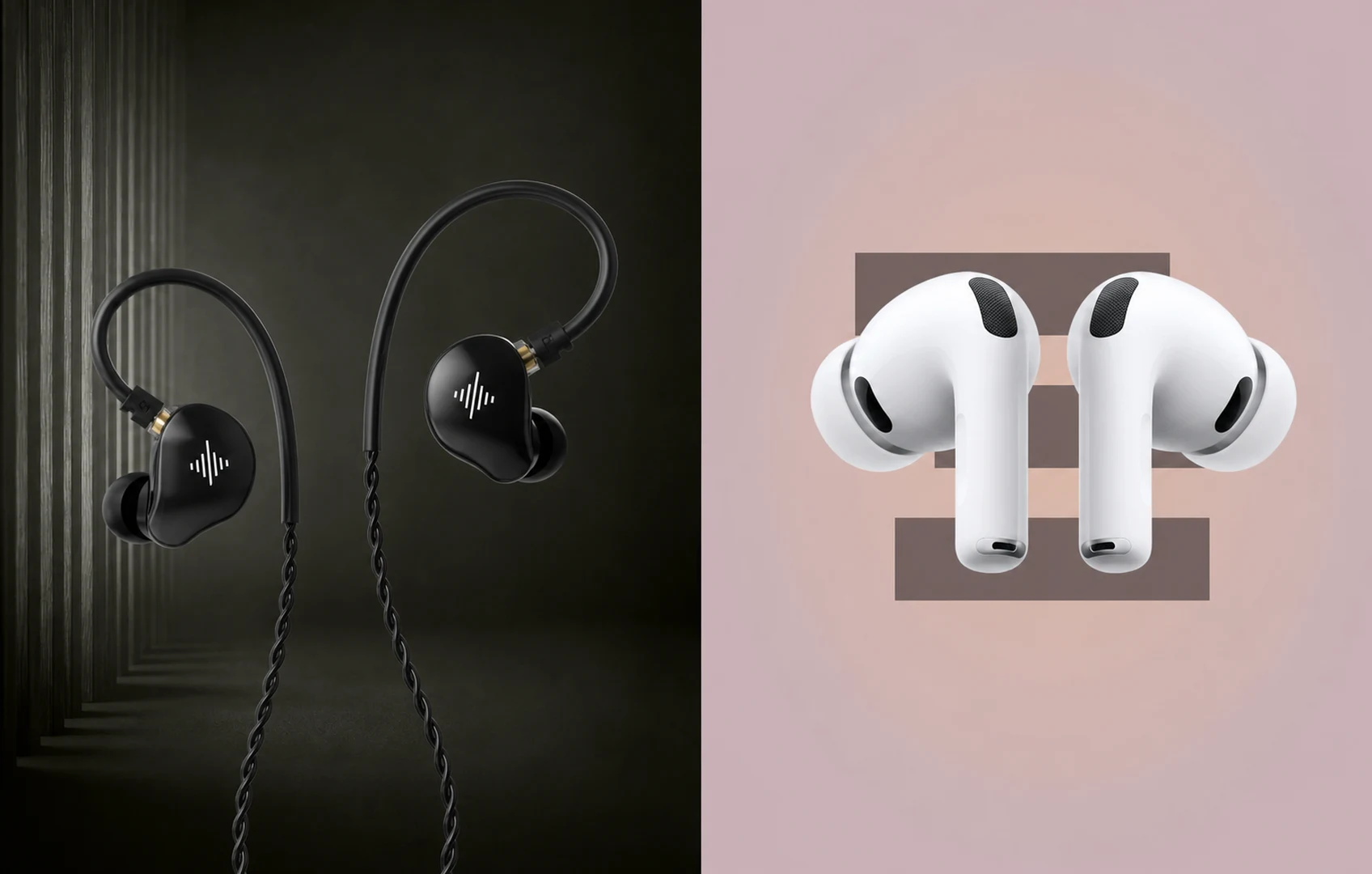
What Riding Actually Tests
A motorcycle might be the most unforgiving listening room imaginable.
At speed, turbulent air around the helmet can become louder than the motorcycle itself. The helmet presses against the outer ear. Controls disappear behind gloves and padding. A bud that feels perfect on the sofa can become a painful pressure point after twenty minutes, then get dragged out when the helmet comes off.
Wind exposure is not merely annoying. NIOSH recommends limiting occupational exposure to 85 dBA over eight hours, and its 3 dB exchange rate means every additional 3 dB halves the recommended exposure time. Motorcycle hearing guidance reports wind levels around 90 dB at approximately 40 mph, with considerably higher levels possible at highway speeds.
That changes what “good headphones” means.
In a quiet room, sound quality might be the whole test. On a motorcycle, the winner also needs to:
- Fit beneath a helmet without creating a pressure point
- Reduce outside noise before adding more volume
- Stay stable when the helmet goes on and comes off
- Keep voices and navigation intelligible
- Survive sweat, movement and daily use
- Work reliably without creating another charging ritual
Rider discussions repeatedly return to the same frustrations: bulky true-wireless buds pressing into the ears, earbuds being pulled loose during helmet removal, and speakers that need careful positioning before they become audible at speed.
The best motorcycle audio is not the loudest. It is the setup that lowers the noise floor, stays put beneath your helmet and lets you hear more without turning the volume into another hazard.
How We Ranked These
No single product is perfect for every rider. Someone organizing a group ride needs something very different from someone listening to music alone.
We ranked each option according to six factors:
- Helmet compatibility: Shell profile, cable routing and the likelihood of pressure
- Noise management: Passive isolation or certified attenuation, depending on the product
- At-speed intelligibility: How the design helps music, podcasts and spoken directions remain clear
- Long-ride comfort: Tip options, stability and pressure management
- Reliability: Battery life, pairing, replaceable parts and wired simplicity
- Purpose: Music, navigation, phone calls, hearing protection or rider-to-rider communication
We did not treat ANC marketing as equivalent to certified hearing protection. A manufacturer’s passive-isolation claim and an ANSI Noise Reduction Rating are not interchangeable, and real-world performance depends heavily on fit.
1. Soundbrenner Wave
Best Overall For Riders Who Care About Music

Wave uses an ear-hugging musician-style design, with both earpieces connected by a detachable cable.
Let us begin with the honest limitation.
Wave is not a motorcycle intercom. It does not provide Cardo-style rider communication, and Soundbrenner does not list an ANSI Noise Reduction Rating.
It wins this comparison for a different rider: someone who wants properly reproduced music and intelligible navigation inside a helmet, with substantial passive isolation, no earbud batteries and no separate true-wireless earpieces to retrieve from the pavement.
That combination is surprisingly difficult to find.
It tackles the fit problem differently
Many true-wireless earbuds protrude from the ear or include a stem. Once helmet padding presses against them, even a small amount of movement can create discomfort. Riders frequently report earbuds moving, hurting or nearly falling out when the helmet is removed.
Wave takes its design language from professional in-ear monitors.
The cable routes over the ear, while the body sits within the outer ear rather than hanging from a stem. Both earpieces remain physically connected. That does not guarantee a perfect fit beneath every helmet, but it gives the rider a more stable system and removes the anxiety of handling two tiny, independent earbuds next to the road.
Helmet shape and ear anatomy still matter. That is precisely why Soundbrenner includes 12 ear tips across foam and silicone options in three sizes.
Foam tips provide the strongest listed isolation. Silicone alternatives may work better for riders who feel pressure from expanding foam. You can choose the combination that seals without turning the helmet into a clamp.
It lowers the noise floor before adding music
Soundbrenner says Wave’s foam tips can provide up to 36 dB of passive isolation when correctly fitted. That is not an ANSI NRR, but it represents a fundamentally different approach from trying to overpower wind with louder speakers.
A proper in-ear seal reduces the amount of outside sound entering the ear before playback begins. The intended result is clearer music, podcasts and spoken navigation without forcing the drivers to compete against the full noise floor of the ride.
This is especially important on a motorcycle. Raising the volume until it dominates the wind is the wrong arms race.
Two drivers give the mix room to breathe
Most compact earbuds rely on a single driver to reproduce the entire frequency range.
Wave uses a dual-driver hybrid system in each ear:
- A 10 mm dual-magnet dynamic driver
- A precision-tuned balanced armature tweeter
The system is designed to give bass and upper detail their own drivers rather than forcing one tiny speaker to reproduce everything at once. Soundbrenner lists a 20 Hz to 20 kHz frequency response and 22-ohm impedance, making Wave easy to drive from common portable sources.
On a motorcycle, separation matters for more than audiophile bragging rights.
It helps spoken directions and vocals occupy their own space while bass retains weight and upper detail remains present. Instead of turning the entire mix into one louder wall of sound, Wave is built to preserve the information inside it.
No pairing. No earbud battery. No dead case.
Wave uses a detachable 3.5 mm cable and requires no battery.
There is nothing to pair before a ride, no left earbud mysteriously sitting at 12 percent, and no charging case to remember. Riders using USB-C devices can add Soundbrenner’s optional USB-C adapter.
The cable is replaceable, as are the ear tips. That matters in a product expected to endure repeated helmet changes, sweat and daily movement. Soundbrenner also lists Wave as sweat resistant and offers a 30-day money-back guarantee.
Why Wave finished first
- Best for: Solo riders who prioritize music, navigation clarity and wired reliability
- Why it works: An in-ear seal, over-ear cable routing, 12 tip options, connected earpieces and no protruding stem
- Why it sounds good: Dual-driver architecture separates bass and upper detail rather than asking one driver to do everything
- Why it is easier to own: No charging, no Bluetooth pairing and replaceable cables and tips
- Main tradeoff: It is wired, it does not provide rider-to-rider communication, helmet fit remains individual and its isolation claim is not an ANSI NRR
Fit it before the first ride
Choose the smallest tip that creates a complete seal. Route the cable inside your jacket, put the helmet on while stationary and leave it in place for at least fifteen minutes.
Turn your head in both directions. Check for localized pressure. Remove the helmet slowly.
No earphone should create pain, numbness or sharp pressure. Soundbrenner’s 30-day return period matters here because no manufacturer can guarantee compatibility with every combination of ear and helmet.
At publication, Soundbrenner lists Wave at Sale price, reduced from its regular Original price price. Pricing can change.
2. Cardo Spirit HD
Best For Calls And Two-Rider Communication
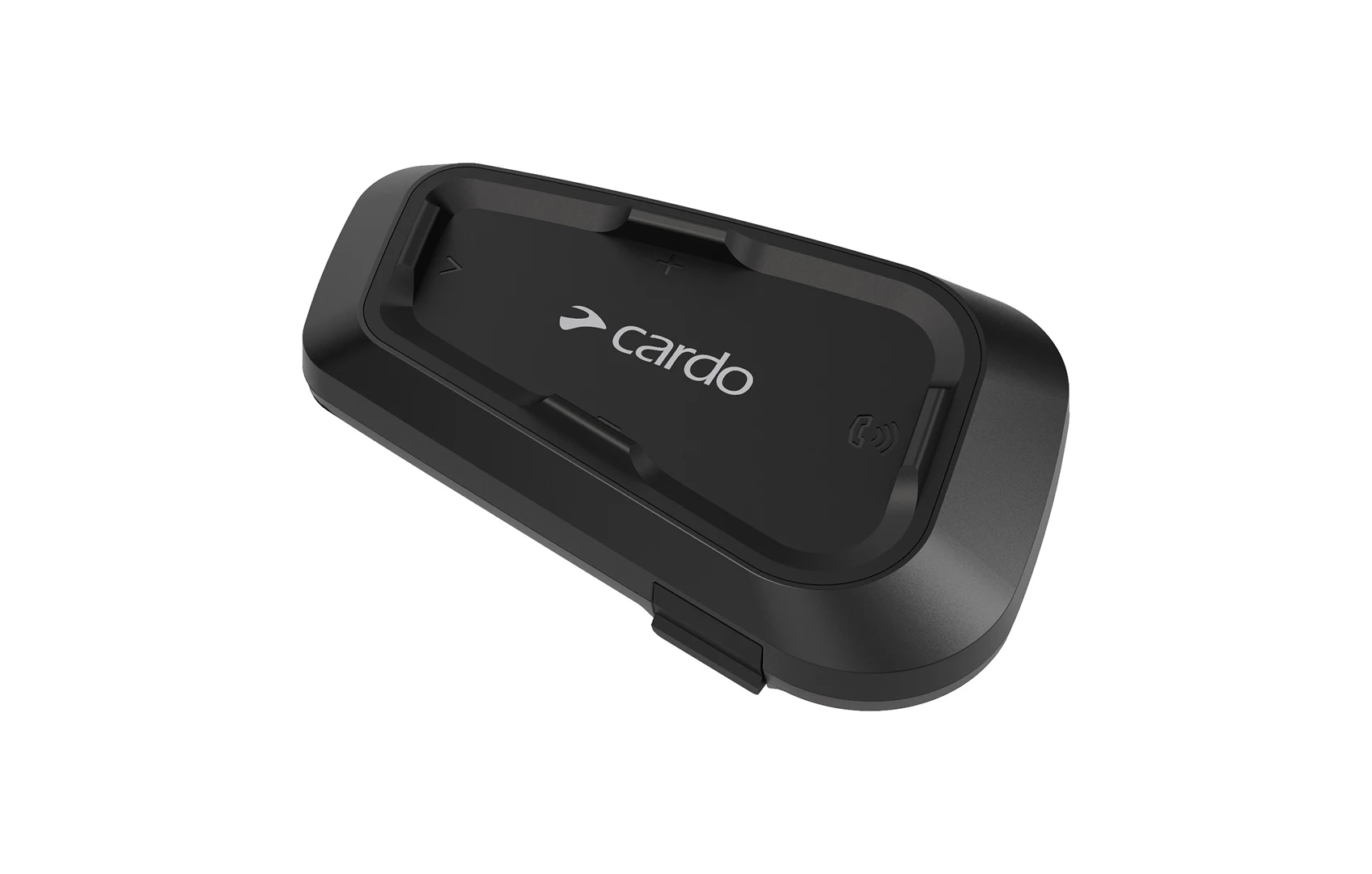
Cardo is a motorcycle communication system first and a music system second.
For riders who need to speak with a passenger or another rider, Cardo Spirit HD is the more appropriate tool.
It is built specifically for helmets and combines Bluetooth connectivity, two-rider intercom and 40 mm speakers. Cardo lists up to 13 hours of talk time and a current retail price of $162.
Its greatest strength is convenience. The speakers remain installed inside the helmet, calls and directions are integrated, and there is nothing inside the ear canal.
The compromise is sound isolation.
Helmet speakers do not form an in-ear seal. Their apparent volume and clarity depend heavily on how closely they align with the rider’s ears, and many riders still use earplugs to reduce wind noise. Rider feedback frequently describes dramatic improvements or problems caused by moving the speakers only a small distance inside the helmet.
- Best for: Calls, navigation prompts and communication with one other rider
- Why it works: Purpose-built helmet controls, integrated microphone and no in-ear pressure
- Why it ranks second: It is the better communication tool, but not the strongest music-first option
- Main tradeoff: No in-ear seal, and speaker placement can make or break the experience
3. Plugfones Liberate 2.0
Best Certified Earplug-Headphone Value
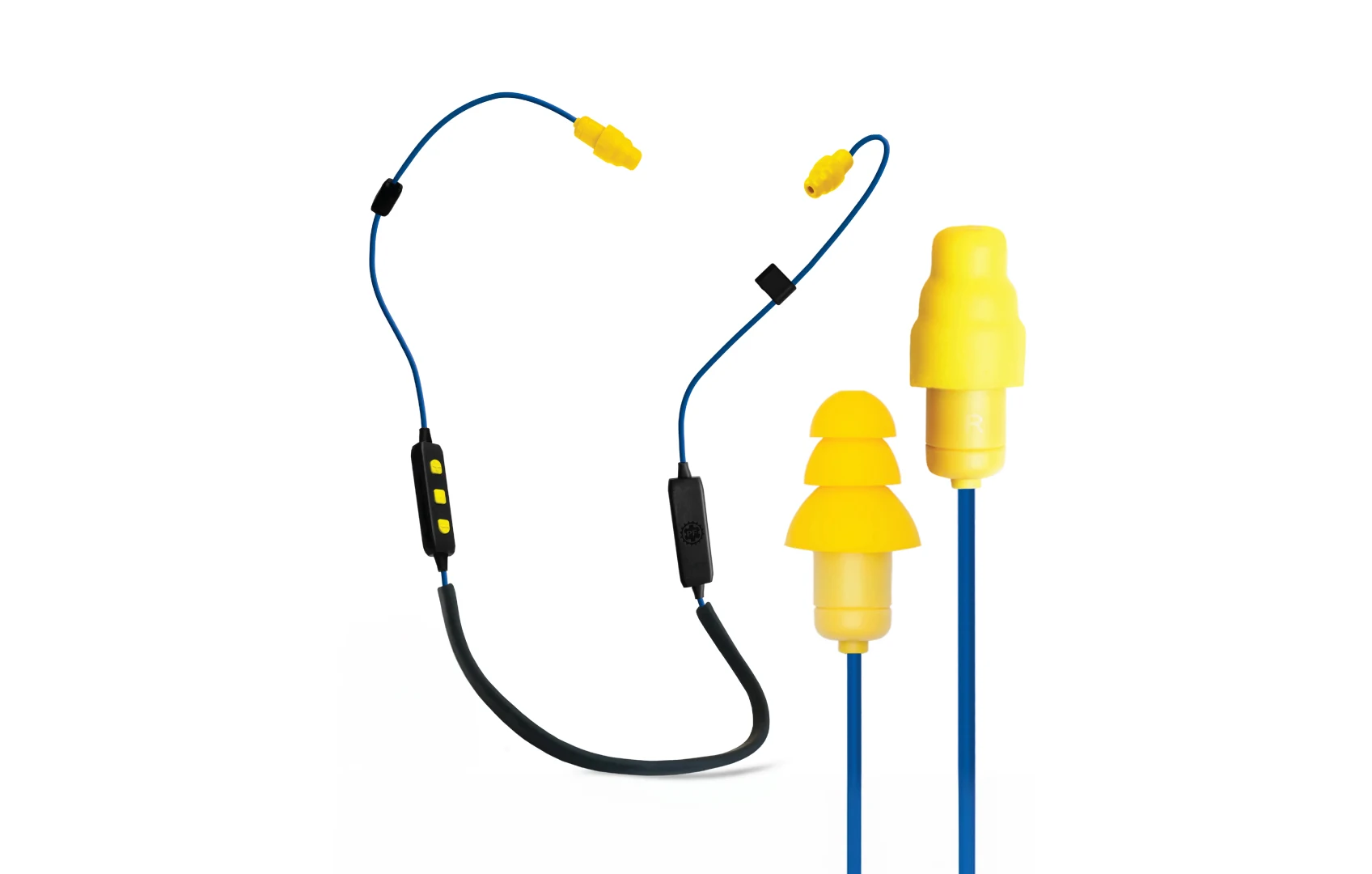
Plugfones combines Bluetooth audio with tips designed and rated as hearing protection.
Plugfones has become a recurring motorcycle recommendation for a simple reason: it combines an earplug and an earphone in one relatively affordable product.
The Liberate 2.0 carries a 29 dB NRR with foam tips and a 27 dB NRR with silicone tips. It also provides Bluetooth 5.0, a noise-isolating microphone and up to 12 hours of battery life. Plugfones says a ten-minute charge provides approximately two hours of use.
This is one of the most practical options for riders whose first requirement is certified attenuation.
Its limitation is refinement. Plugfones is designed as protective equipment with audio built in. The neckband, control module and battery add more hardware, and the sound system is aimed more at reliable listening than premium separation and detail.
- Best for: Riders who put certified attenuation and value above premium sound
- Why it works: Rated foam and silicone tips combine hearing protection with Bluetooth audio
- Why it ranks third: It solves the noise problem directly, but gives up some sound quality and wired simplicity
- Main tradeoff: Battery charging, external control hardware and more utilitarian sound
4. Shure SE215
Best Budget Wired IEM
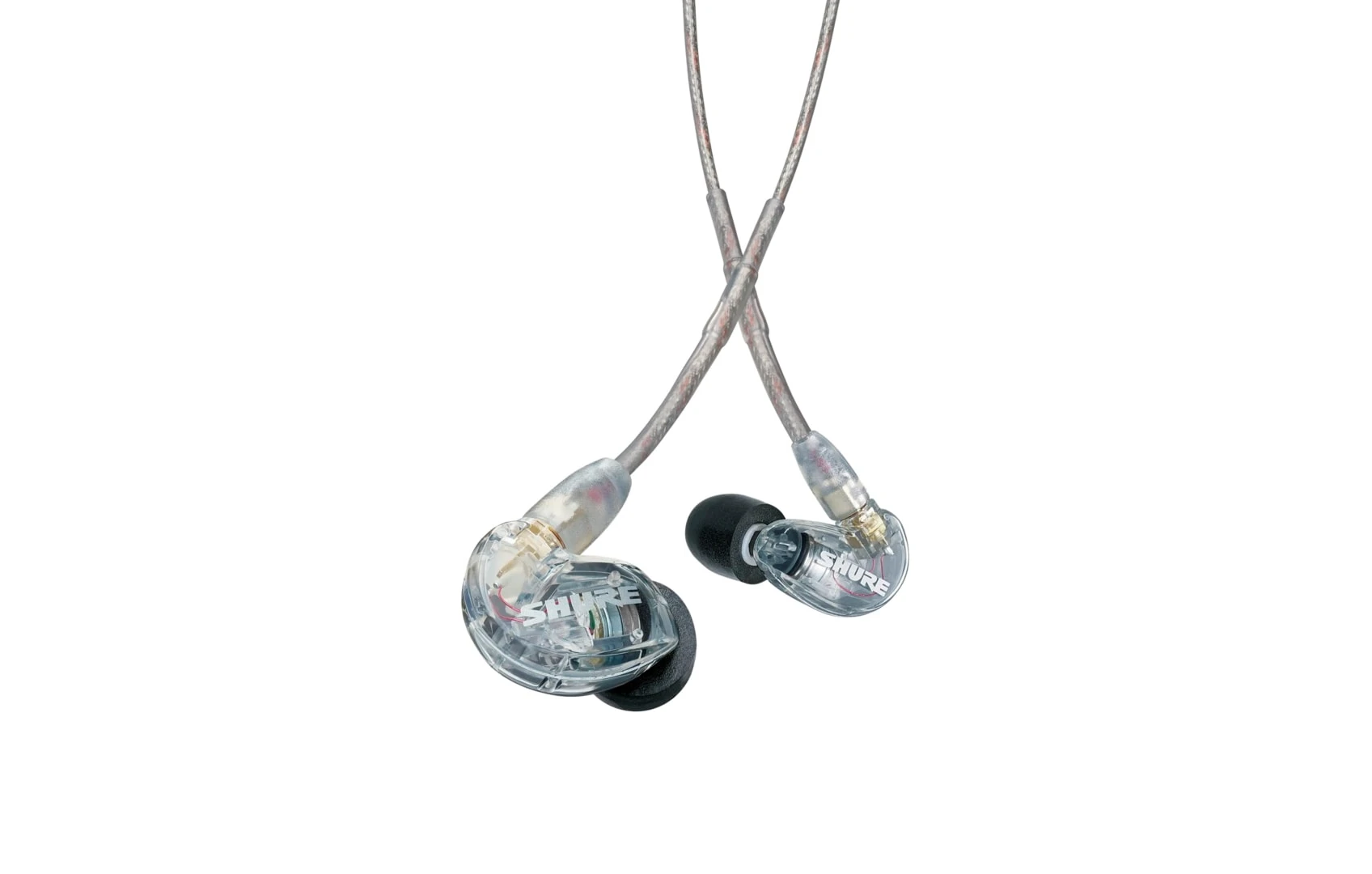
The SE215 has a compact shell, over-ear cable and a long history as an entry-level musician’s IEM.
The Shure SE215 is one of the most frequently recommended traditional IEMs among riders.
Its compact, low-profile shape sits close to the ear, the cable routes over the top, and Shure claims up to 37 dB of outside-noise reduction with a proper seal. It uses a detachable MMCX cable and a single dynamic driver.
Riders often choose it because it is straightforward: no battery, no separate wireless buds and no large control housing. Motorcycle discussions regularly mention the SE215 as an improvement over helmet speakers for music and navigation.
It is the clearest lower-cost alternative to Wave.
Wave ranks higher because it provides a larger tip kit, a dual-driver hybrid system and greater emphasis on full-range separation. The SE215 counters with a smaller, simpler shell that may suit particularly tight helmets.
- Best for: Riders who want a proven, relatively affordable wired IEM
- Why it works: Compact shell, detachable over-ear cable and strong passive isolation claim
- Why it ranks fourth: Excellent fundamentals, but a simpler single-driver sound system
- Main tradeoff: Less resolution, separation and fit flexibility than Wave
5. Elgin Rebel
Best True-Wireless Hearing Protection
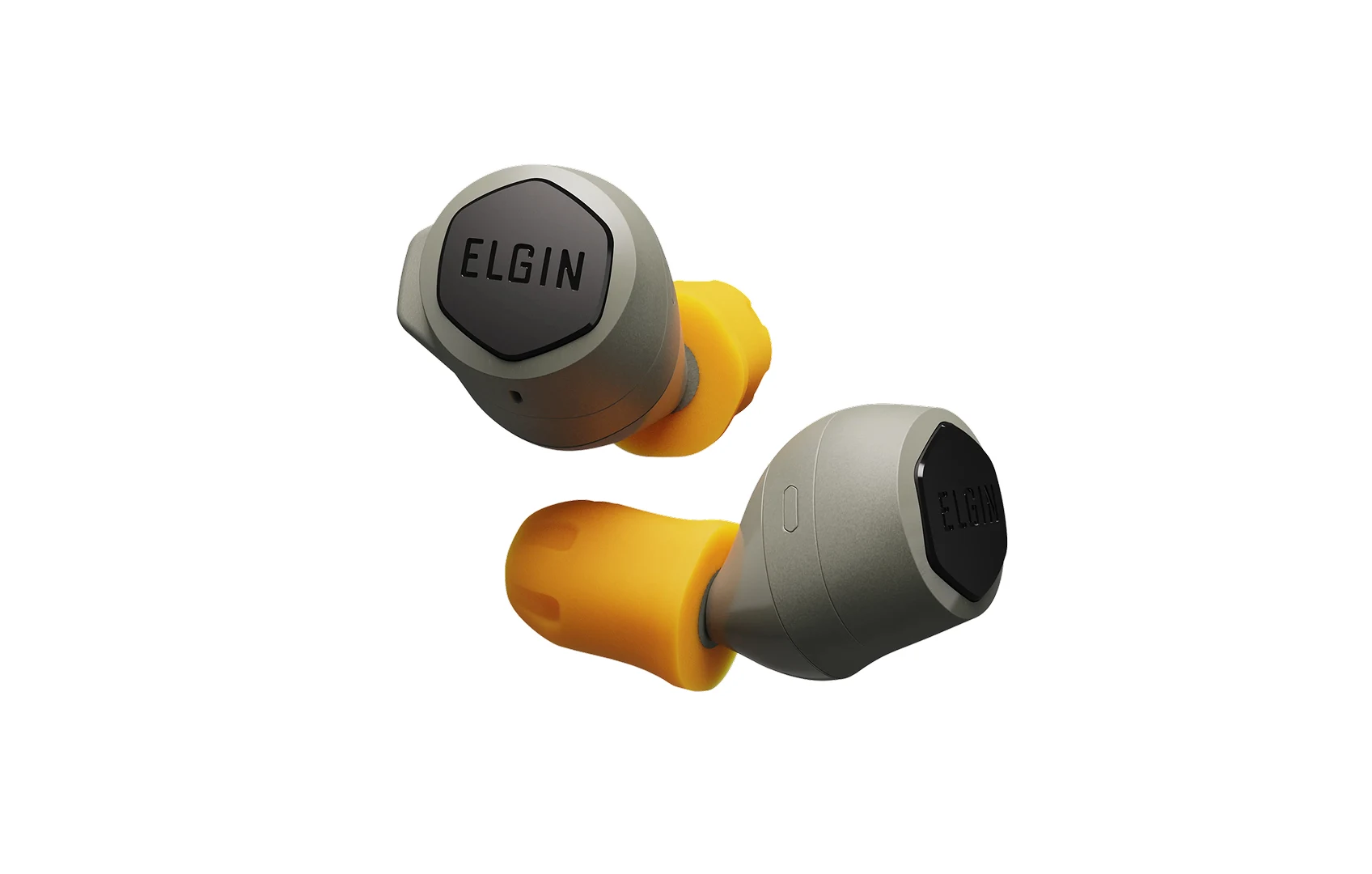
The Rebel combines a true-wireless design with an ANSI-rated Noise Reduction Rating.
The Elgin Rebel is designed for buyers who want the convenience of true-wireless earbuds without giving up a formal attenuation rating.
Elgin lists a 31 dB NRR, more than 12 hours of battery life in the earbuds and up to 50 hours with the charging case. It uses Bluetooth 5.3 and is marketed for demanding, noisy environments, including motorcycle use.
That makes it meaningfully different from ordinary consumer earbuds. The Rebel treats noise reduction as part of the product’s intended job rather than relying on ANC alone.
The question is helmet fit.
Any self-contained true-wireless shell must occupy enough space to hold its battery, radio and controls. Depending on the rider and helmet, that can introduce pressure or movement. There is also no cable connecting the two buds if one comes loose during helmet removal.
- Best for: Riders who want true-wireless convenience and a certified NRR
- Why it works: Formal attenuation rating, long battery life and no external neckband
- Why it ranks fifth: Strong protection credentials, but a less predictable helmet fit than a wired IEM
- Main tradeoff: Battery dependence and two completely separate earpieces
6. Etymotic ER3XR
Best For Deep-Insertion Isolation
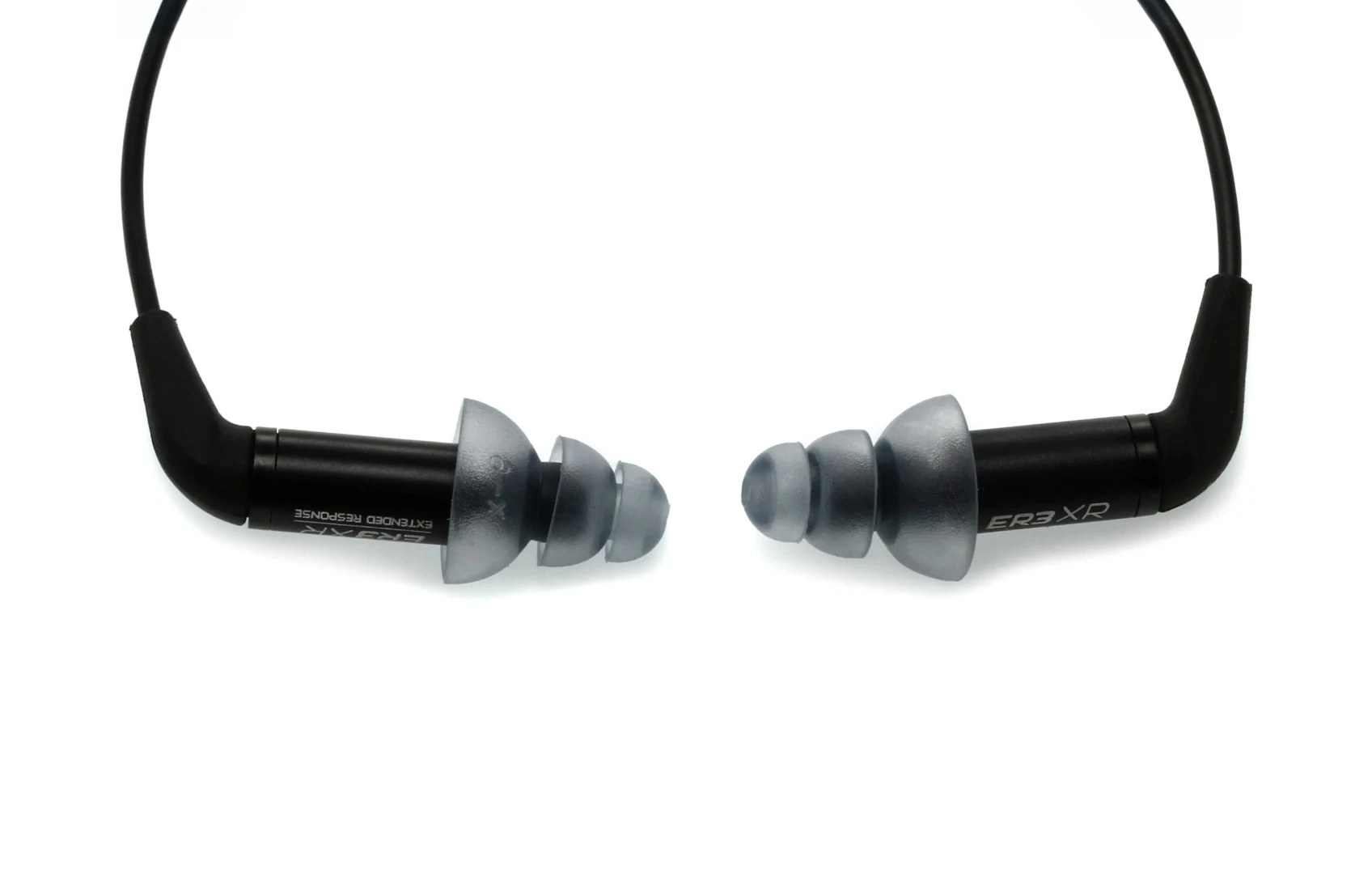
Etymotic’s narrow earpieces use a deeper seal than most conventional earbuds.
Etymotic has built its reputation around deep insertion and strong passive isolation.
The ER3XR uses a single balanced-armature driver, a detachable cable and a narrow earpiece designed to sit deeper in the ear canal. Etymotic lists approximately 35 dB of isolation with its silicone tips and up to 42 dB with foam.
For the right person, this can produce an excellent seal with very little hardware pressing against the outer ear.
The fit is polarizing.
Some listeners love the security and isolation. Others dislike the sensation of deep insertion, particularly when a helmet is being pulled on or removed. It is a product that should be tried carefully while stationary before it goes anywhere near a moving motorcycle.
- Best for: Riders who already know they are comfortable with deep-insertion earphones
- Why it works: Narrow outer profile and very strong manufacturer-listed passive isolation
- Why it ranks sixth: Potentially excellent under a helmet, but the fit is less universally comfortable
- Main tradeoff: Deep insertion is an immediate deal-breaker for some listeners
7. Apple AirPods Pro 3
Best Everyday Earbuds That Might Also Fit Your Helmet
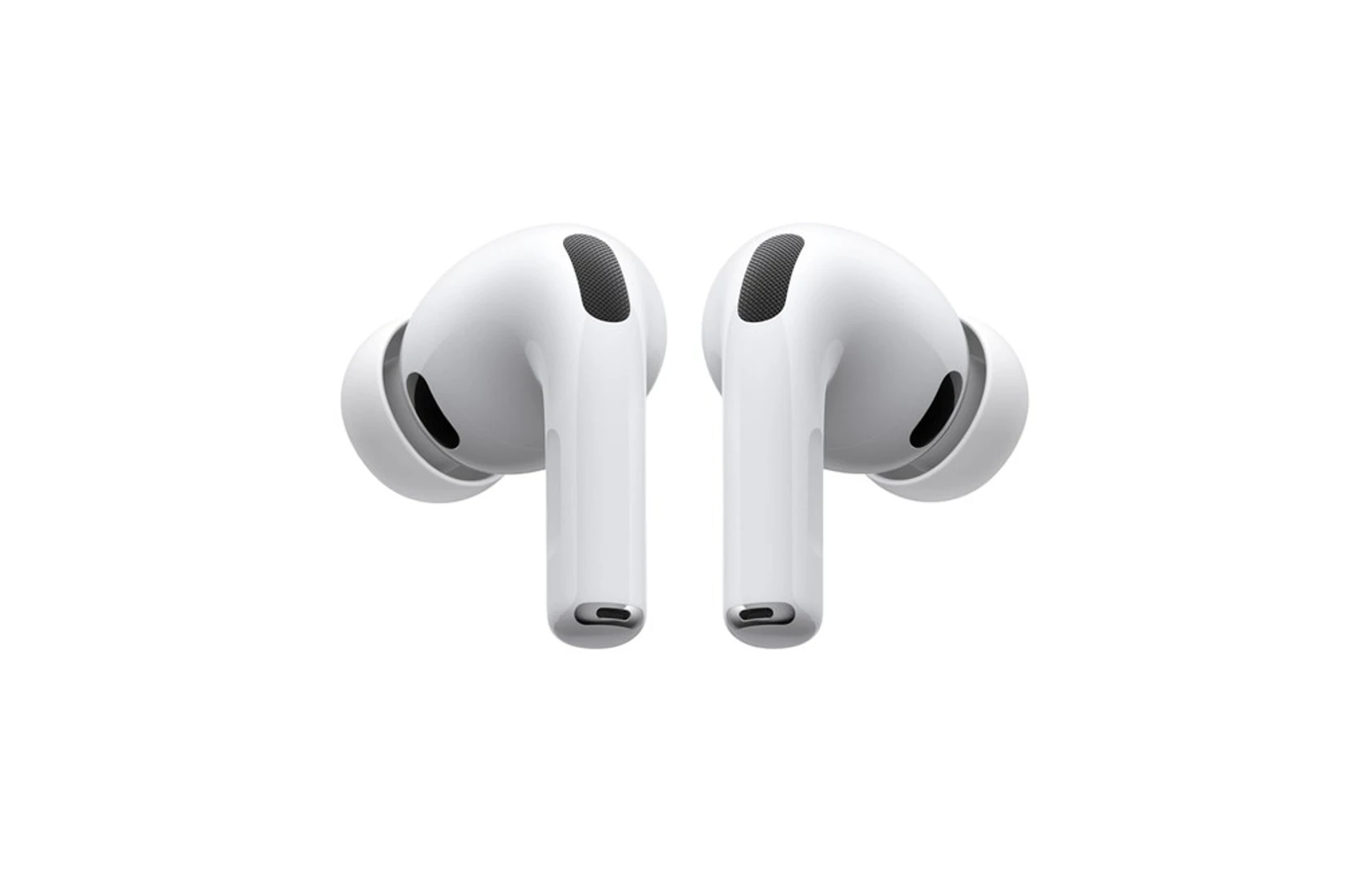
AirPods remain exceptionally convenient away from the motorcycle, but helmet compatibility is unpredictable.
AirPods Pro 3 offers strong active noise cancellation, transparency features and nearly effortless integration with Apple devices. For commuting, flights, offices and general daily use, it is an exceptionally complete consumer earbud.
That does not automatically make it a motorcycle earbud.
AirPods still need to accommodate a battery, microphones, electronics and a stem. Rider reports frequently describe AirPods-style buds moving, hurting or nearly being pulled from the ear as a tight helmet comes off.
ANC can make a ride sound quieter, but AirPods Pro 3 is not marketed as certified motorcycle hearing protection. Its fit also varies dramatically between helmets.
For a rider who already owns AirPods and has tested them successfully beneath a particular helmet, they may be perfectly adequate. As a product purchased specifically for motorcycling, the other options on this list solve the physical use case more deliberately.
- Best for: Apple users who want one earbud for daily life and occasional riding
- Why it works: Excellent convenience, strong ANC and familiar Apple integration
- Why it ranks seventh: Its greatest strengths are not motorcycle-specific
- Main tradeoff: Unpredictable helmet pressure, battery dependence and no certified NRR
The Short Verdict
Choose based on the job you actually need done:
- For the best music-first experience: Soundbrenner Wave
- For rider-to-rider communication: Cardo Spirit HD
- For affordable certified attenuation: Plugfones Liberate 2.0
- For a compact budget wired IEM: Shure SE215
- For certified true-wireless protection: Elgin Rebel
- For deep-insertion passive isolation: Etymotic ER3XR
- For Apple convenience beyond the motorcycle: AirPods Pro 3
Wave comes out on top because it addresses the motorcycle’s physical problems before trying to impress you with wireless features.
It gives riders multiple ways to create a proper seal. Its cable sits over the ear and keeps both earpieces connected. It never needs charging. Its cable and tips can be replaced. Most importantly, its dual-driver architecture is built to preserve bass, voices and detail when outside noise is trying to flatten everything into one indistinct wall.
Cardo is still the correct choice when conversation matters more than music.
Plugfones or Elgin is the correct choice when an ANSI Noise Reduction Rating is the first requirement.
But for the solo rider who wants the ride to have a real soundtrack, not merely some faint audio fighting against the wind, Wave is the most complete option here.
No charging. No pairing. 12 included ear tips. Detachable cable. Two drivers in each ear.
Ride And Fit Safety
Motorcycle headphone laws vary by jurisdiction. Check the rules where you ride before using audio in one or both ears. California, for example, generally restricts covering or inserting earphones in both ears while operating a motor vehicle, subject to stated exceptions.
Use the lowest practical volume, preserve awareness of traffic and emergency signals, and never adjust your audio while moving. Stop using any earphone that causes pain, numbness or persistent pressure.
Wave’s listed passive-isolation figure is not an ANSI Noise Reduction Rating. Where certified hearing protection is required, use equipment carrying the appropriate certification.
Comments
No comments yet.