

 Written by Nico Delray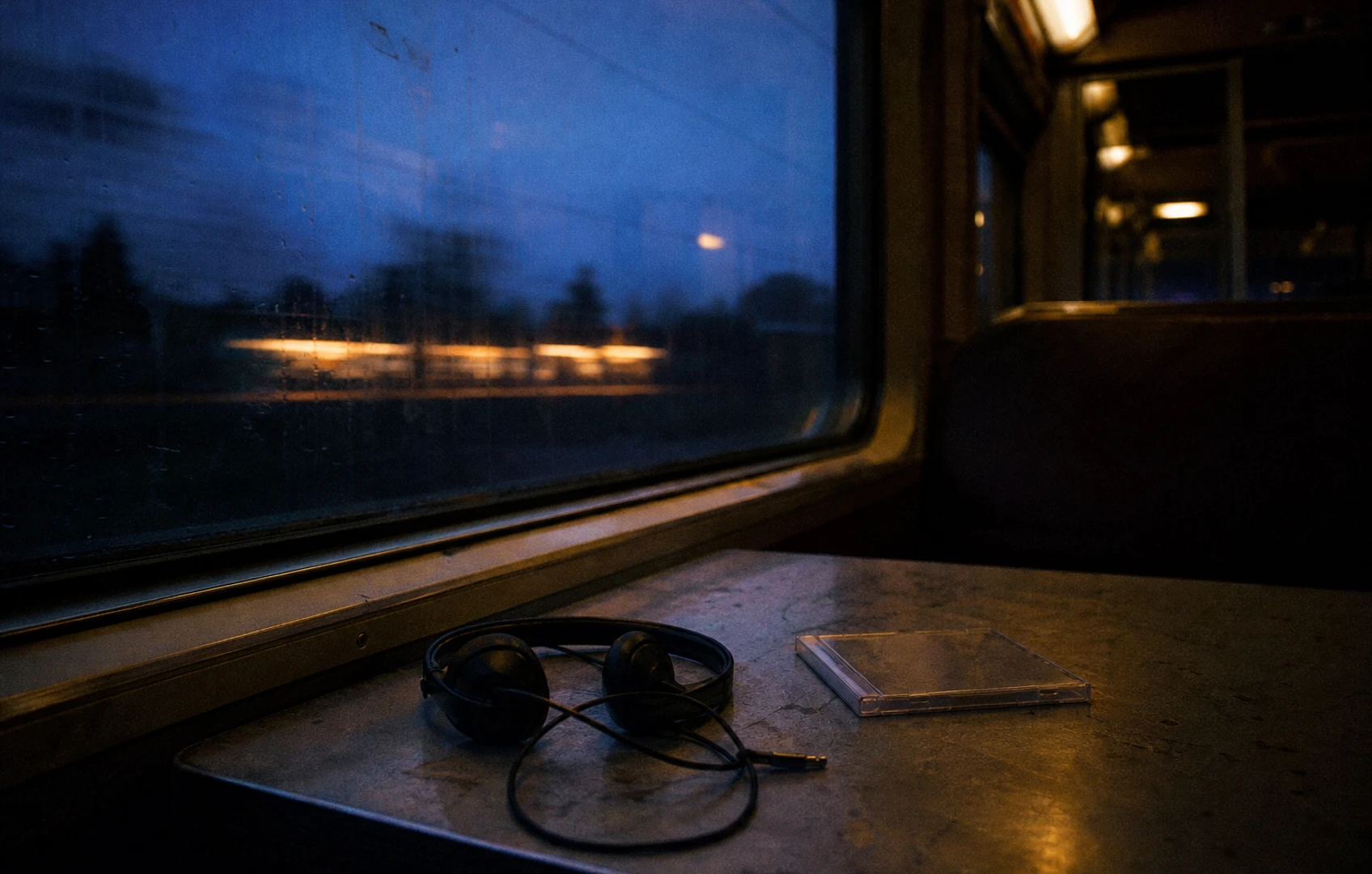
The album-sized gap
On July 17, 2026, NME reported a poll finding that 41 per cent of people in the UK had not listened to a full album during the previous year. The number arrived alongside a National Rail campaign encouraging music fans to step outside their usual choices. Polls depend on sampling and wording, so the figure works better as a prompt than as a census of national attention.
Still, the route to an unfinished record is painfully easy to map. A message arrives. The train reaches your stop. The app presents another song with a brighter thumbnail. An album that was carefully sequenced becomes three tracks and a vague intention to return.
Much of the trouble sits in the setup. An album asks for a defined patch of time, while the device playing it also holds every available interruption. Musicians know this kind of failure. A loose power lead can flatten a pedalboard even when every box on it works perfectly.
A running order does real work
Every running order makes arrangement decisions at a larger scale. The opener sets the room. Track two confirms or complicates that promise. A quieter cut can reset the ears before the loud one hits, and an odd little interlude may turn out to be the hinge.
Set order is musical work onstage. Stack every peak at the front and the back half drags. Leave no breath between heavy songs and they can start to feel smaller. Albums use the same mechanics, only the room might be a bedroom, a car, or a pair of headphones.
Even the song you would never save can have a job. It may change the temperature, reveal a lyric from another angle, or make the closing track feel earned. For players, those relationships are practical lessons in restraint. Isolated, a dry guitar may seem small. After two dense tracks, the same sound can pull the listener right up to the grille cloth. That effect disappears when the neighboring songs never get their turn.
The exit is always glowing
The phone makes leaving frictionless. Search, queues, recommendations, messages, and the rest of the internet sit within a thumb's reach. That freedom is useful. Shuffle can animate a kitchen, and a single track can rescue five dead minutes at a bus stop. The problem appears when every listening mode defaults to the same restless behavior.
Blaming attention spans turns ordinary scheduling into a character flaw. Work, caring, travel, and plain fatigue break time into scraps. Album listening fares better when it has an edge around it.
Physical formats draw that edge in cardboard and plastic. Concentration does not belong to any format. A downloaded album with shuffle off can make just as firm a boundary. If a record gives you nothing, stop it. Give the sequence a fair audition before the queue becomes a committee meeting.
Build an album-sized lane
Choose the record first, then reserve roughly its listed runtime. Clear any old queue. Turn off shuffle and autoplay. Silence nonessential alerts. Put the phone face down once the first track begins. Four small moves hide the obvious glowing exit signs.
Use the speaker or headphones you already know. The ritual does not demand a new turntable, a special cable, or a chair positioned like a mastering suite. Comfort and reliable playback are enough.
A rail trip can provide a natural frame because the route has a beginning and an end. That is the useful piece inside the campaign premise. Download the record before leaving if coverage may be patchy, and keep enough awareness for announcements and your surroundings. If your stop arrives before the closer, pause at a track boundary and resume in sequence.
At home, pair the album with a simple task if sitting still sends your finger toward the screen. Folding laundry, cleaning strings, or sorting patch cables leaves the running order intact. Avoid the inbox. Put one album in the same weekly slot for a month, then see which records ask for a second pass.
Start through a familiar doorway
A small step beyond familiar territory usually beats a blind leap into a famously demanding classic. Use one known element as the doorway: a single you already like, a producer credit, a shared player, or an instrument you want to hear in a different setting.
A simple three-rung discovery plan keeps the exercise moving:
- Start with a familiar artist and an album you have missed.
- Move to an artist connected by a collaborator, a local scene, or a label.
- Keep one wildcard for a record chosen by its era, instrumentation, or a friend's brief description.
Taste can be rude here. A glossy pop album, a grimy punk record, a long ambient drift, and a game soundtrack all count if you let the chosen sequence run. Prestige is poor fuel for attention. If track three feels like unpaid homework, remove the record from next week's queue and try another door.
Listen once before you inspect
Players have an occupational habit of taking a song apart before it has finished introducing itself. The snare gets judged, the vocal chain gets guessed, and somebody starts pricing a pedal in their head. Save that inspection for a second pass.
On the first run, follow energy and emotion. Notice where your attention rises, where it sags, and which transition changes the room. Keep your hands off the notes app. The sequence should get one chance to work at full scale.
On a return listen, choose one thread. Follow the drums through every entrance and dropout. Track the length of the bass notes. Hear how much gain the guitar actually uses, or when a doubled vocal becomes a single exposed line. The useful detail is often the moment an element vanishes.
This can interrupt the gear-shopping reflex. A huge chorus sometimes owes its size to a sparse verse, a wider harmony, or one cymbal arriving late. No new box will make those arrangement choices. For your own material, mark the first energy dip, the barest texture, and the point where the ending becomes inevitable. Then borrow the structural move rather than chasing the exact tone.
Let the final note clear
When the closer ends, keep autoplay from firing the next recommendation into the silence. Leave half a minute. Name the moment you remember and the track you would replay. If nothing stayed with you, that is useful information too.
The reported 41 per cent needs no funeral march. It is enough reason to inspect the listening rig around the music: the queue, the alerts, the missing boundary, the habit of leaving at track four.
On the next trip with enough open time, choose one record, clear the queue, and let the running order reach its destination. When the final chord fades, leave the headphones on for a moment before your thumb goes looking for something else.
Comments
No comments yet.