

 Written by Levi Torres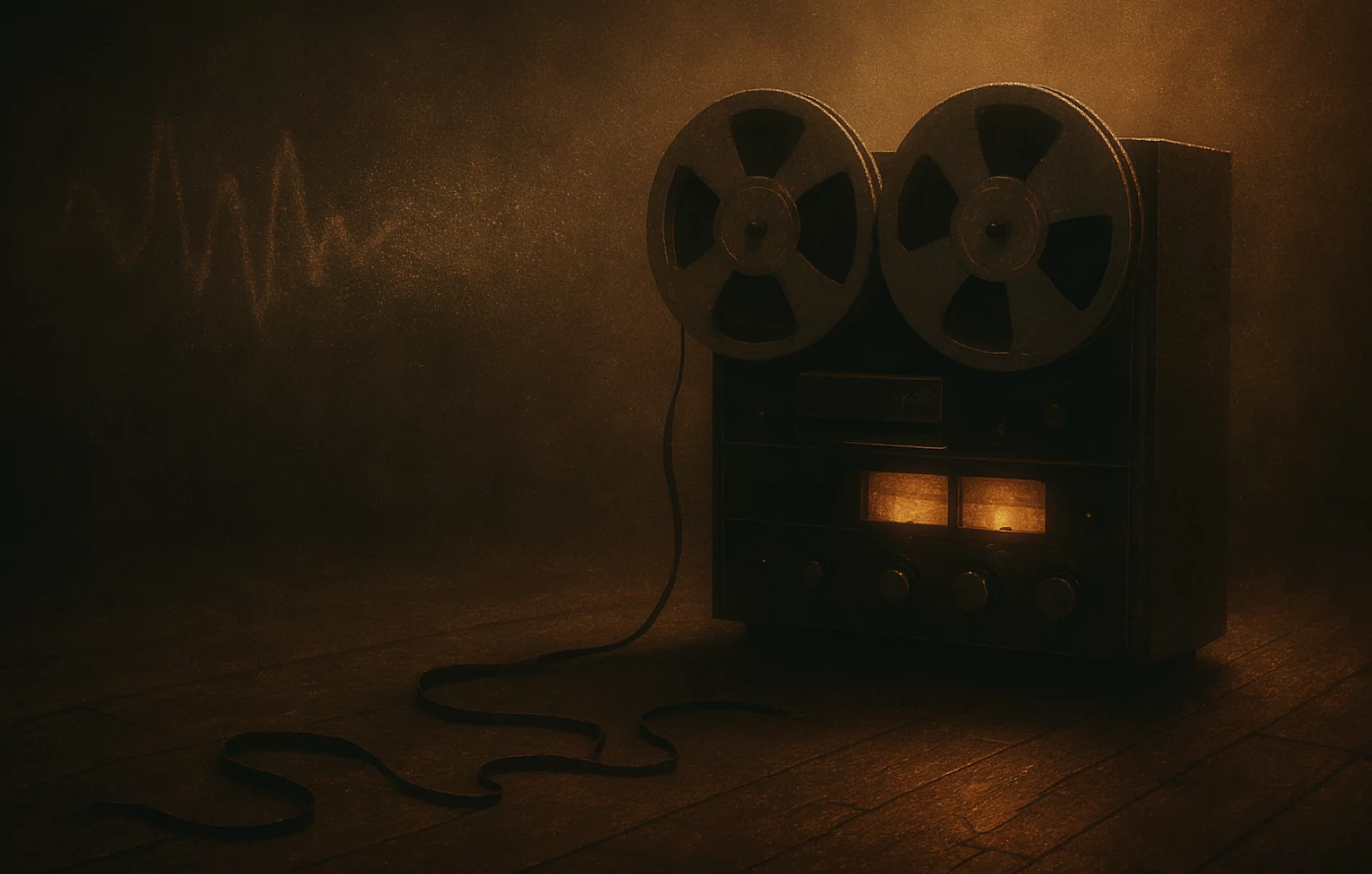
Once Ubiquitous, Now Extinct
There was a time — not that long ago — when every pop song seemed to drift into the ether. A final chorus looped. The instruments softened. The singer repeated the hook until they vanished into the static. That was the fade-out — not a full stop, not a conclusion, just a gentle disappearing act. You didn’t leave the song. The song left you.
Now? Try finding a song released in the last five years that fades out. You’ll be scrolling for a while.
The fade-out didn’t just die. It was erased — phased out like a bad plugin, memory-holed by a generation raised on hard cuts, autoplay queues, and 15-second dopamine hits. But its absence says more than we think. Because how we end songs tells us a lot about how we experience emotion, how we process time, and how culture treats closure.
The Golden Age of Drifting Away
From the 1960s through the early 2000s, fade-outs were everywhere — a sonic curtain call. The Beatles ("Hey Jude"), Bowie ("Heroes"), Fleetwood Mac ("Dreams"), and Whitney Houston ("I Wanna Dance With Somebody") all leaned on them. Even The Clash, known for punk’s punch, let “Train in Vain” slide off the rails rather than crash.
There was a ritualistic comfort to it — a sense that the music didn’t truly end. It just kept going, somewhere out of reach. You could walk away from the stereo, and the song was still happening. Like it had a life of its own.
For radio DJs, fade-outs were practical — easier transitions, no jarring silence. For artists, it offered a way to soften emotional impact, or let a groove ride out into myth. It was cinematic. Romantic. Messy in a way that felt human.
Why We Killed the Fade-Out
So what happened?
Streaming happened. More specifically, algorithmic structuring, track-based monetization, and shrinking attention spans. Today, a song’s most important real estate is its opening 10 seconds — the hook, the grab, the part that keeps you from swiping. Endings are an afterthought. Spotify doesn’t reward fade-outs. TikTok doesn’t either.
Now, songs end like tweets. Abrupt. Tidy. Performed resolution. You get one final chorus. Maybe a cinematic swell. But rarely the drift. Artists wrap things up fast — they know listeners are already halfway to skipping.
And when you’re not making albums, just isolated tracks to slot into algorithmically generated playlists, who needs the illusion of continuity? There’s no next track on your album. There’s just whatever Spotify throws next.
The Emotional Cost of Cutting Clean
But this isn’t just a technical shift. It’s a psychological one.
The fade-out was a space for ambiguity — songs could feel unresolved, open-ended, emotionally complex. You weren’t told how to feel. You were left in the feeling.
Now, we demand resolution. Final lines land like closing arguments. Production wraps everything up with a bow. We’re allergic to unease — especially in pop. And when the rare song does fade, it often feels nostalgic, retro, or ironic. It’s no longer a tool — it’s a reference.
There’s also this: fade-outs imply the song — and by extension, the story — keeps going without you. In today’s culture of self-centered consumption, that’s almost offensive. The audience is the main character now. Songs don’t get to wander off. They answer to the listener, not the artist.
Who’s Still Fading?
There are holdouts. Ambient artists, obviously. Jazz. Shoegaze and post-rock use the fade like a weapon — letting sound dissolve like breath on glass. Radiohead’s “True Love Waits” (live versions) still drifts into nothing. And some experimental pop — like Caroline Polachek or Sufjan Stevens — uses fade for dramatic or emotional subversion.
But mostly, it’s gone. Not because we outgrew it. But because we stopped having the patience — or the infrastructure — for it.
Bring Back the Drift
The death of the fade-out isn’t a tragedy. But it is a symptom.
It reflects our discomfort with ambiguity. Our obsession with polish. Our addiction to pace. And maybe, our deep fear that if something keeps going without us, we’ll be forgotten.
Music doesn’t need to tie itself up neatly. Let it bleed out. Let it vanish slowly. Let it leave us before we’re ready.
Because not everything has to end clean.
Comments
No comments yet.