

 Written by Silas Reed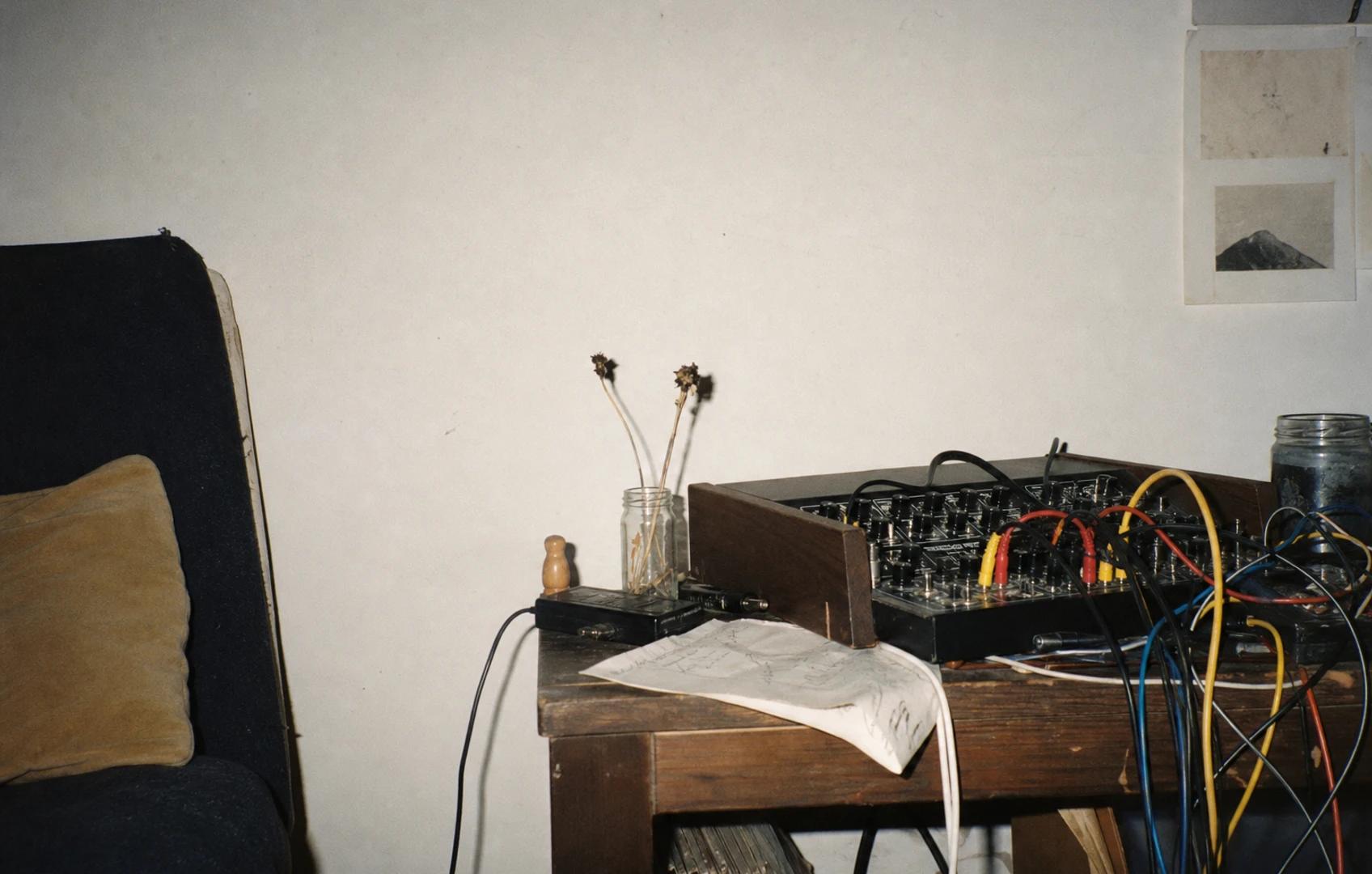
The old machine enters the new fight
MusicRadar’s August 24 report places Dr. Dre’s comments inside the loudest recurring argument in record-making: whether a new machine expands authorship or drains it. His challenge to opponents of AI in music is blunt: “You sound like the person that would have been against the drum machine when it came out. Or synthesizers.” Jimmy Iovine, according to the same report, points to AI companies’ poor communication.
The comparison carries force because electronic music is full of devices that entered under suspicion and left as ordinary studio furniture. A row of programmed hits can hold human swing. A voltage-shaped tone can carry grief. Musicians turn rigid systems into personal grammar by learning where they bend, clip, lag, and misbehave.
That history should cool easy claims that automation automatically erases creativity. It cannot settle the current dispute. Calling every technology a tool hides the technical and economic arrangements around it, and those arrangements determine who gets agency.
Why the analogy has voltage
A drum machine reallocates decisions. In a programmed rhythm workflow, performance moves toward placement, velocity, sound choice, swing, mute states, and arrangement. A synthesizer makes pitch only one part of the gesture. Envelope shape, modulation, filtering, and control movement become part of the playing. These choices can happen before the red light, during a take, or several passes later in an automation lane.
Generative systems can produce a similar relocation of effort, depending on their design. A musician may supply original audio, describe a transformation, audition several results, then cut the useful half-second into a new context. Selection is real work. Anyone who has reached headphone fatigue while comparing nearly identical loops knows that abundance does not remove judgment. It often makes judgment the bottleneck.
The strongest part of Dre’s analogy is psychological. Listeners often read visible labor as authentic labor. A hand on a fretboard is legible. A carefully drawn automation curve is less visible, although it may shape the entire emotional rise of a chorus. New interfaces can make musicianship temporarily hard to recognize. History therefore asks for patience with unfamiliar technique. It offers no blanket clearance for the system surrounding that technique.
Where the circuits diverge
In many conventional drum-machine workflows, the user works with a bounded set of synthesized sounds, included samples, or samples they load. The pattern and playback rules remain relatively inspectable. In many synthesizer workflows, a player chooses notes and adjusts parameters whose effects can be heard and repeated. The causal chain is short enough to trace from finger to speaker.
A generative AI chain can include the developer, training process, data sources, model behavior, user instructions, generated candidates, and later edits. Products vary widely, as does transparency. A musician may exercise serious judgment at the output stage while having limited visibility into how the system acquired its capacities.
That gap is central to concerns about permission and attribution. A sampler also works with existing sound, but the sampled file is a concrete piece of audio selected by somebody. Its origin can, in principle, be identified. Learned relationships inside a model are distributed. A user may have no practical way to identify which recordings affected a result or what permissions governed their inclusion.
Speed changes deployment too. A system that produces long passages from brief instructions can multiply output quickly. That capacity may support sketching, and it can also increase pressure around replacement, impersonation, and platform volume. Sound quality alone cannot answer those concerns. The route from source material to released file belongs in the review.
Follow the consequential choices
“Tool” is a category broad enough to hold a tuning fork and a recommendation engine. A useful evaluation follows the choices that materially shape input and result. For an AI-assisted session, four records help:
- Input: Note whether the system receives artist-owned stems, licensed source files, or material with uncertain provenance. Keep uncertainty visible in the session notes.
- Permission: Confirm consent before using a recognizable person’s voice or a collaborator’s performance. A technically available upload is not proof of permission.
- Control: Record the musical decisions made after generation, including cuts, reharmonization, timing edits, resynthesis, and arrangement.
- Traceability: Save the tool name, displayed version, date, relevant settings, input bounce, and output bounce. Cloud services can change without the project changing.
These notes do not certify authorship or resolve rights questions. They preserve the chain of decisions for collaborators, labels, or a future self reopening the project. They also expose a weak process. If nobody can explain why one render survived, the workflow may be outsourcing attention. That is a creative problem before it becomes any other kind.
Write an AI session policy
A producer does not need a manifesto before opening a new tool. A one-page session policy is enough to prevent the 2 a.m. bounce from becoming an untraceable release asset.
Start with reversible work. Duplicate the source playlist or track. Feed the system a bounce, retain the untouched source, and print every result onto a clearly labeled track. Keep experimental renders away from the release playlist until their inputs and permissions are understood.
Set boundaries by use case. Private ideation with artist-owned material carries a different set of concerns from generating a recognizable voice or asking for close stylistic imitation. Treat those cases separately. Require documented permission for identifiable voices and collaborator performances. When commercial terms or rights remain unclear, inspect the current service terms and ask an appropriate professional before release.
Agree on uploads with collaborators before a shared stem leaves the session. This matters even when the output gets deleted because the service’s handling of uploaded audio may differ by product and account. Check the actual policy instead of assuming.
Finally, cap abundance. A producer could generate three candidates, then spend ten minutes editing one before asking for more. The limit is arbitrary on purpose. It stops the session from becoming a slot machine of plausible intros and forces the ear back onto arrangement, timing, and intent. The cursor should eventually leave the generate control and return to the timeline.
Learn the box before defending it
The drum machine earned trust through use and legibility. Musicians learned its accent behavior, timing, decay, outputs, and failure points. They could hear a pattern, reach for a control, and predict the direction of change. That intimacy turned circuitry into style.
AI advocates make a stronger musical case when they demand comparable literacy from developers and users. Accepted inputs, treatment of uploads, revision controls, documentation, and output restrictions should be visible at the product level. An analogy cannot substitute for those details.
AI skeptics gain precision by separating use cases. Cleaning artist-owned audio, generating a texture from consented inputs, fabricating a recognizable singer, and bulk-producing finished cues create different stakes. Flattening them into one category makes practical rules harder to write.
Dre’s provocation is useful as an invitation to listen before declaring a machine musically empty. Then the session needs labels. If an AI-generated phrase survives the edit, it should sit beside the original stems, version notes, permission records, and a plain explanation of the producer’s choices. A mysterious bounce named FINAL_new_7.wav gives the next person nothing to work with, however exciting the sound inside it.
Comments
No comments yet.