

 Written by Levi Torres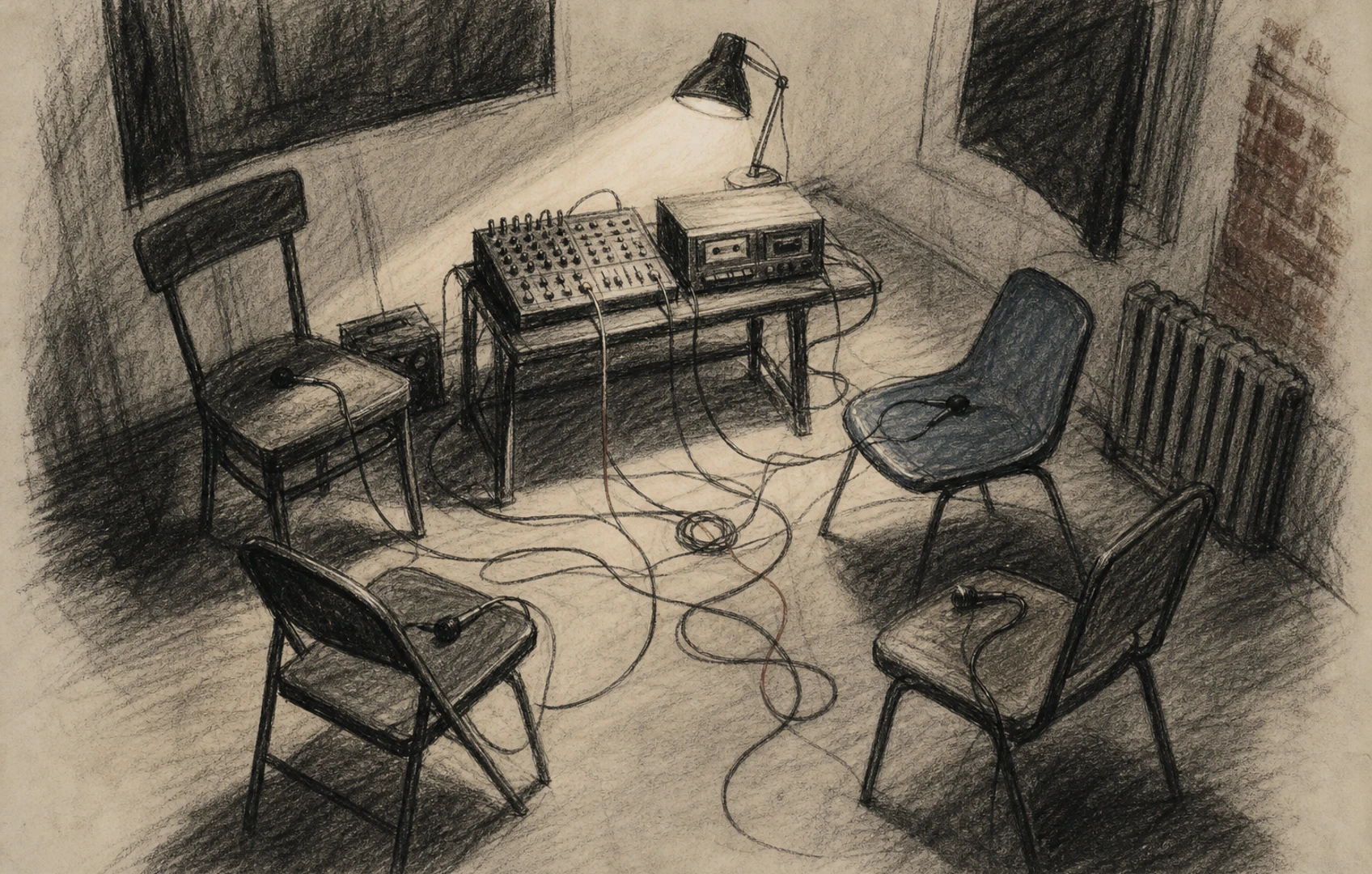
The Room Behind the Release
Rubber Band Gun’s Bloodwork appeared without advance warning, but it did not materialize from a vacuum. In reporting the release, Stereogum places Kevin Basko’s project inside Historic New Jersey, a Philadelphia recording circle it describes as a collective and/or record label. Basko’s home studio has served as a base for work around that circle. Its recent activity includes Emily Moales’s Star Moles album Highway To Hell and Sam and Louise Sullivan’s Love & Devotion. Bloodwork also features Sam and Louise Sullivan and Star Moles.
That overlap is the useful news. A surprise album can look like a solitary magic trick from the listener side of the screen. Here, the credits point back to a room, a set of returning collaborators, and a run of connected records. No equipment list is needed to see the mechanism. People keep making things near one another, then carry that energy into the next project.
Continuity is the enviable part, far ahead of any immaculate control room.
A Room Becomes Infrastructure
A home studio becomes infrastructure when people can return without rebuilding the day from zero. In any repeatedly used room, musicians gradually learn where the stands live, which outlet causes trouble, how loud the monitors can go, and how much setup fits before everyone’s attention leaks away. None of that photographs as well as a new rack. All of it can determine whether Thursday evening produces a take.
The practical gain is reduced friction. Keep the basic routing documented. Label cables. Save a plain session template. Leave enough floor space for one more person. Make file handoff boring and predictable. These choices allow guests to spend their limited hours on arrangement and performance instead of detective work.
There is a social gain too. An available room gives a scene somewhere to happen between shows. A venue may introduce people. A repeatable recording space lets those introductions become songs. It supplies a calendar, an electrical outlet, and a reason to come back next Tuesday.
Constraints Start Speaking
Stereogum characterizes Historic New Jersey’s output as retro-tinged pop-rock that can feel scrappy and carefully made at once. A recurring recording environment can help a circle develop a family resemblance while each act keeps its own identity. The same room reflections, familiar tools, and repeated problem-solving habits become shared grammar.
That does not require fetishizing one microphone or pretending peeling paint adds harmonic richness. Consistency often comes from decisions. Vocals get captured before the available hour disappears. A guitar part earns another pass because the setup is already ready. In a familiar room, somebody may remember the odd corner where a small amp sits clearly in the track. Familiarity protects attention.
For a DIY room, document two or three starting setups that reliably get sound into the session. Photograph stand positions for recall. Note gain settings as starting points, never commandments. Keep track sheets and rough mixes beside the multitracks. Let each project break the template wherever its character demands it. By the time the next singer arrives, the headphones should work before the kettle boils.
Collaboration Without the Networking Costume
The visible feature list on Bloodwork makes the circle tangible. Sam and Louise Sullivan and Star Moles are connected to releases already associated with Historic New Jersey, and now they appear within Basko’s own project. The names move across credits instead of standing in separate promotional boxes.
This is what collaboration can look like before anybody orders matching tote bags. Artists in a small circle can share time, attention, skills, and audiences. The useful unit is a favor that can be named: singing a part, checking an edit, lending an afternoon, or helping a session cross the finish line. The release notice does not spell out every contribution, so the visible evidence is simply the recurrence of names. That recurrence still matters.
For musicians building something similar, clarity keeps warmth from turning into resentment. Write down contributions while the session is fresh. Confirm how each person wants to be credited. Decide who holds the current files and who is responsible for the next action. Put the date in a shared calendar. Keep the mood informal and the hard drive orderly. A collective gets sturdy when nobody has to search six message threads for the final vocal.
The Surprise Had a Runway
A release can arrive without notice after months of context-building. Stereogum’s account traces attention around Historic New Jersey through Star Moles in February, then Sam and Louise Sullivan over the summer, before Basko’s record surfaced. Bloodwork had no announced runway, yet its surrounding names and sensibility already had context.
That is the hidden labor beneath a convincing surprise release. The calendar announcement disappears, while the relationships remain visible. Listeners who entered through one collaborator have another door. Coverage of one record makes the next name easier to recognize. The release lands inside an active conversation rather than asking a cold feed to manufacture one overnight.
A small artist considering the same move should prepare the unglamorous pieces. Make sure titles, artwork, credits, and artist pages agree. Give collaborators the correct link and a concise description. Keep a normal announcement ready for people who were asleep when the surprise happened. Spontaneity feels much better when nobody is fixing a misspelled name at midnight.
Build the Commons You Can Maintain
No one should copy a scene from a news item, and Historic New Jersey’s internal working arrangements cannot be reverse engineered from a release report. The repeatable principle is simpler: give creative relationships a dependable place and enough routine to compound.
Start small:
- Choose one room that can be available regularly, even if it is acoustically imperfect. Regular access matters more than theoretical perfection.
- Standardize the dull parts. Name sessions consistently, back them up, maintain a cable box, and keep a basic input map near the desk.
- Set a recurring open session or listening night with a clear end time. A monthly date survives busy lives better than vague promises.
- Invite people for specific reasons. “Come add a harmony to this chorus” is kinder than an indefinite request to collaborate.
- Track contributions and return favors. Shared culture collapses quickly when one person becomes the unpaid emergency department.
- Let releases keep their own names, artwork, and character. Connection can create paths between projects without turning them into material for a collective brand.
The budget conversation matters, although buying can become procrastination wearing a lanyard. Use the gear that records reliably, repair what is practical, and add equipment only when a recurring problem has a clear name. The room’s rarest asset will still be the person who exports organized files and answers messages.
Bloodwork brings Basko’s own project into focus within a circle his studio has helped host. The next scene-building task is sitting beside the desk: clear one chair and put Tuesday’s session on the calendar.
Comments
No comments yet.