

 Written by Levi Torres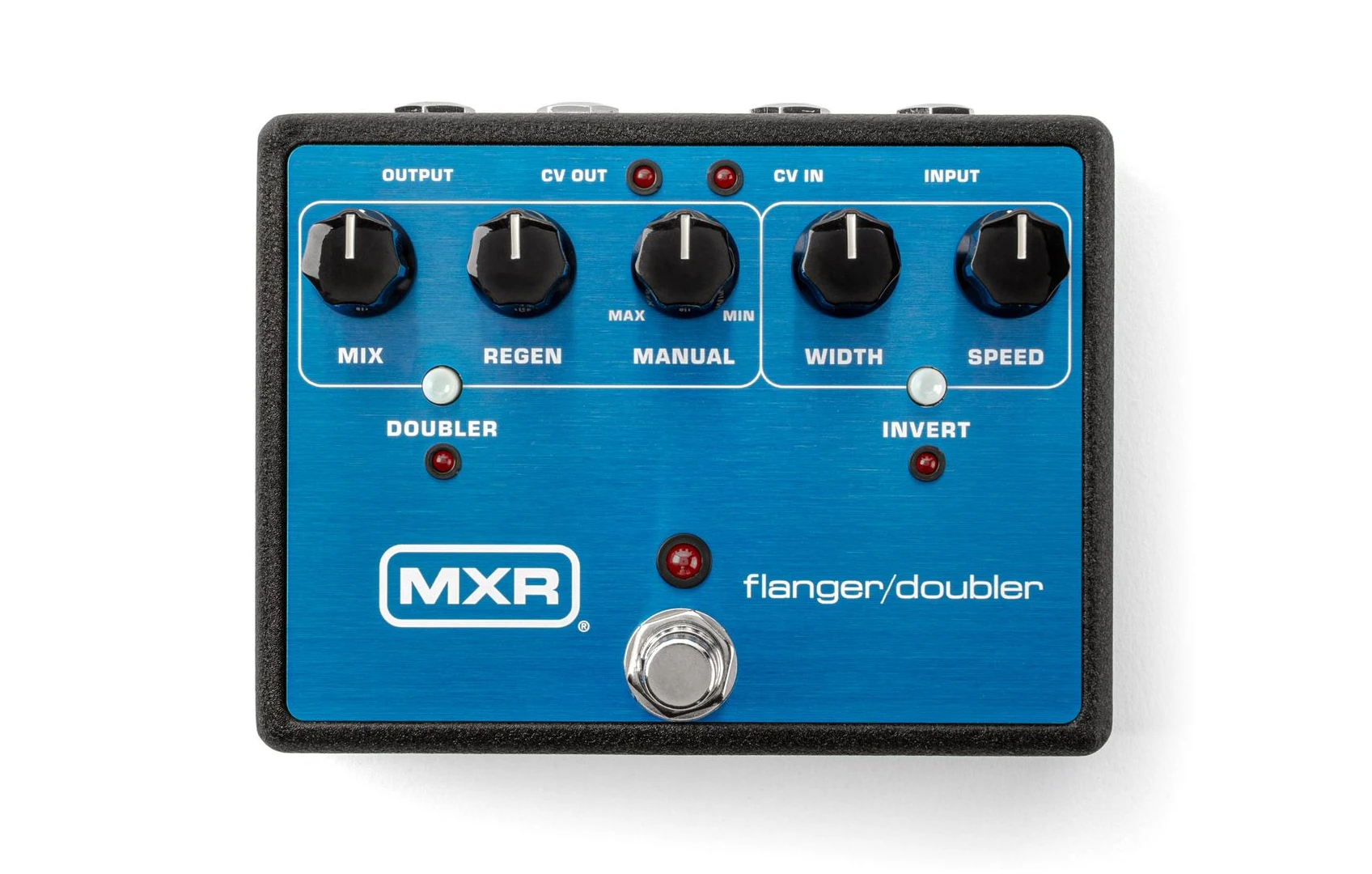
The rack comes down to floor level
MXR has pulled its Flanger/Doubler concept out of the rack and into a compact pedal. The August 11 announcement describes a BBD-driven analog design aimed at 1970s and 1980s textures, and says the control scheme follows the original rack unit. Much of the launch chatter will orbit Dimebag Darrell, who is closely linked with the old unit and with making extreme modulation feel at home inside a heavy rhythm sound.
History gets attention. Daily usefulness decides whether a box stays. Pedalboard space is rented by the square inch, and every tenant needs a job beyond recreating one famous tone. The useful question is how often flanging and doubling can solve ordinary arrangement problems.
This first look is based on the announcement. Judgments about hiss, headroom, switch feel, bypass behavior, and road durability need verified testing with the finished pedal.
Flanging and doubling share a hallway
At a basic level, flanging recombines the dry signal with a very short delayed copy whose timing moves. The interaction creates shifting peaks and notches across the frequency range. Push that movement and you get the broad, vocal whoosh that owns pedal demos. Hold it back and the guitar can feel wider or less static without announcing an effects lesson.
Doubling uses a slightly offset second voice to add mass and separation. A human second take also contains tiny changes in timing, pitch, pick attack, and note length, so an electronic doubler cannot reproduce the whole performance. It can provide a repeatable version of that width onstage, where recording the part twice is unavailable for fairly obvious reasons.
The bucket-brigade device matters because it passes the signal through a clocked chain rather than calculating the delay in software. That topology can bring bandwidth limits and noise that the designer has to manage. The letters BBD describe the method. They do not certify warmth, punch, or good taste. Filtering, gain staging, sweep range, and headroom will determine whether the new pedal feels musical in a real rig.
Give it three jobs before giving it space
Before clearing a patch of Velcro, give the pedal three possible assignments.
Rhythm support. Use the doubling side as a low-key thickener. Keep movement gentle and aim for a result that becomes obvious mainly when bypassed. This can help a dry rhythm part sit beside bass and drums without another layer of distortion. If the part starts sounding seasick, the setting has already made its point and kept walking.
A one-guitar arrangement. In a trio, a sparse verse, or a home demo with one usable take, the doubler can make a line occupy a little more time without adding more notes. Keep the offset small enough to preserve the attack. Record a clean safety path when possible, since a printed modulation choice is much harder to argue with tomorrow morning.
The big sweep. Dramatic flange earns its keep when an arrangement opens a hole for it. Let the motion enter on a held chord, a transition, or the final repeat of a riff. Running the deepest setting through every section can flatten the surprise and blur palm-muted detail.
Set all three sounds at rehearsal volume. Comb filtering changes the apparent balance of a guitar, and a bedroom setting may feel far more aggressive once cymbals and an amp are moving air.
Put it where the problem is
Before distortion, modulation becomes part of the gain structure. Any noise from the effect can also be amplified. After the main drive, the moving notches usually remain clearer and the sweep sounds more deliberate. Start after your core dirt pedal, then move it earlier if the effect feels pasted on top.
An amplifier effects loop offers another option, especially when most distortion comes from the amp. Verify that the loop level suits the pedal before committing. A hot loop can make an otherwise polite stompbox behave badly, and the manual should settle that question.
Power deserves the same boring attention. A compact enclosure says nothing about current draw. Match voltage, polarity, and required current to a proper supply, preferably an isolated output if the rest of the board is already noisy.
Finally, level-match the bypassed and effected sounds. A louder setting wins quick comparisons even when its texture is less useful. Play the same riff, switch back and forth, and listen for lost pick attack as well as glorious movement.
Make a trial version with what you own
You can test the musical idea before adding any hardware. In a DAW, put a stock short delay on a dry guitar track. For a rough doubler, set the delay around 15 to 30 milliseconds, keep feedback at zero, and blend the copy below the dry signal. Add a tiny amount of slow pitch movement if the plugin allows it.
For the flange experiment, use the DAW's stock flanger and start with its least theatrical preset. Lower the mix until the effect supports the riff. An existing chorus at a slow rate can also approximate the gentler side of the idea, while a multi-effects unit can place flange and short delay on neighboring patches.
Make a 20-second recording, then check it in mono. Wide modulation can feel impressive alone and become hollow when channels combine. The mono check is especially useful for home recordists sending tracks into someone else's mix.
This exercise reveals which function your songs actually need. One automated flange moment in a bridge may already be covered by software. A set that moves repeatedly between a quiet double and a violent sweep gives dedicated foot control a much stronger reason to exist.
Who should make room
The clearest case belongs to a player who uses both sides of the format: quiet width for rhythm work and obvious motion for transitions or leads. A home recorder who likes committing analog effects on the way in may also value the immediate controls, provided a clean fallback is captured.
Players who mostly need one mild chorus sound should spend more time with the gear already on the floor. The same goes for anyone chasing a single artist tone. The Flanger/Doubler can supply movement, while the rest of that sound still comes from the guitar, gain staging, amplifier, speaker, arrangement, and hands.
Before assigning permanent space, wait for independently recorded examples that reveal the noise floor, bypass level, control interaction, and behavior with high gain. Read the published manual for power and signal-level requirements. Those mundane details matter more after the first giant sweep has stopped being funny.
There is no shame in wanting the giant sweep because it is funny. Just give the quieter settings an audition too. Write three song titles on masking tape and note the pedal's job beside each one. If the tape stays blank, leave that square open for the cable that always seems to be too short.
Comments
No comments yet.