

 Written by Jude Harper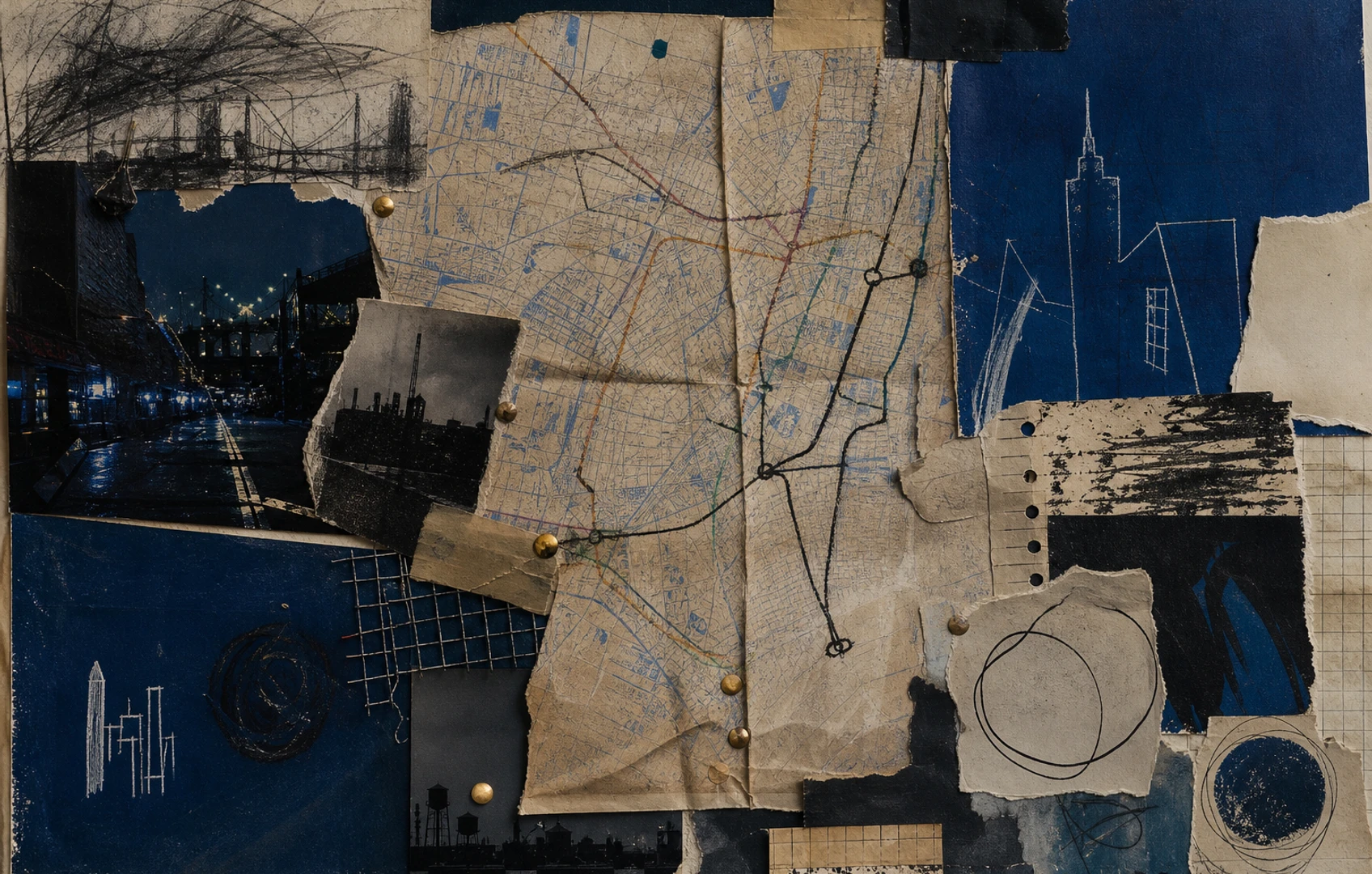
Pins on the borough
There is something beautifully odd about rap history showing up inside a navigation app. One minute you are checking traffic, the next you are being invited to trace the career of Jay-Z across New York through locations tied to his story, timed to the 30th anniversary of Reasonable Doubt. It sounds tidy, almost too tidy, the kind of brand alignment that would make a cynic reach for a helmet. Yet the idea sticks because it reveals what music memory has become. We no longer just hear origin stories. We scroll them, zoom them, and let them sit beside restaurants, pharmacies, and train delays.
That shift matters. Rap has always been geographic in a way many other pop forms only pretend to be. Streets, corners, buildings, borough rivalries, local codes, neighborhood prestige, the exact distance between danger and ambition — these are not decorative details in the music. They are part of the rhythm section. So when a giant platform turns that geography into something legible for the casual user, it can feel both clarifying and slightly eerie, like seeing a sacred mural flattened into route guidance.
The city was always in the verse
Jay-Z makes sense as a case study because his catalog has long treated New York not as backdrop but as operating system. His rise was never sold as a fairy tale detached from place. It came with blocks, hustles, borough politics, aspirational addresses, and the hard glamour of making your own route where official routes were not built for you. Reasonable Doubt in particular remains fused to the city in the public imagination — not just New York as postcard, but New York as coded social terrain.
That has always been one of rap’s great formal tricks. A song can make a place feel mythic while keeping the grime under its fingernails. Fans learn cities through records before they ever visit them. They inherit maps made of references, not streets. A corner becomes famous because a bar landed there. A housing project becomes globally legible because an artist transformed local knowledge into durable language. Hip-hop has been doing unofficial cartography for decades.
The Google Maps angle formalizes that instinct. It says: here are the coordinates, here is the route, here is the sanctioned version of the mythology. Useful, yes. Also a little dangerous in the way all official memory is dangerous. Once a story is pinned, it starts to harden.
What platforms do to memory
Platforms are excellent at making culture feel frictionless. They take messy, layered histories and convert them into interfaces that promise ease. Tap here. Save this. Visit that. Share the list. The result is not fake, exactly. It is compressed. A life gets turned into discoverable points. A movement gets turned into a user path.
This is where the Jay-Z map becomes more interesting than a simple anniversary promotion. It shows how public memory is now brokered by tools that were not built for memory in the first place. Google Maps was designed to get you somewhere. Increasingly it also tells you what matters there. That is a quiet transfer of cultural authority.
For music fans, this can feel thrilling. The app in your pocket suddenly behaves like a docent. For artists and estates, it offers scale and permanence that old-school commemorations rarely achieved. For cities, it creates a tourism layer made of songs and legend. But the platform’s logic is still platform logic: simplify, surface, rank, route, move on.
Rap history does not naturally behave that way. It is full of contested stories, neighborhood memory, private pain, exaggeration, bravado, revision, and scenes that changed names depending on who was speaking. The map can hold a pin. It cannot hold the argument around the pin.
Heritage used to arrive slower
There was a time when music heritage became official through documentaries, museum shows, anniversary box sets, biographies, plaques, and the patient work of scenes talking to themselves. Now it can arrive through mainstream consumer software. That is a different speed and a different texture.
Part of me admires the blunt efficiency of it. Rap spent years being treated as disposable youth noise by institutions that now rush to archive it once the economic and symbolic value is impossible to ignore. Fine. Better late than never. If a giant tech platform helps mark hip-hop as civic history rather than niche subculture, that is not trivial. Plenty of older fans spent years watching the culture get mined for style while denied the dignity of preservation.
Still, preservation through convenience has a weird smell. It can sand off the antagonism that made the music necessary. Reasonable Doubt did not emerge to become a heritage walking route. It emerged from pressure, ambition, exclusion, and the urge to narrate survival with unnerving precision. When that kind of work gets folded into a friendly map experience, the edges do not disappear, but they do get upholstered.
The tourist version and the true version
Every music city has two versions of itself. There is the lived city, where scenes are unstable and local meaning changes block by block. Then there is the tourist city, where significance gets condensed into landmarks. Fans want the second version because it is legible. Locals tend to protect the first because it is real.
A Jay-Z map sits right on that fault line. It invites people to experience rap history spatially, which is good and overdue. It also risks turning the city into a branded pilgrimage trail where complexity becomes atmosphere. The danger is not that fans care too much. The danger is that platforms teach them to care in the easiest possible format.
That format can flatten how rap actually works. Hip-hop geography is not only about where something happened. It is about who could move through a place safely, who had status there, who was watched there, who hustled there, who left, who returned, who got memorialized, and who got erased. A pin can tell you where. It struggles with why that where mattered.
Still, I would rather have this argument than the old argument where rap was treated as too unruly or too commercial to deserve public memory at all. At least now the fight is over how to archive it well.
Why this keeps happening now
Anniversaries are one reason. Thirty years is a clean media number, and Reasonable Doubt carries the sort of canonical weight that institutions love once enough time has passed for everyone to stop pretending they missed it. But there is a broader reason too: platforms increasingly want to function as cultural companions, not just utilities. Music, with its built-in fandom and emotional stickiness, is perfect material for that expansion.
The app economy has learned a simple lesson from streaming and social media. People do not only want tools. They want guided meaning. They want the route and the story attached to the route. They want context without homework. A map tied to an artist delivers exactly that.
And artists with deep regional identity are especially suited to this treatment. Their work can be translated into place-based experiences without inventing a connection that was never there. Jay-Z and New York are already fused in popular memory. The platform is not creating the relationship from scratch. It is packaging it into a cleaner container, then handing it back to the public with a button on it.
The future is full of mapped mythologies
Expect more of this. Not only for rap, and not only for legends with museum-grade stature. Scenes, labels, clubs, studios, indie histories, dance floors, pirate radio routes, regional punk basements — all of it is increasingly vulnerable to being turned into navigable culture. Some of that will be genuinely useful. Some of it will be corny. A lot of it will be both at once.
The practical takeaway for fans is simple: use these tools as doorways, not verdicts. Let the map point you toward the story, then go find the messier version. Read interviews. Talk to people who were there. Listen to the records in sequence. Notice what the interface leaves out. The route is not the history. It is the invitation.
What lingers about the Jay-Z map is not the novelty of seeing rap attached to Google Maps. That part was always coming. What lingers is the image of a once-local mythology being absorbed into everyday digital infrastructure. The corner becomes a pin. The pin becomes a memory aid. The memory aid becomes public history.
And somewhere under all that clean interface logic, the old city is still muttering to itself, refusing to be reduced to a neat line between stops.
Comments
No comments yet.