

 Written by Levi Torres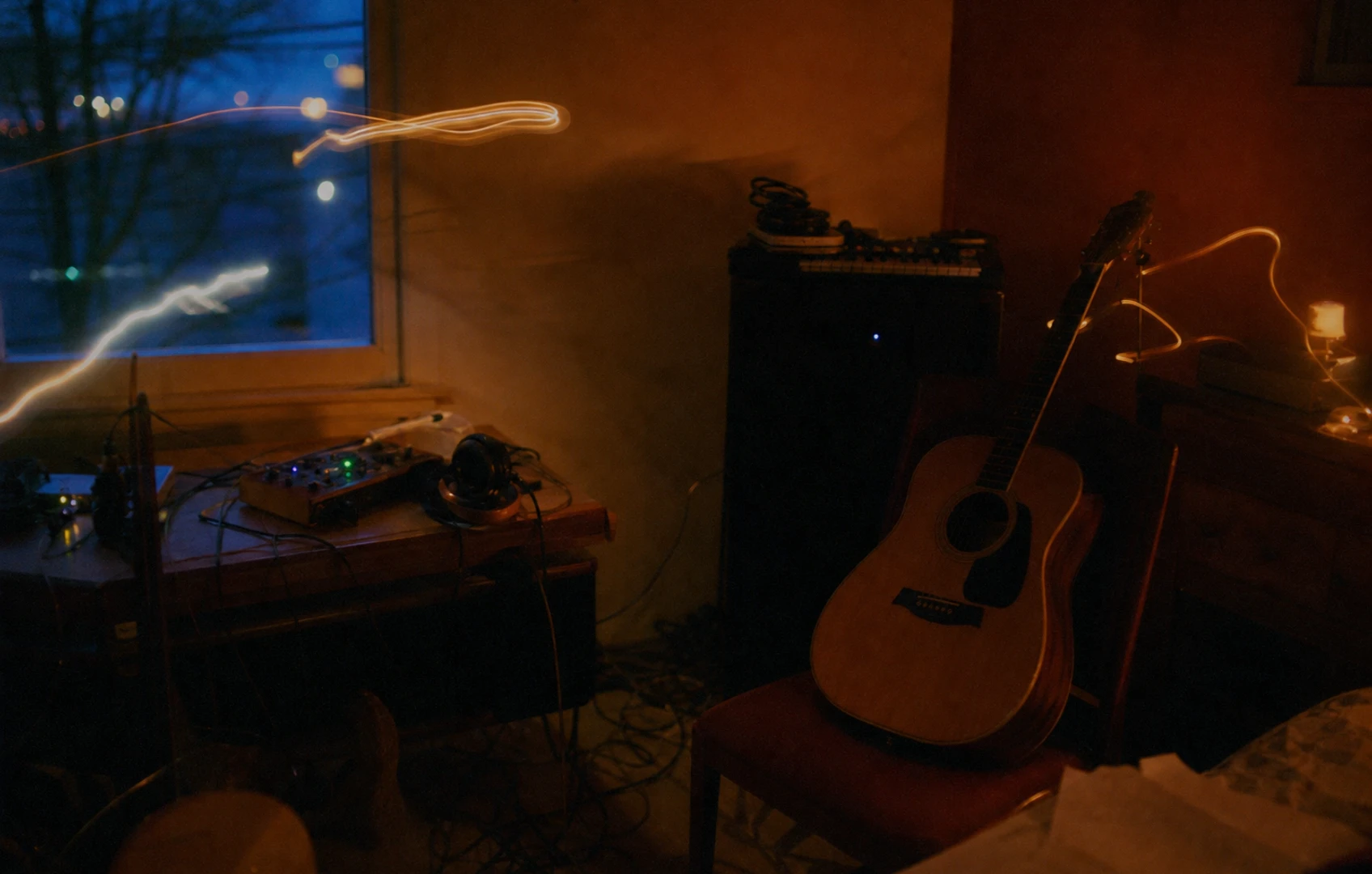
A record made in the room it belongs in
Hannah Cole announcing her debut album Switchbacks would be easy to file under ordinary indie-release news: new single, fall release, familiar collaborators, everybody move along. But one detail makes it stick. According to the announcement, Cole reconnected with collaborator Josef Kuhn and recorded the album in their home studio between 2024 and 2025, with the pair playing nearly every instrument themselves.
That detail matters because it says something useful about how a lot of strong records actually get made right now. Not in some fantasy room full of glowing vintage gear and a patient budget, but in a familiar space where the players can leave a mic up, chase a weird idea at midnight, and try again tomorrow without watching the clock eat the song.
Home recording is no longer the scrappy compromise people apologize for before you hit play. For plenty of indie artists, it is the best available format for making a record with character.
The home studio stopped being a placeholder
There was a long stretch where “recorded at home” carried a little defensive shrug. It could mean intimate and handmade, sure, but it could also mean undercooked, boxy, or unfinished. Those old associations have not disappeared, but they have weakened. The tools got better, the musicians got sharper, and listeners got used to hearing records that keep some room noise, some edge, some evidence of the hands that made them.
That is part of why a story like Cole’s feels current instead of quaint. A home studio is not just where you make demos before the real work starts. It is often where the real work happens because the room itself supports the kind of work the music needs.
For a songwriter making guitar-led or emotionally close music, speed and familiarity can beat prestige every time. If you know how your voice sits in one corner of one room, if you know which amp gets cranky after an hour, if you know the floor squeak you have to avoid, you are already ahead. Those are not glamorous advantages, but they are real ones.
And unlike a commercial room, a home setup lets you build momentum in ugly little bursts. One good vocal before coffee. Tambourine after dinner. Harmony stack at 1 a.m. because your brain finally stopped trying to impress anybody.
Playing nearly everything changes the record
Another part of the Switchbacks setup is worth lingering on: Cole and Kuhn reportedly played nearly every instrument themselves. That can happen for budget reasons, obviously. Hiring players, booking rooms, and coordinating schedules adds up fast. But it also shapes the sound in ways that are easy to hear even when you cannot point to one technical cause.
When a small number of people play most of the parts, the record often develops a private logic. The tempos breathe in a related way. The fills arrive from the same brain weather. The arrangement choices feel less like a committee and more like somebody moving furniture around in one apartment until the room finally works.
This is not an argument against bands or session players. Those records can be wonderful. It is just a reminder that constraint often creates coherence. If two people are doing almost everything, they are not only saving money. They are preserving a shared sense of timing and taste.
You hear that a lot in modern indie records that feel close to the body. The drums may be simple. The guitars may not be huge. The vocal may sit a little more exposed than a major-label production would allow. But the song arrives with a unified pulse, which is harder to fake than polish.
The practical advantage nobody romanticizes enough
Let’s be honest about something dull and important: logistics kill songs all the time.
Not in a dramatic way. Usually the song dies because the email thread got long, the room booking moved, the player was free next Thursday, the singer got self-conscious, the rough mix sat untouched for two months, and by the time everyone reconvened the song’s little spark had gone cold. Nobody failed. The process just sanded the life off it.
A home studio cuts down on that friction. That does not make the work easy. It makes it possible to keep the song in motion.
This is the least sexy and most valuable thing about modest recording spaces. They reduce the number of moments where a song has to survive bureaucracy. If the chorus needs a lower harmony, you try it now. If the bridge sounds too polite, you hit the fuzz pedal and see what breaks. If the take is emotionally right but technically messy, you can decide whether the mess is actually the point.
That kind of workflow is not just cheaper. It is psychologically better for a lot of artists. Fewer witnesses, fewer deadlines attached to every experiment, fewer reasons to lock into the first acceptable version.
Personality beats horsepower more often than gear people admit
A lot of musicians still assume the big upgrade is waiting one purchase away: better preamp, better converter, better mic locker, better whatever. Sure, better tools can help. Bad gear can absolutely get in the way. But if Cole’s announcement suggests anything broader, it is that records still live or die on decisions, performances, and whether the room lets you stay honest long enough to make a few good ones.
That is good news for people making music on ordinary setups. You do not need to turn your apartment into a content bunker. You need a chain you understand, a room you can work with, and enough patience to learn what your songs actually want from you.
Sometimes that means embracing limits instead of treating them like an embarrassment. Maybe your room sounds best on close, dry vocals. Great. Make that part of the aesthetic. Maybe your drum options are basically shaker, tambourine, one floor tom, and whatever your desk can survive. Fine. Arrange around that. Plenty of records become memorable the moment they stop auditioning for a bigger budget.
The funny part is that listeners often experience those constraints as intimacy or style. They do not hear, “this artist lacked resources.” They hear, “this sounds like itself.”
Mixing still matters, and so does knowing when to call in help
The announcement also notes that Switchbacks was mixed by Sonny Diperri. That is a useful reminder that DIY does not have to mean doing every last thing alone.
There is a healthy version of home recording where the artist keeps control of the writing, tracking, and overall feel, then brings in a trusted outside set of ears at the stage where perspective matters most. That can be mixing, mastering, editing, or even just arrangement feedback before the final push.
This hybrid model makes a lot of sense. Track at home where the performances can stay alive. Hand the material to someone experienced when the project needs translation, balance, and distance. You keep the personality without forcing your bedroom to perform every job in the chain.
That is probably one reason so many current indie records feel both personal and legible. They are not trapped at either extreme. Not raw for rawness’ sake, not polished into wallpaper. Just made in the place where the songs could happen, then finished by people who know how to let them travel.
What working musicians can take from this
The useful takeaway from a story like this is not “go buy more stuff” and it is definitely not “every record should be made at home.” It is simpler.
If your songs come alive when you can work in short bursts, keep instruments plugged in, and change arrangements without asking permission from a schedule, a home setup is not a lesser version of real recording. It may be the correct one. If you have been waiting to earn the right room before committing to the record, you might already be standing in the room that makes the most sense.
That does not mean settling. It means paying attention to what helps you finish. A stable desk, a dependable interface, one mic you know well, a monitoring setup you trust enough to keep moving, and a collaborator who can tell when the third chorus is lying to you — that can be a whole album ecosystem.
Hannah Cole’s debut announcement is small news in the best way. It does not need to pretend to be a movement. It just quietly confirms one. A lot of the music worth caring about is still being built in ordinary rooms by people who know how to use limitation as momentum.
There is comfort in that, especially now. Not because it makes the work easy. Because it keeps the work within reach.
Comments
No comments yet.