

 Written by Jude Harper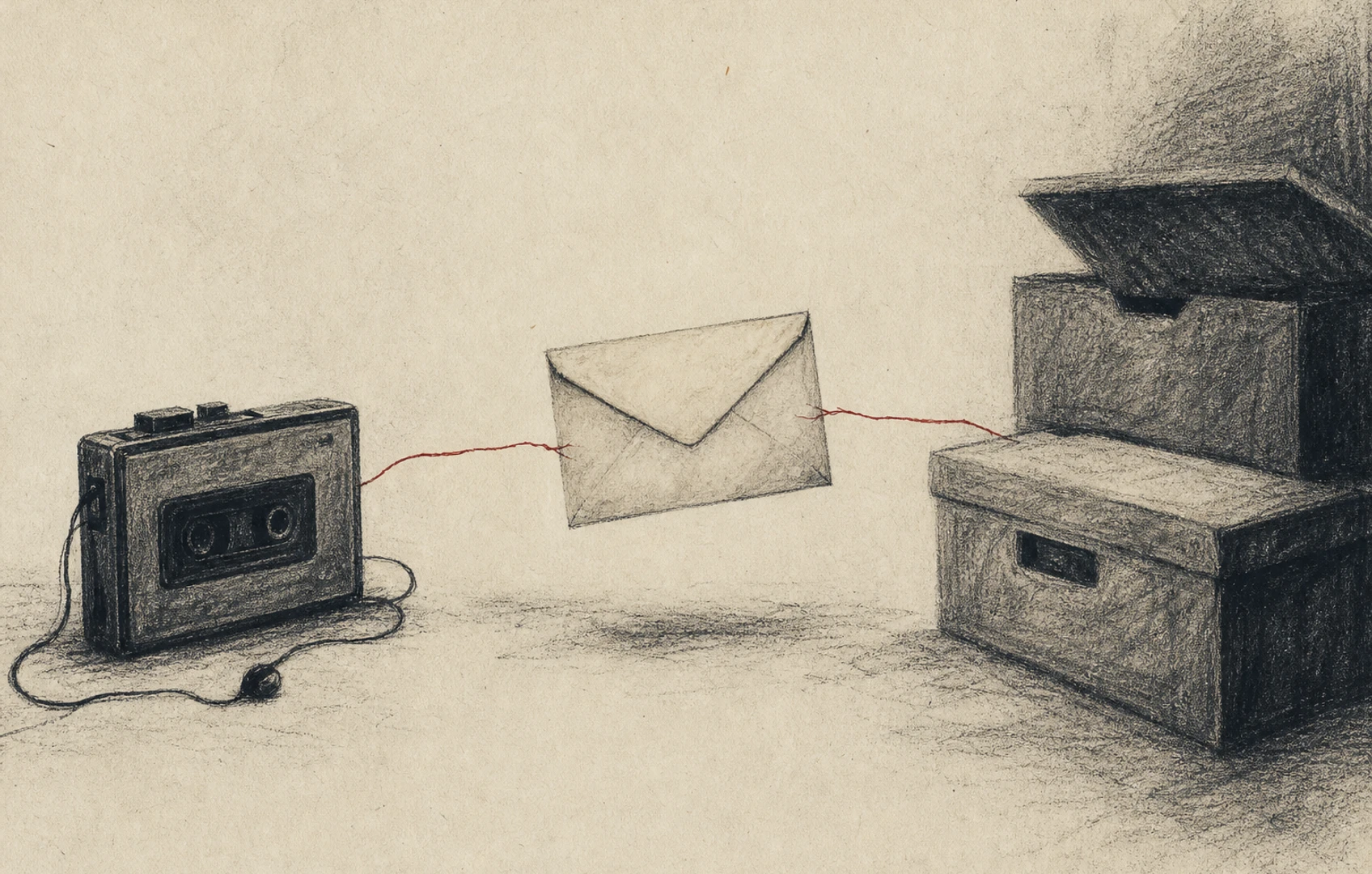
The reply in the archive
Jamie Fisher’s forthcoming Elliott Smith biography has produced the kind of detail that makes the floor tilt. As Stereogum reported on August 13, Fisher discovered an unsent response from Smith to a fan letter written by a teenager. Nobody Broke Your Heart, Fisher’s deeply sourced biography, is due from Penguin Random House later this month.
The known facts are spare: a young listener wrote, Smith composed a reply, and that reply did not reach its destination. There is no need to decorate the gap with a broken mailbox, a distracted intermediary, or a last-minute change of heart. The available account does not establish why the answer remained unsent. Its existence already does plenty.
A fan letter can feel like a bottle thrown at a lit window. Many vanish without evidence of impact. This one apparently landed, prompted a response, then stopped somewhere inside the machinery. Years later, biographical research recovered the stalled signal. The episode is small beside an artist’s body of work, yet it presses on one of fandom’s sorest nerves: what silence allows us to imagine.
Fan mail had no dashboard
Smith’s career unfolded before artist communication became a column of notifications. The web existed. Today’s always-on social layer had not yet hardened around musicians, listeners, and every flicker of contact between them.
A postal fan letter demanded a usable address, a stamp, and faith. The sender received no delivery receipt and no reliable indication that the envelope had crossed the threshold from mailroom object to human encounter. No reply could cover a dozen realities. The note might have gone unread, arrived during chaos, been set aside, or prompted an answer that never left. That last possibility now gives this story its voltage.
Platforms train us to expect status markers: sent, delivered, seen, liked. Those labels supply data. Intimacy remains unmeasured. An unanswered message can still become a screen onto which a fan projects rejection, recognition, embarrassment, or hope. Old fan mail carried the same uncertainty without a glowing interface. Fisher’s find gives that ambiguity a physical contour. Somewhere, an answer existed beyond the sender’s field of view.
Silence gets a footnote
For the teenage sender, the lived experience remained an unanswered letter. A later discovery cannot retroactively put the response in their hands. It can revise the factual map. Smith engaged with the message closely enough to produce an answer. Beyond that, the artifact needs room around it.
Fandom is very good at building bridges from splinters. A set list becomes a confession. A studio outtake becomes a final intention. A few lines of correspondence can be asked to certify a bond neither participant had a chance to define. The urge makes emotional sense, especially around a songwriter whose recordings can feel close enough to fog the glass between speaker and listener.
A clean reading keeps three trays separate. The fact is that a response existed and remained unsent. The inference concerns why it stayed behind. The feeling belongs to the sender and to readers moved by the discovery. Mix those together and biography turns into séance work. Keep them distinct and the find becomes more affecting, because the blank space stays blank.
Biography as signal tracing
Music biography is often asked to crack open a sealed personality. The archive rarely cooperates. Interviews drift with memory. Documents survive unevenly. Public personas throw their own reflections across the glass. The biographer works in a signal chain full of loose cables, and the honest page identifies the hum instead of mastering it away.
An unsent reply is a potent object for that work because it is revealing and incomplete. It records an action without explaining the interruption. It shows attention without defining its depth. A responsible account can establish the artifact’s provenance and chronology, then mark the edge of what remains unknown.
That discipline matters with Smith. Listeners have spent years hearing autobiography in songs whose power also comes from craft, arrangement, fictional distance, and performance. Acoustic closeness can tempt a reader to treat every private scrap as another verse. A letter draft deserves its own scale. It proves a moment of attention. It cannot carry a total account of the person who wrote it.
Handle found intimacy with clean hands
Archival discoveries trigger the collector reflex. Readers want the handwriting, the crossed-out word, the exact turn of phrase that might seem to unlock the artist. Curiosity is part of why archives and biographies matter. It also creates pressure to turn private paper into emotional contraband.
When Nobody Broke Your Heart arrives, the handling of this episode will matter as much as the surprise. A careful presentation should tell readers what kind of object was found, when it was created, and how confidently it can be placed in sequence. Interpretation should remain visibly separate from documentation. The teenage correspondent’s vulnerability deserves attention too, whether the sender welcomes the disclosure, tells the story personally, or remains at a distance from it.
This standard does not require treating every archive box as sacred ground. Musicians leave historical records, and those records can correct myths that calcified in public. Restraint simply keeps one page from becoming a floodlight aimed at an entire life. The response occupied a private, undelivered state. Research has now made its existence part of the public story.
The distance between rooms
The story catches because the reply never completed its original trip. It traveled sideways instead, from attempted correspondence into biographical research, then toward music news. Its meaning changed at every stop. The existence of what began as an answer for one teenager is now evidence considered by strangers.
Modern fandom should recognize the route, even with new machinery around it. Messages pass through filters, crowded inboxes, management layers, and ordinary distraction. An interface can report delivery while leaving intention opaque. Silence tells a sender only that no answer arrived. Artists have no automatic duty to respond, and fans can still feel the absence with unreasonable force.
When Nobody Broke Your Heart is published later this month, this episode will be one small wire running through a larger book. Readers can watch whether it stays small enough to remain true. The most honest image keeps two rooms in view. In one, a teenager lives with no reply. In the other, an answer exists without a route out. The archive eventually opens a third door, too late to arrive on time, just in time to alter the shape of the silence.
Comments
No comments yet.