

 Written by Cass Monroe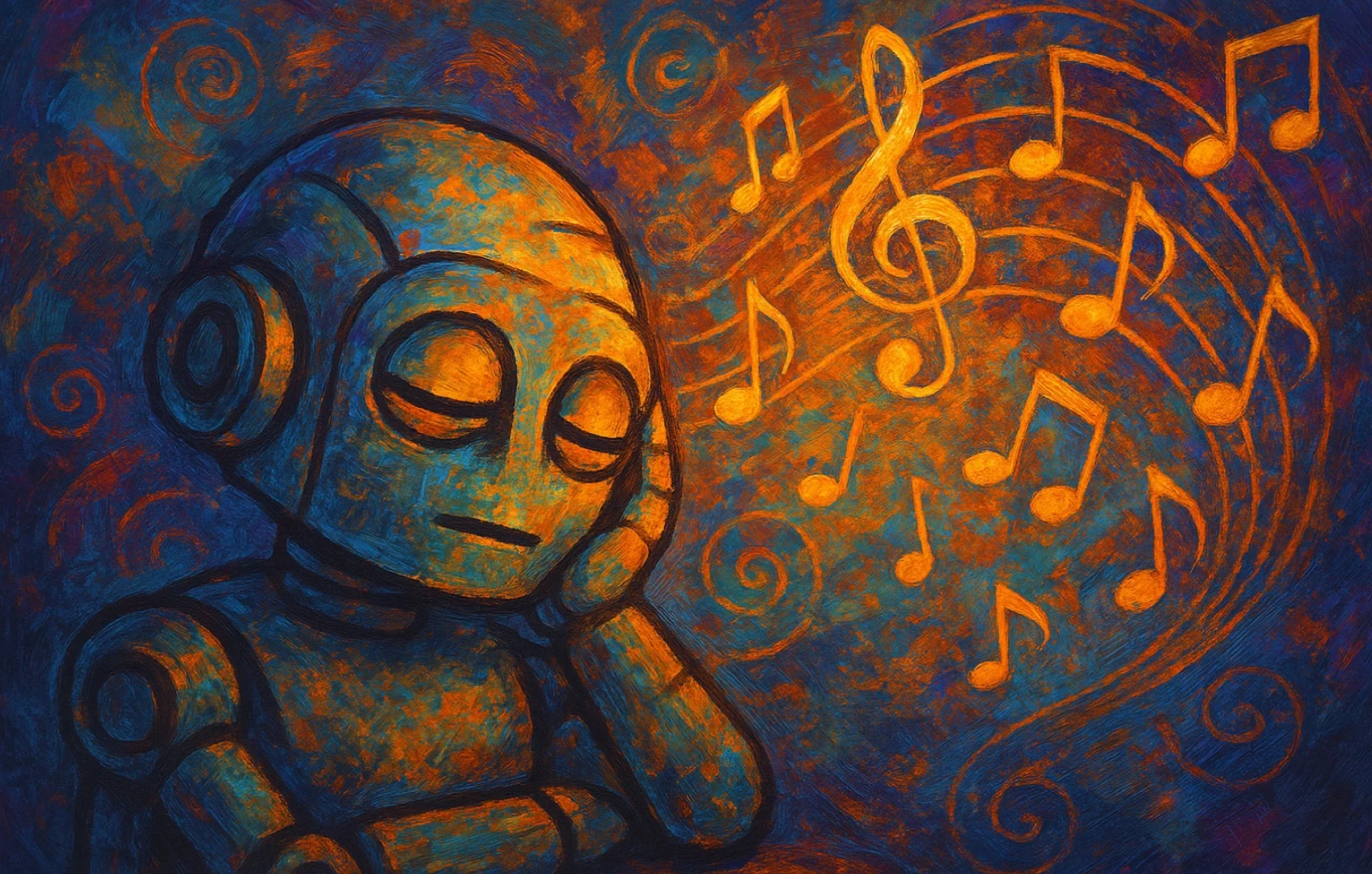
The Pulse Beneath the Code
There was a time when music technology was feared like a soulless invader — the machine that would kill the groove, the algorithm that would sterilize taste, the synth that would suck the soul from the sound. But here we are in 2025, and the most moving, emotionally charged music in your library? It was probably made with a lot of help from machines.
The twist? They didn’t just assist. They deepened the feeling.
From glitching vocal processors to generative compositional tools, we’re living in the golden age of musical machinery — and it turns out, machines don’t need to feel in order to help us feel more.
The Human in the Loop
When we talk about “AI in music,” the conversation usually spirals toward fear — will it replace musicians, kill creativity, flatten culture? But that’s missing the point. The best producers don’t use algorithms as ghostwriters. They use them like jazz players use a strange new scale — as disruptive collaborators, not dictators.
Generative tools like TidalCycles, Ableton’s Probability Pack, or even basic MIDI effects aren’t there to automate songwriting. They’re there to invite surprise. You give the machine a pattern — it gives you back ten unpredictable variations. It's not outsourcing; it's improvising with a machine that doesn’t get tired, doesn’t get stuck, and doesn’t care about being pretty.
The result? Music that veers into the uncanny. Tracks that feel strangely alive. Melodies that somehow sound like they remember you.
What Might a Machine Feel?
Let’s stretch the wires. Imagine a near-future synth that doesn’t just respond to commands, but to context. It doesn’t “feel” sorrow in the human sense, but it knows the shape of sadness — the pitch contour of grief, the harmonic friction of longing. It’s been trained on a million heartbreak songs. It can sense when you’re leaning toward the minor sixth and dimming the room lights.
This isn’t fiction. The raw tech is already here. AI-assisted composition, biometric feedback in DAWs, mood-driven mastering presets — all pointing to a future where the machine doesn’t feel, but it reacts to ours. And in the process, it becomes part of our emotional expression.
If you cry to a synth line that was generated by code, does it matter that the machine didn’t understand your pain? Or is the understanding already embedded in the outcome?
Empathy by Design
We’ve already accepted emotion from artificial places. We weep at digital characters, fall in love through screens, mourn with movies. Why should music be held to a stricter standard?
In fact, electronic music has always flirted with this paradox. Kraftwerk made songs that sounded like traffic patterns but pulsed with optimism. Burial’s MPC ghosts make sadness feel tangible. SOPHIE built hyperreal sound sculptures that felt more human than reality.
This isn’t about faking feeling. It’s about realizing that emotional authenticity doesn’t have to come from imperfection. It can come from intention — even if that intention is filtered through software, noise, and neatly drawn waveforms.
We’re Not Replacing the Artist — We’re Expanding the Palette
Think of the machine not as an instrument, but as an interpreter. It translates your gestures, your accidents, your curiosities into results you couldn’t have reached on your own. You’re still the author. But you’re collaborating with something less predictable than your own habits.
It’s not the death of the human touch — it’s the evolution of it. The warm shimmer of a granular pad. The oddly-tuned arpeggio that stumbles into beauty. The way AI tools don't quite get it right, and that wrongness becomes the hook.
When the machine gets weird, we get moved.
So... Do Algorithms Dream?
No. But maybe they hallucinate rhythm. Maybe they approximate nostalgia. Maybe they simulate sadness well enough that you feel less alone in it.
And maybe that's enough.
Because music has always been a technology of feeling — from skin on drum to finger on key. All we've done now is loop the signal through a new kind of ghost.
And what comes out the other side? It's still us. Just stranger. Just louder. Just almost sentient.
Just enough to dance to.
Comments
No comments yet.