

 Written by Jude Harper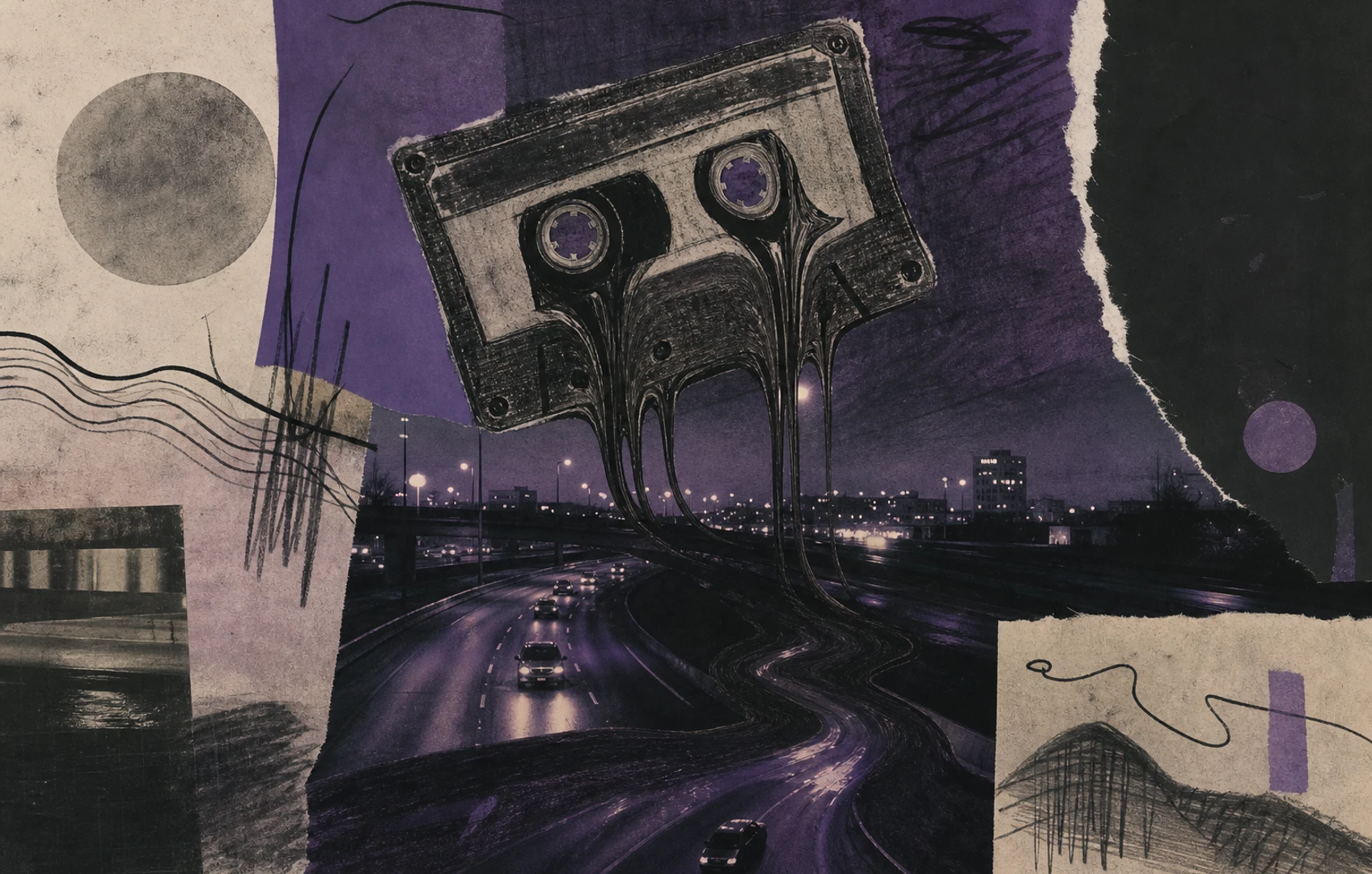
Streaming Meets Slow Time
DJ Screw’s catalog is finally coming to streaming, with mixtapes set to appear weekly through the end of June. That sounds like a simple access story until you remember what this music actually does. Screw didn’t make content for the endless scroll. He built a listening environment — syrup-thick, communal, local, intimate, car-sized — and now that environment is being lowered into platforms designed to keep everything moving. The fascinating part is not whether people will click. It’s whether streaming can hold still long enough to hear what it’s being handed.
A giant body of work escapes the side door
For years, DJ Screw has lived online in the half-lit way foundational music often does when commerce, rights, format decay, and regional history refuse to line up neatly. You heard him through uploads, rips, recommendations from people who spoke about certain tapes the way families talk about old houses. The music was available, but not settled. It moved through side channels, memory, YouTube rabbit holes, forums, hard drives, and the kind of friend who says, no, not that one, start here.
Now the catalog is being brought onto streaming in an organized rollout. That matters because platforms still function as cultural customs offices. Once music crosses that border, it becomes easier to discover, easier to cite, easier to place in a timeline, easier to flatten, easier to misunderstand. Access expands and context gets tested.
Screw’s work has always had the force of legend around it, and legends get treated badly by apps. They become a mood, a shorthand, a thumbnail for “slowed + reverb,” a vague ancestor to internet aesthetics that took one piece of the method and left the room before the sermon was over. Streaming can correct some of that by placing the source closer to ordinary listeners. It can also make the source feel deceptively frictionless, as if these tapes were always meant to sit beside algorithmic chill playlists and gym rap.
They were not made for that kind of polite coexistence. They were made to occupy space.
Screw’s music changed speed, but it also changed social life
The easiest summary of DJ Screw is technical: slowed-down mixes, chopped vocals, a distinct drag on tempo and gravity. That summary is true and still far too small. What made the tapes matter was the social architecture around them. Cars. neighborhoods. local knowledge. long stretches of hanging out. repeated listening. voices turning up like familiar ghosts. The mix as document, dedication, atmosphere, and proof of who was in the room.
That is why this streaming arrival feels bigger than a catalog update. It introduces a body of work that asks for a different posture from the listener. Screw’s tapes do not hustle to justify themselves in the first thirty seconds. They do not trim the fat because the fat is part of the meal. They let repetition gather force. They let tracks become weather systems. They understand that boredom and hypnosis are neighboring addresses, and they know exactly how to drive between them.
For younger listeners raised inside recommendation engines, that can feel almost confrontational. Good. Some music should confront the habits we picked up from software. Some music should make the room heavier and the clock stranger.
Streaming loves efficiency. Screw loved duration.
Every platform has a hidden ideal listener: alert, skimming, open to suggestion, easy to redirect. That listener is useful to ad models, playlist editors, and recommendation loops. DJ Screw’s catalog arrives carrying the opposite energy. It asks for patience, surrender, and a tolerance for drift. It rewards immersion over sampling.
This is where the story gets interesting for Audio Chronicle readers, because it is really a format story disguised as a catalog story. Streaming has spent years teaching us to treat music as a surface you can move across quickly. Screw’s tapes insist on depth. They ask you to sink.
That means the practical listening advice here is almost embarrassingly simple: don’t audition these mixes like a shopping cart. Pick one. Let it run. Put the phone down. If you’re working, driving, walking at night, cleaning the kitchen, staring out a train window, even better. The music was never meant to behave like isolated clips in a feed. It wants duration because duration is where the emotional chemistry happens.
And if the platforms present these tapes with the same metadata stiffness they use for everything else, listeners will need to do some of the contextual work themselves. Follow the names. Notice recurring voices. Pay attention to how a mix holds a mood instead of chasing a climax. Listen for the moments where a familiar rap record becomes something slower, sadder, funnier, more narcotic, more human.
There is a difference between influence and extraction
The internet has spent a long time borrowing from Screw. Sometimes that borrowing was loving and explicit. Sometimes it was a smash-and-grab. The slowed vocal, the dreamy drag, the intoxicated haze, the sensation of a track being pulled through humid air — these qualities traveled far beyond Houston and far beyond rap. They helped shape internet microgenres, pop experiments, ambient edits, club detours, and countless unofficial remixes.
That spread is real. So is the loss that came with it. A lot of what people call “Screwed” now is just tempo reduction with a fog machine. The cultural frame gets stripped away. The communal ritual disappears. The precision of his touch gets replaced by a preset mentality. What remains is the vibe, drained of local intelligence.
Putting the catalog on streaming won’t magically repair that history, but it does bring the center of gravity back into view. It lets listeners compare the source with the diluted copies. It gives younger artists and fans a chance to hear that Screw’s work was not merely slow. It was compositional. It was curatorial. It was architectural. He knew how to suspend a track without killing it, how to distort a voice until it carried fresh emotion, how to make space feel physical.
That kind of influence deserves better than being reduced to a button in an editing app.
The regional story is the whole story
There is always a temptation, when a major regional archive becomes widely available, to immediately universalize it. To say: finally, everyone can have this. Fair enough. But music like this loses something when it is introduced as a floating masterpiece detached from place. DJ Screw is inseparable from Houston, from the city’s car culture, from Southern rap’s long fight against coastal condescension, from the practical and emotional life of mixtapes as community media.
Streaming can help national and global audiences hear that history. It can also sand off the edges if the rollout gets received as a novelty drop for curious omnivores. The right way in is not to treat Screw as a museum artifact or a retro accessory. Hear the tapes as living infrastructure from a scene that built its own systems because the mainstream was slow, dismissive, or deaf.
That history still matters because platform culture has recreated a version of the same problem. Certain sounds get absorbed only after years of being mined for style while the communities that built them remain under-credited. The catalog landing on streaming offers a chance to reverse that pattern a little, if listeners come with some humility and a willingness to hear the local before they rush to the universal.
What happens next will depend on how people use the door
There will be a predictable wave of first-contact reactions: listeners stunned by the drag, critics posting primers, producers revisiting old lineages, playlist people trying to fit this material into categories that are too neat for it. Some of that will be useful. Some of it will be embarrassing. That is what happens when a major body of work enters the center of the digital room.
The better outcome is slower and less flashy. A listener finds one tape and stays with it. A younger artist hears not just an effect but a philosophy of time. Somebody raised on immaculate platform mastering discovers the beauty of rough edges and environment. A regional history gets treated as present tense. The catalog stops being a rumor and starts being part of everyday listening without surrendering its strangeness.
That last part matters. Streaming tends to domesticate whatever it touches. It files the wild corners down. It turns difficult work into adjacent content. DJ Screw’s music has a chance to resist some of that because the method itself is stubborn. These tapes still feel like they are running on their own clock. They still sound like a city after dark, bass pushing at the doors, names moving through the mix like coded messages, the whole thing stretched until ordinary time gives up.
The platforms are about to host that sensation. Hosting it is the easy part. Listening is where the work begins.
Comments
No comments yet.