

 Written by Marvin Cavanaugh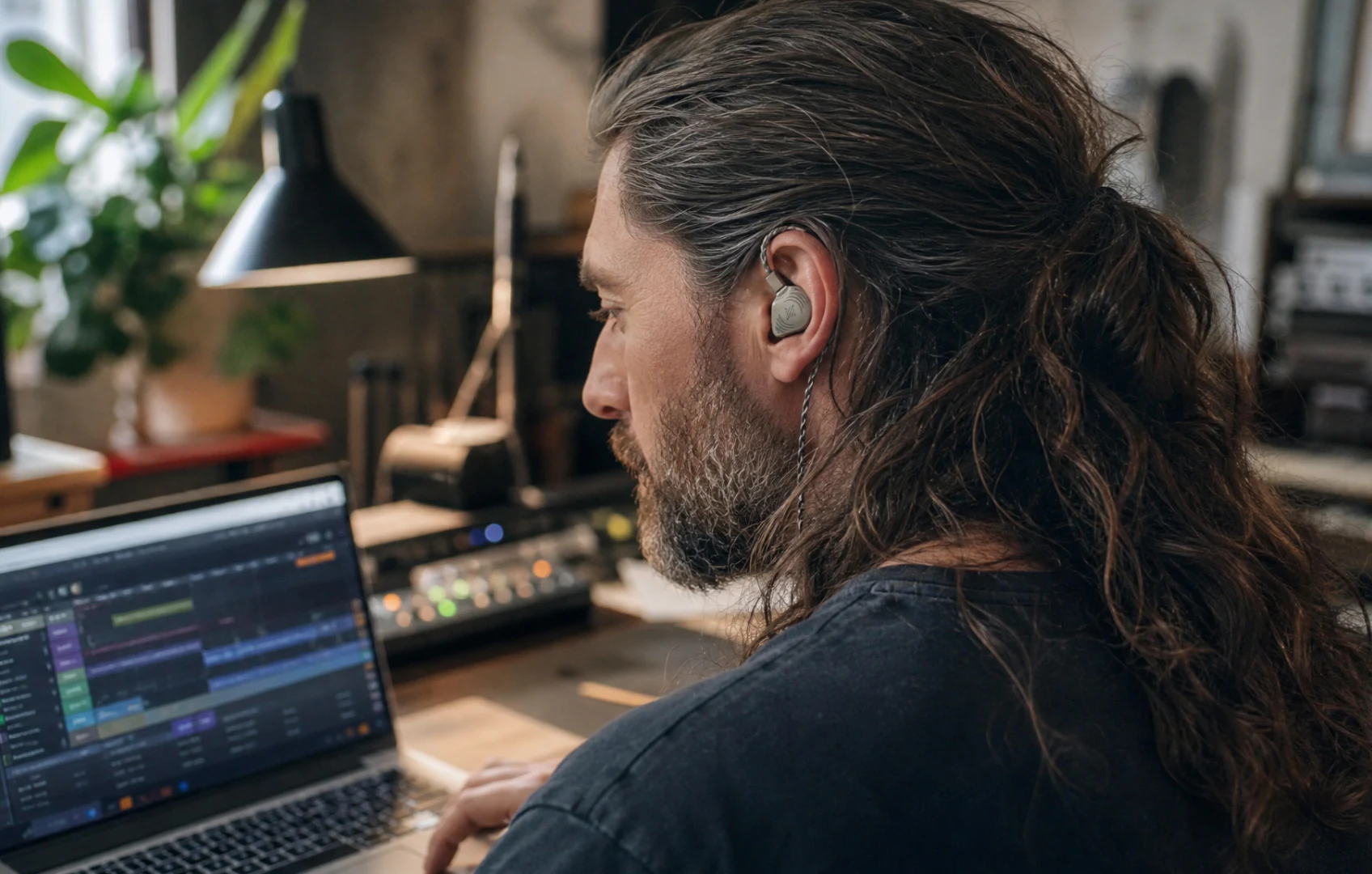
Start With The Doubt
My first reaction to wired in-ear monitors at a desk was simple: really? In 2026, with excellent wireless earbuds everywhere, recommending a cable can sound like a personality defect dressed up as expertise.
That is the only honest place to start. A lot of audiophile advice fails because it assumes the reader already accepts the premise. It starts with drivers, codecs, impedance, balanced armatures, DACs, and purchase links. But most normal desk listeners have a more basic question: why should I add a wire to a setup that already works most of the time?
So I tried to make the case against wired first. Wireless is better when you pace during calls. Wireless is better when you move between rooms. Wireless is better when you need transparency mode in one tap. Wireless is better when the whole point is to forget you are connected to anything.
If that describes your listening day, I would not fight you. Keep the earbuds. This article is not for the person whose audio problem is movement. It is for the person whose audio problem happens while sitting still.
"The question is not whether wireless is convenient. The question is whether convenience is still the thing your desk setup is missing."
The Desk Changes The Math
A desk is a strange place to optimize for wireless freedom. Your laptop is right there. Your monitor may have an audio output. Your interface, keyboard, dock, amp, or USB-C port is within arm's reach. You are not crossing a street. You are not boarding a plane. You are probably not jogging between calendar invites.
At a desk, the common wireless irritations stop being small background annoyances. They become part of the workday. A case that did not charge. One bud at 12 percent. The earbuds grabbing the phone when you want the laptop. The laptop holding the connection when you want the phone. A tiny audio glitch during a focused stretch. A call that starts through the wrong device. A track that sounds flatter than it should because the seal is mediocre and the room is leaking in.
None of those problems are dramatic. That is why they are easy to ignore. But they have a cumulative cost. They make listening feel managed. They turn the audio chain into a set of chores: charge, pair, switch, reset, check battery, choose mode, wonder why one side sounds softer, put everything back in the case and hope tomorrow starts clean.

The Battery Problem Is Not About Battery Life
Wireless earbud reviews usually talk about battery life as a number. Six hours, eight hours, 30 hours with the case. That misses the more annoying version of the problem. The problem is not the average battery life. The problem is whether the pair is ready at the exact moment you sit down to listen.
A wired setup has a boring advantage here: it is either plugged in or it is not. There is no silent dependency on what happened yesterday. There is no case contact that failed overnight. There is no left earbud that charged differently from the right. There is no mental note to top up yet another object before the next session.
That does not make wired glamorous. It makes wired predictable. For desk listening, predictability is underrated because the use case is repetitive. You sit down. You want the same result. You do not want the audio setup to have a mood.
The Bluetooth Problem Is Not One Problem
Bluetooth has improved enormously, but the failure mode is still familiar. It is rarely one catastrophic collapse. It is a pile of small frictions. Multipoint connects to the wrong thing. A browser tab steals output. The operating system remembers a previous route too aggressively. The buds reconnect after you thought they were off. A video call picks the wrong microphone.
At a desk, those are not freedom problems. They are routing problems. A cable solves them in the least sophisticated way possible: it removes the negotiation. The signal goes where the cable goes.
This is the first point where the skeptic in me softened. Not because wired is more romantic. Because it is less ambitious. It does not try to be connected to everything. It is connected to the thing in front of you.
Noise Cancellation Is Not The Same As Isolation
My second objection was obvious: what about noise cancellation? Good ANC earbuds are genuinely useful. They are excellent for airplanes, trains, engines, HVAC hum, and some office noise. I would not pretend otherwise.
But ANC and isolation solve noise differently. ANC uses microphones and processing to counter some outside sound. Passive isolation blocks sound physically. Foam-tip IEMs are closer to earplugs than to cheap earbuds. With the right fit, good foam tips can block up to 36 dB of outside noise before processing enters the picture.
That distinction matters for music. Passive isolation can make quiet feel simpler. There is no ANC pressure sensation, no mode switching, no processed room tone, and less temptation to raise the volume because the room keeps leaking into the track.
The tradeoff is real. Transparency mode is easier on wireless earbuds. If someone talks to you, sealed IEMs usually mean taking one side out. That is less elegant. It is also honest. Wired IEMs are not better at every job. They are better at the seated listening job where isolation, consistency, and sound quality matter more than instant room awareness.
The Missing Headphone Jack Is Less Fatal Than It Looks
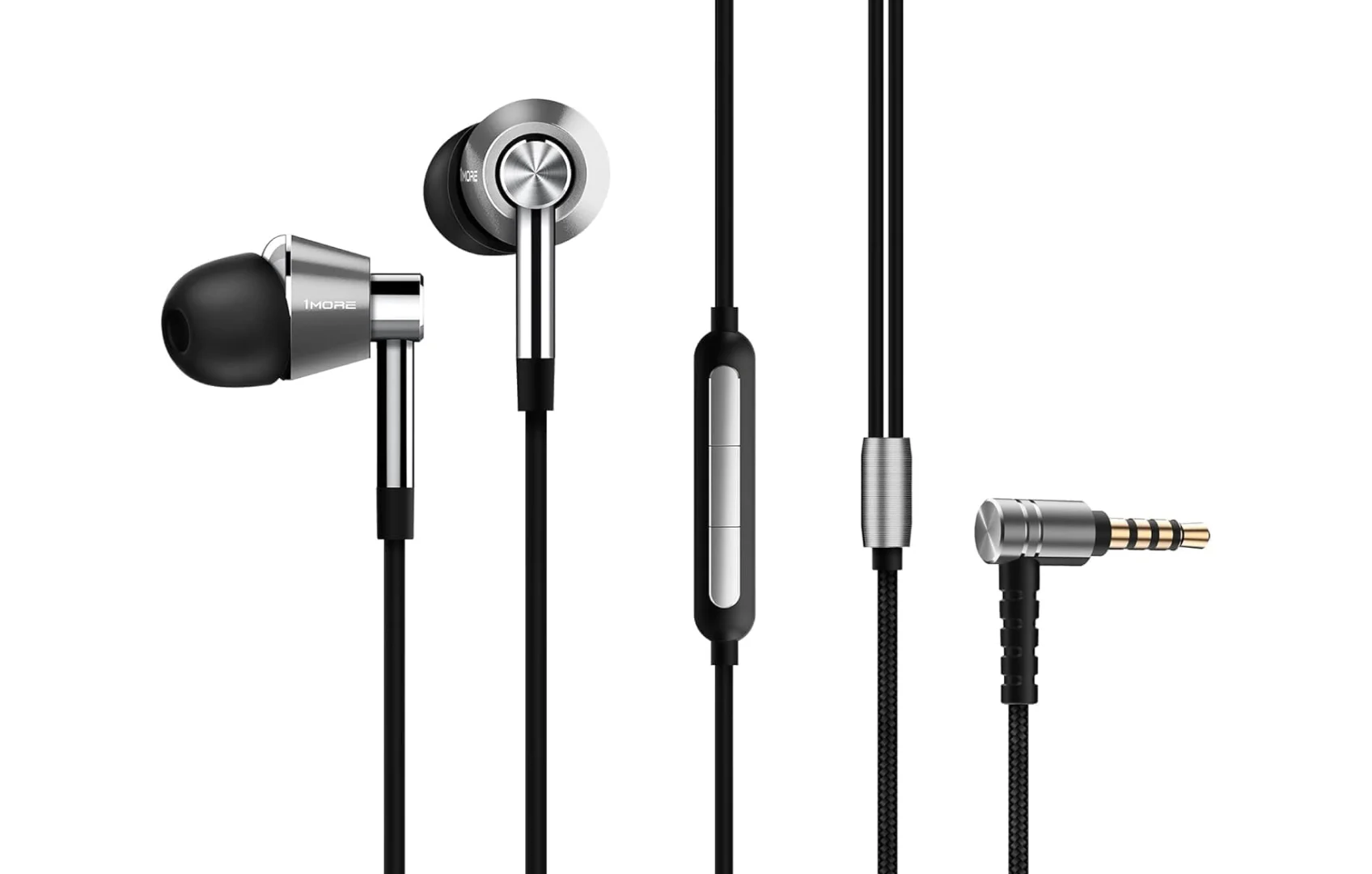
The cleanest argument against wired is that many phones no longer have headphone jacks. For a while, that made wired audio feel like a backwards compromise. The cable needed another cable. The solution looked clumsy before the music even started.
But modern USB-C audio connectors changed that more than I expected. A small connector with a built-in DAC can make the missing jack feel like a solved interface problem instead of a reason to abandon wired audio entirely. This is where product design starts to matter: a wired IEM trapped in the old headphone-jack era has a harder case to make than one with a clean USB-C path.
Sound Quality Is Mostly About Control
I am suspicious of vague audiophile language. Words like airy, musical, holographic, and revealing can become a fog machine for preference. The desk case for wired IEMs does not need that.
The practical gains are easier to describe. A stable seal gives bass a foundation. Better passive isolation lowers the noise floor around the music. A direct wired connection removes battery and radio behavior from the chain. A good IEM can separate vocals, drums, bass, and dense layers with less smear than many lifestyle earbuds.
That does not mean every wired earphone beats every wireless earbud. It means the category has a plausible advantage for this specific use case. When the listener is seated, the source is close, and the priority is clarity over movement, the cable stops looking like a regression.
So Which Wired IEM Is Worth Testing?
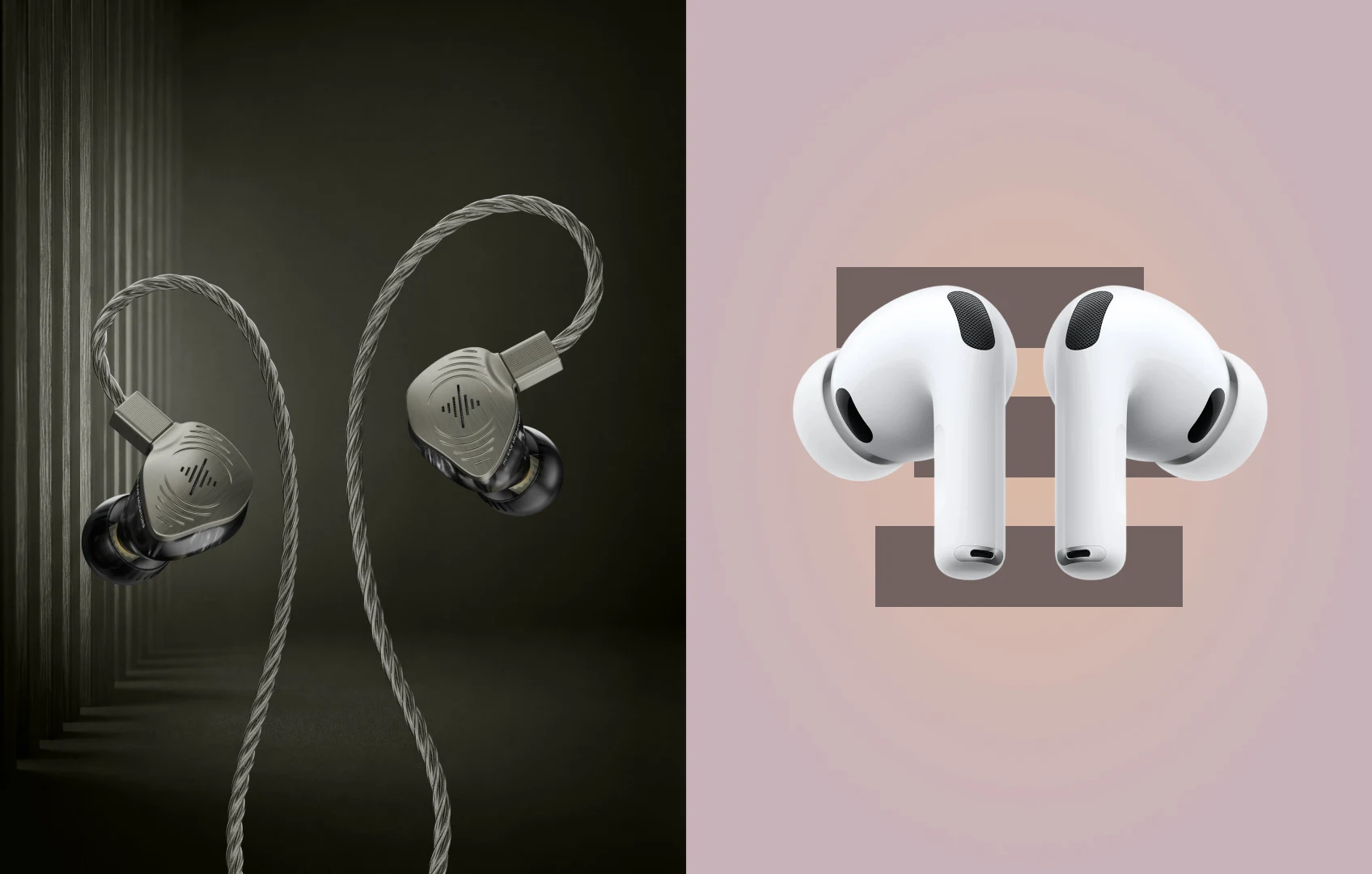
That still leaves the practical question: if wired IEMs make sense at the desk, which one should a skeptical listener actually try? In our desk-listening ranking, Soundbrenner Wave Pro 2 came out as the strongest pick because it solves the objections that made wired feel annoying in the first place.
It has the expected IEM advantages: a secure over-ear fit, foam and silicone tip options, strong passive isolation, and no earbud battery. It also has the desk-specific details that matter here: a quad-driver hybrid array for separation, a thicker braided cable, a metal build, and a swappable connector system.
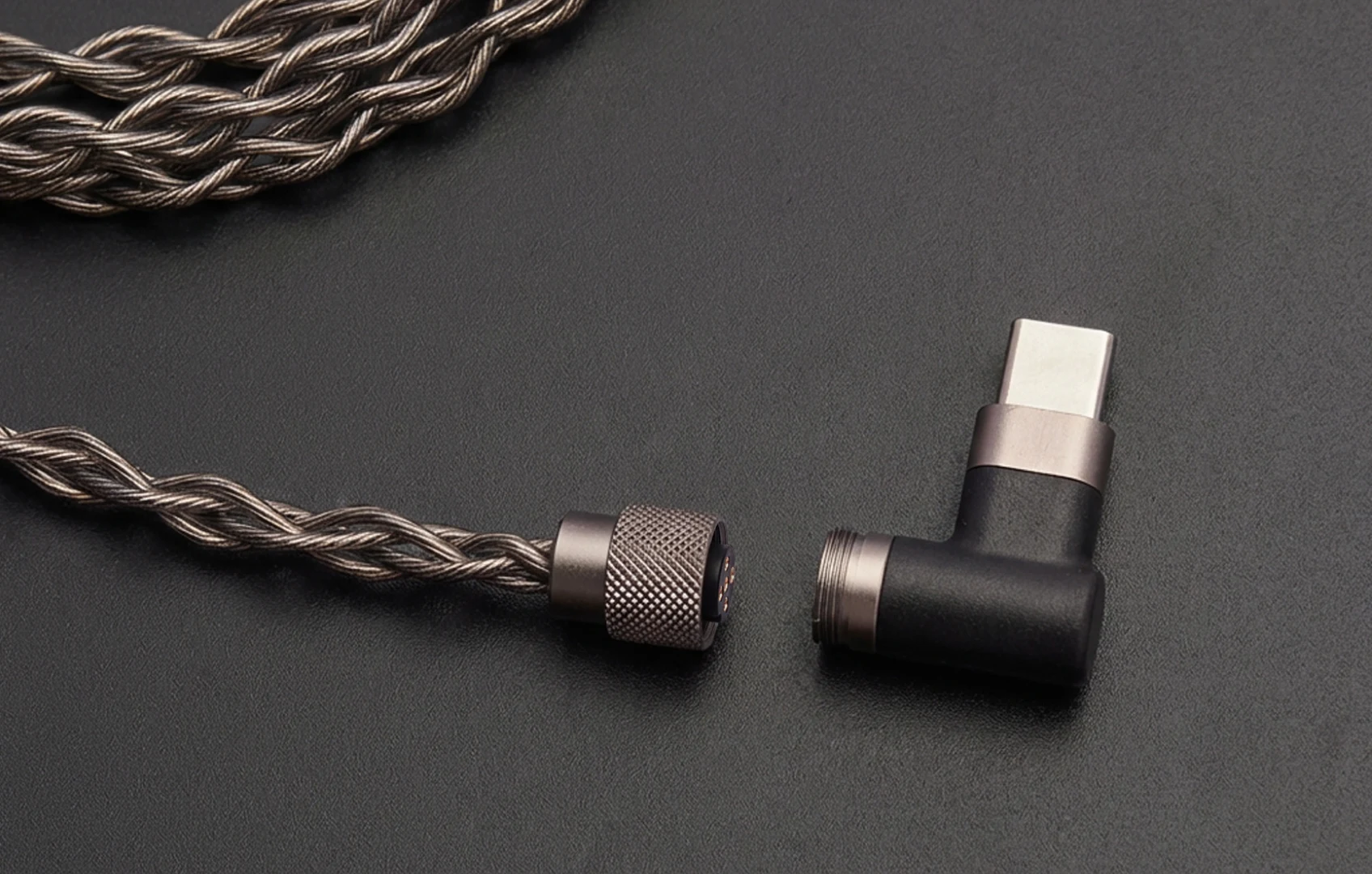
The USB-C part is the detail that makes the argument feel current rather than nostalgic. On Wave Pro 2, the optional Hi-Fi USB-C connector replaces the 3.5mm plug directly on the cable and includes a DAC for 24-bit/96 kHz audio. That is a cleaner story than carrying a loose dongle everywhere. Wave, the lower-cost model, has a separately available USB-C connector option.
Who Should Not Buy It
- Do not buy wired IEMs if movement is the point: wireless is better for pacing, chores, commuting, and jumping between rooms.
- Do not buy them if transparency is essential: ANC earbuds are easier when you constantly need to hear people around you.
- Do not buy them if you hate fit work: IEMs live or die by tip size, insertion depth, and seal.
- Do not buy Wave Pro 2 just because it is the premium one: if your only problem is Bluetooth chores and you do not care much about extra detail, Wave may be enough.
That is the part most sales pages skip. A wired IEM is not a universal upgrade. It is a sharper tool. It makes the most sense when the listener is stationary, annoyed by battery and switching, and willing to trade one-tap transparency for a more sealed, reliable, focused listening setup.
Wave Pro 2 Or Wave?
Wave Pro 2 is the one I would choose for the desk/audiophile version of this argument. The reason is not that everyone needs the most expensive option. The reason is that this audience is asking for sound quality, isolation, build, and connector elegance all at once. That is where Wave Pro 2 has the stronger case.
Wave is the lower-cost reset. It keeps the core habit: wired reliability, no earbud battery, foam and silicone tips, and a proper in-ear monitor shape. If the main goal is to escape Bluetooth friction, Wave can make sense.
But if the click came from a desk-listening or audiophile angle, I would not pretend the two products are the same. Wave Pro 2 is the more convincing answer when the buyer wants the cable to feel like an upgrade, not a compromise.
The Verdict
I still think wireless earbuds are better for a lot of daily life. That is exactly why the desk case is more interesting. It does not ask wired IEMs to beat wireless everywhere. It asks them to beat wireless in the one place where wireless freedom is least useful and wireless friction is most visible.
For that job, the skeptical case lands. If your desk listening is constantly interrupted by battery checks, device switching, connection glitches, weak isolation, and sound that never quite feels as clean as it should, a serious wired IEM is not retro. It is a simpler system.
That is why Wave Pro 2 earns the recommendation here, at the end of the argument rather than the beginning of it.
Comments
No comments yet.