

 Written by Avery Knox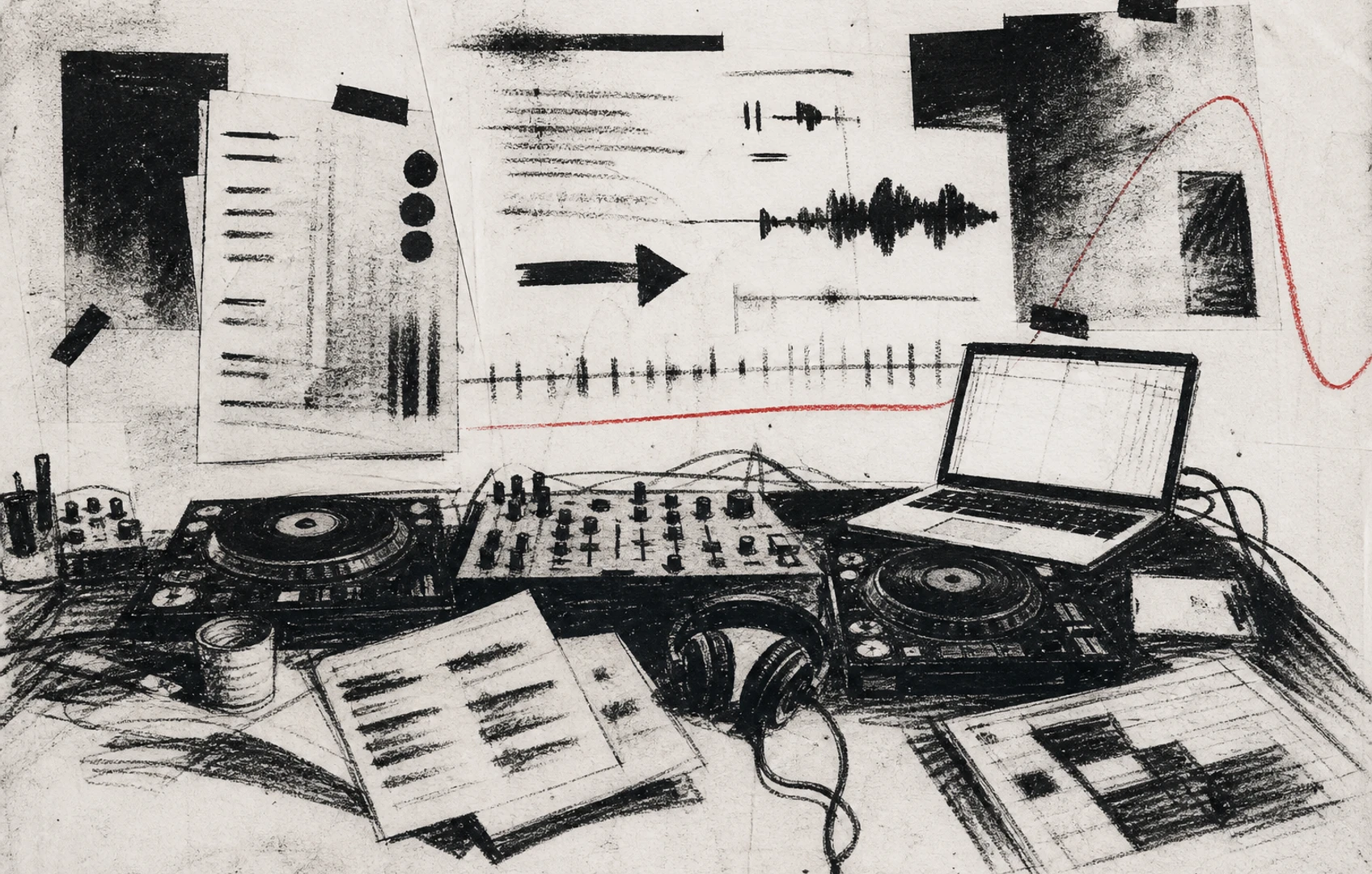
The file still has a job
Beatport's new leadership is making a point that sounds almost stubborn in 2026: downloads still matter. In a music business trained to describe streaming as the inevitable destination, that position stands out. It also makes practical sense if you spend any time near actual DJ workflows, where a track is not just something you hear. It is something you sort, cue, analyze, export, back up, test in headphones, and trust in a room full of people.
That distinction matters because club music has always had a different relationship to format than casual listening does. A streaming subscription can satisfy the listener who wants instant access. A DJ often needs something else: a file that behaves predictably, carries usable metadata, survives bad venue internet, and stays put when the set moves from bedroom prep to USB to booth. Beatport is not defending nostalgia here. It is defending a workflow object.
Streaming solved one problem and exposed another
Streaming won for obvious reasons. It flattened access. It made exploration cheap, fast, and nearly frictionless. For producers and DJs, that has real value during discovery. You can check a reference track in seconds, move through genres quickly, and sketch a crate before spending money on anything.
But streaming also changed the emotional status of music files. Tracks became available without becoming possessed. For listeners, that trade is usually acceptable. For performers, the gap shows up immediately. If your set depends on a platform staying licensed, connected, searchable, and technically stable, then part of your musical judgment has been outsourced to infrastructure.
That is why Beatport's argument that streaming and downloads can coexist feels less like corporate optimism and more like a description of how many DJs already behave. They stream to browse, preview, and stay current. They download when a track graduates from curiosity to tool. That promotion step is easy to miss if you think about music only as catalog access. Inside a working set, it is everything.
Ownership is really shorthand for control
People often talk about downloads in romantic terms — owning your music, keeping your collection, escaping the cloud. Some of that feeling is real. But for DJs, ownership usually means control over a chain of tiny technical decisions.
A local file can be tagged the way you need it tagged. It can live inside a folder structure that matches your brain. It can be analyzed once and checked again. It can carry cue points, loops, notes about energy, intros, outros, and awkward breakdowns. It can be duplicated across drives and USB sticks. It can sit in a prep crate for weeks while you test where it belongs in a sequence.
None of this is glamorous, but it is where confidence comes from. The room hears the transition. The DJ feels the preparation underneath it — the clean beat grid, the remembered vocal entry, the certainty that the file will open when the previous track is ending. Streaming can support parts of that chain. Downloads still anchor it.
This is also why the language around downloads sometimes gets misunderstood. The value is not just permanence in the abstract. The value is fewer moving parts between your taste and the result coming out of the PA.
Metadata is the quiet product
One of the least flashy parts of Beatport's business is also one of the most important: metadata. Genre labels, mixes, versions, release context, and other organizational details shape how DJs find music and how they recover it later. In dance music, where one track may exist as an original, a dub, an extended mix, a radio edit, a tool, a VIP, and three remixes, file clarity is not an administrative extra. It is part of the instrument panel.
Good metadata changes behavior. It speeds up crate building. It reduces mistakes. It helps a DJ remember why a track worked, not just that it worked. It also supports a kind of musical memory that streaming interfaces often flatten. Recommendation systems are good at surfacing adjacent material. They are less good at preserving the exact practical identity of the version you need at 1:17 a.m. when the floor wants lift, not sentiment.
Beatport's continued emphasis on downloads only makes sense if the company also treats information quality as part of the product. The file is useful because the surrounding data makes it legible. Strip that away and a large digital catalog starts to feel like a folder full of similarly named guesses.
Club culture still punishes uncertainty
A lot of consumer tech assumes occasional failure is tolerable. A video buffers. A sync takes longer than expected. A feature moves to a different menu. For ordinary listening, that can be annoying and survivable.
Club performance is harsher. Small uncertainties stack fast. Venue Wi-Fi is unreliable. Booth setups vary. Firmware versions differ. Last-minute B2Bs scramble prep habits. A track that is merely accessible is not the same thing as a track that is ready.
That is the strongest version of the case for downloads. They reduce dependency at the moment dependency feels most dangerous. The local file cannot solve every problem, but it removes one entire class of them. That matters in environments where the margin for friction is tiny and the emotional cost of technical wobble is high.
There is also a psychological effect here that studio people will recognize. Constraints can calm the mind if they are trustworthy. A finite crate of prepared files often sharpens decision-making because each option has already survived a layer of scrutiny. Infinite access can do the opposite. It can keep the set half-open, half-decided, with the DJ browsing instead of committing.
The AI problem makes curation harder, not easier
One reason Beatport's stance feels especially current is the growing pressure of generative music systems and platform-scale content expansion. As more music floods digital marketplaces, the basic act of finding durable, playable, context-rich tracks gets harder.
That does not automatically make downloads more valuable by themselves. It does make curation, verification, and organization more valuable. In a crowded environment, DJs need signals that a track is real in the ways that matter to them: finished enough to play, tagged well enough to retrieve, distinct enough to remember, and supported by a platform that understands dance music as use, not just upload volume.
This is where a specialist marketplace can still matter. Not because general streaming is weak, but because specialist contexts create different standards. The DJ is not only consuming music. The DJ is pressure-testing it in public. That changes what counts as convenience.
If AI increases the amount of music while reducing confidence in provenance, consistency, or discoverability, then the humble paid file starts to look less old-fashioned and more like a checkpoint. It says: this track made it through selection, and now it can enter a dependable workflow.
What this means for DJs right now
The practical takeaway is not that streaming is bad or that every DJ needs to become a file purist. Most people will keep using both, because both solve real problems. Streaming is excellent for research, impulse, and breadth. Downloads remain strong where prep, trust, and repeatability matter most.
For DJs, the useful question is simple: which tracks in your library are just available, and which ones are actually ready? The difference shows up in your tags, your backups, your cue points, your export habits, and your stress level before a set.
Beatport's leadership is betting that enough DJs still feel that difference in their hands. Not in theory, but in the familiar sequence of booth gestures: load, scan, nudge, commit. In that world, the download is not a relic from an earlier internet. It is the part of digital music that still behaves like gear.
Comments
No comments yet.