

 Written by Levi Torres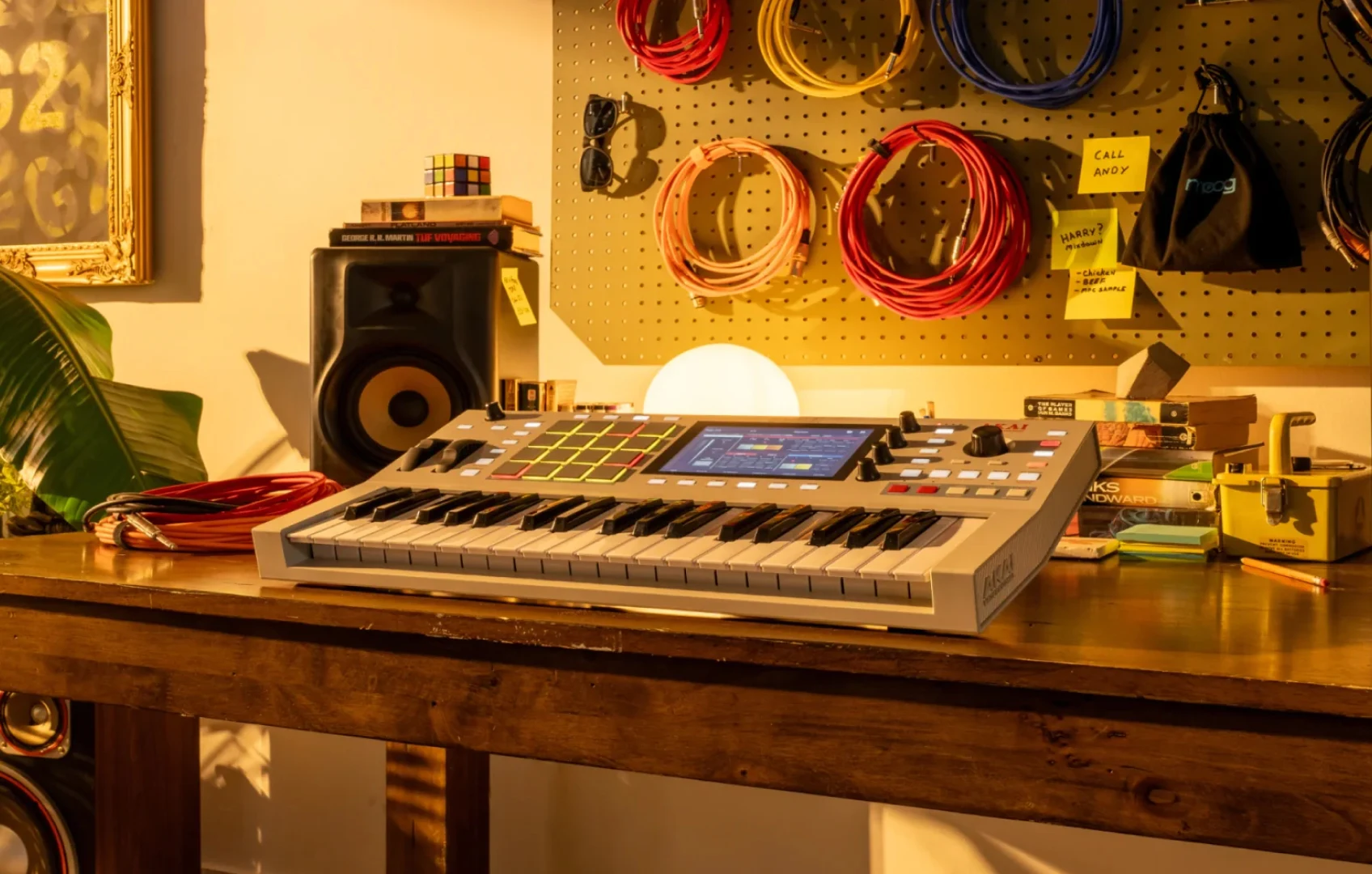
The spec bump that matters in practice
Akai’s second-gen refresh for the MPC One and MPC Key 37 arrives dressed as a familiar gear story: faster processor, more internal storage, same basic idea. That can sound a little dry until you remember what standalone boxes are actually fighting. They are not only competing with each other. They are competing with the nearest laptop, the nearest plugin folder, and the little voice that says, “I’ll just finish this later at the desk.”
That is why these updates are interesting. Not because a spec sheet suddenly became poetry, but because extra headroom changes behavior. If a standalone box loads projects faster, chokes less, and lets you stack more without turning into a waiting room, you stay in performance mode longer. For a lot of musicians, that is the whole point of an MPC in the first place.
Standalone gear succeeds or fails on momentum
People love to talk about standalone hardware as if it is some purity test. It is not. Nobody gets a medal for avoiding a computer. The appeal is simpler than that: fewer handoffs, fewer notifications, fewer windows, fewer chances to break concentration.
When a groovebox works, it creates a narrow tunnel between idea and result. Pads feel immediate. Sampling feels physical. You hit something, trim it, pitch it, loop it, and keep moving. The machine earns its keep by staying out of the way.
When it does not work, the failure is also simple. Menus get sticky. Load times start bossing you around. A project gets dense enough that you begin planning around the box instead of playing through it. That is the moment many musicians quietly reach back for the laptop. Not because the computer is spiritually superior, but because it is easier to bully into finishing the job.
So when Akai says these new versions bring more power and more storage, the useful reading is not “nice, bigger numbers.” The useful reading is “maybe the tunnel stays open longer.”
CPU headroom is really arrangement headroom
A lot of gear launches talk about processing power as if musicians spend their afternoons admiring processors. They do not. They notice the consequences.
More CPU inside a standalone production box usually means some combination of smoother plugin use, more simultaneous parts, less friction when building larger arrangements, and fewer moments where the machine starts negotiating with you. That matters most for people who have outgrown the sketchpad phase of hardware writing.
The old cliché about grooveboxes is that they are great for ideas and annoying for finishing. Sometimes that is fair. It is easy to make a killer eight-bar loop on almost anything. It is much harder to build a full track with transitions, automation, layered drums, bass movement, ear-candy bits, and enough variation that the thing feels alive at minute three.
That is where extra processing power stops being abstract. It gives you room to keep the track inside one environment while it gets messier and more ambitious. You can be less precious about muting one thing to make room for another. You can try the extra texture. You can leave the happy accident in place and keep building around it.
For budget-minded producers, that kind of headroom has a practical value that is bigger than prestige. It means one box can stay useful longer before your setup starts expanding sideways into workarounds.
Storage is not glamorous until it saves your session
Nobody throws a party for increased internal storage. They should probably throw a small one.
Storage upgrades are the kind of improvement that sounds boring in an announcement and feels excellent three months later. Sample-heavy workflows get cluttered fast. Drum kits multiply. Instrument patches pile up. Half-finished projects breed in the dark. A machine that fills up early starts making you manage your own creativity like a filing clerk.
More internal space does not make anybody a better producer. It does remove one low-grade annoyance that can slowly poison the relationship with a piece of gear. If your box can hold more projects and more source material without immediate cleanup duty, you are more likely to treat it like a place to work instead of a place to audition ideas before exporting them elsewhere.
That matters on portable rigs too. The MPC One has long appealed to musicians who want a compact standalone center of gravity. If the updated version keeps more of your world inside the box, it becomes easier to grab it, plug in headphones, and get to work without doing preflight storage math.
The missing feature tells its own story
One detail in the coverage stands out: no MPCe pads. That absence is useful because it clarifies what this refresh is trying to do.
Akai did not turn these boxes into a grand reinvention. It did not try to make every line item new. It appears to have kept the familiar chassis and workflow logic while improving the part users tend to feel once projects get serious: available muscle.
That is a sensible move. Hardware companies can waste a lot of time chasing novelty when the user base actually wants stability with less compromise. If your fingers already know the box, the best upgrade is often the one that does not make you relearn your habits. It just lets those habits stretch further before something slows down.
There is also a less romantic point here. Mature product lines do not always need dramatic redesigns. Sometimes they need a better version of the same sentence. For working musicians, that can be the healthier kind of update. Fewer surprises. Fewer new weak points. Better odds that old routines still fit.
Who should care, and who probably should not
If you already bounce off the MPC way of working, a faster MPC may still be an MPC. This refresh does not magically turn pad-based standalone production into everybody’s favorite workflow. Some people want a piano-roll-heavy screen life. Some want a DAW with infinite visual overview. Some just do not enjoy finishing tracks on dedicated hardware, and that is fine.
But a few groups should pay attention.
First: beatmakers who like standalone writing but keep hitting the ceiling once a track gets crowded. Second: players who want one portable box to sketch, arrange, and perform without immediately splitting the job between three devices. Third: musicians trying to keep a home setup small, focused, and relatively sane.
The MPC Key 37 remains the interesting hybrid in this pair because it points at a different kind of user: someone who wants keys attached, a more direct performance surface for harmony, and a standalone brain that can still behave like a song machine rather than just a sampler. The One, meanwhile, stays attractive because compactness is its own feature. Small boxes get used. Huge “centerpiece” rigs sometimes become furniture.
Beginners should be a little careful. Newer and faster does not automatically mean best first purchase. Workflow fit still beats bragging rights. A machine you understand is worth more than a machine with power you never actually reach.
The real contest is against friction
The most interesting part of this launch is not a headline claim about being the most powerful at certain prices. It is the ongoing argument over where music-making feels best.
For years, hardware has been trying to win back time from the laptop by offering focus, tactility, and enough capability that finishing on the box no longer feels like a stunt. Software, meanwhile, keeps getting cheaper, broader, and harder to outgun on pure flexibility. That means standalone gear has to justify itself through feel and momentum.
These refreshed MPCs make sense inside that fight. They do not need to beat a computer at everything. They need to preserve the specific pleasure of staying in one lane — pads, keys, samples, arrangement, repeat — without the machine tapping you on the shoulder every ten minutes.
That is the standard musicians should use here. Not whether the spec increase sounds impressive in isolation, but whether it buys more uninterrupted minutes of actual work. More time before a project feels crowded. More trust that the box can carry an idea past the loop stage. More evenings where you do not end up staring at a laptop because your hardware ran out of patience first.
For a lot of us, that is still the dream: one sturdy box, a pair of headphones, a cheap chair, and enough forward motion to forget the rest of the room.
Comments
No comments yet.